
Compound Interest: The Mechanic Behind Long-Term Wealth Building
Understand how compound interest works, why time amplifies its effect, and what it means for anyone starting to invest early or late.
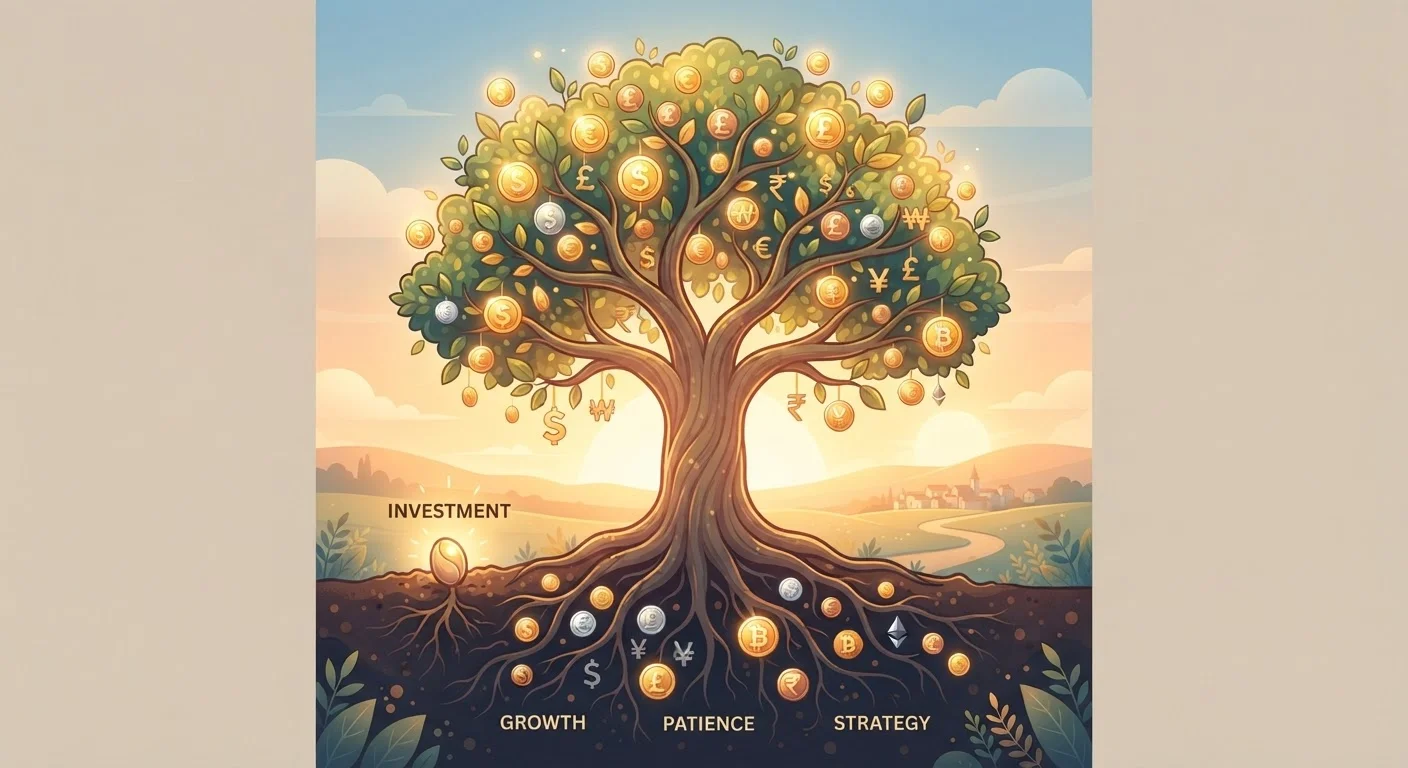
Photo: HorizonMetric.com | One Destination For Everyday Insights editorial
—— In This Article
Key Takeaways
- Compound interest earns returns on both your principal and your previously earned interest.
- Time is the single most powerful variable in compounding — starting early matters enormously.
- Compounding works against you when you carry debt, making balances grow faster than expected.
- Even modest, consistent contributions can build significant wealth over decades.
- Compounding frequency (daily vs. annually) affects how fast money grows.
How Compounding Actually Works
The easiest way to understand compounding is through a simple example. Suppose you deposit $1,000 into an account earning 5% interest annually. After year one, you've earned $50, giving you $1,050. In year two, you earn 5% on $1,050 — not just the original $1,000 — so you earn $52.50, ending with $1,102.50. By year three, you're earning interest on $1,102.50.
This might seem like a small difference early on. But over 30 years at the same 5% rate, that initial $1,000 grows to roughly $4,322 — without adding a single extra dollar. Simple interest would only produce $2,500 over the same period. That gap is compounding at work.
The key variables are: the principal (starting amount), the interest rate, the compounding frequency, and most critically, time. Adjusting any one of these changes the outcome, but time has the most dramatic effect of all.
$4,322
Growth of $1,000 over 30 years at 5%
Compared to $2,500 under simple interest — illustrating the compounding difference on a single deposit with no additional contributions.
~72 ÷ rate
Years to double money (Rule of 72)
A widely cited financial shortcut: divide 72 by your annual interest rate to estimate how many years it takes to double an investment through compounding.
10 vs. 30
Years invested — early vs. late saver comparison
Illustrative scenarios consistently show that an investor starting a decade earlier with fewer contributions can produce a comparable or larger balance than one who contributes longer but starts late.
Why Time Is the Most Powerful Ingredient
Consider two investors. The first starts contributing $200 per month at age 25 and stops at 35 — investing for just 10 years. The second waits until age 35 and contributes $200 per month until age 65 — investing for 30 years. Assuming a 7% average annual return, the first investor, despite contributing for fewer years and less total money, often ends up with a comparable or larger balance at retirement. This counterintuitive result is the power of an early start.
This happens because the earliest dollars invested have the longest runway to compound. Each year of additional compounding multiplies the entire balance — not just new contributions. A dollar invested at 25 has 40 years to grow; the same dollar invested at 45 has only 20.
Automate Contributions to Protect Compounding
One of the most effective ways to let compounding work is to remove the temptation to pause or withdraw. Setting up automatic contributions to a retirement or investment account means your money keeps compounding without requiring monthly decisions. Even small automatic transfers add up significantly over long time horizons.
For those who feel they've started late, the math still favors action. Beginning at 40 instead of 25 reduces the compounding runway, but contributing more consistently and leaving funds invested without interruption can still build meaningful long-term wealth. The right time to start was always as early as possible; the second-best time is now. For more on getting started, see our practical beginner's guide to investing.
When Compounding Works Against You
Compounding is neutral — it amplifies whatever direction interest is flowing. On savings and investments, it builds wealth. On debt, it erodes it. Credit card balances are a common example: if you carry a balance month to month, the interest that accrues gets added to your principal, and next month's interest is calculated on the larger amount. The balance can grow quickly even if you make minimum payments.
This is why understanding compounding is essential not just for investors, but for anyone managing debt. The real cost of carrying a credit card balance is often far higher than the stated interest rate suggests, precisely because of how compounding works on the debt side of the ledger.
Compounding Frequency Matters — But Less Than You Think
Daily compounding does produce slightly more than monthly or annual compounding at the same rate. However, the difference between compounding frequencies is far smaller than the impact of the interest rate itself or the length of time invested. Don't let compounding frequency distract from the bigger variables: consistent contributions and time in the market.
The same principle applies to student loans, auto loans, and personal loans — though the compounding frequency and structure varies by loan type. Understanding the terms of any debt, including how interest is calculated, is a core part of managing household finances. Our saving and debt hub covers strategies for both sides of this equation.
Putting Compounding to Work in Everyday Life
You don't need a large sum to benefit from compounding. Many workplace retirement accounts, such as 401(k)s, and individual retirement accounts (IRAs) are designed to let contributions and investment returns compound over decades. Reinvesting dividends from stocks or funds is another practical way compounding operates in an investment portfolio.
The habits that support compounding are straightforward: contribute consistently, avoid withdrawing early, and keep investment costs low (since fees reduce the amount that stays invested and compounds). For those building toward this, starting with a consistent savings habit is often the practical first step before investing.
It's also worth addressing a common misconception: many people assume they need substantial capital before compounding becomes meaningful. In reality, compounding rewards consistency and time more than large initial amounts. Even $50 per month, invested steadily over decades, compounds into a meaningful sum. Our article on investing myths that hold beginners back addresses this and other barriers in more detail.
This article is for general informational and educational purposes only and does not constitute personalized financial or investment advice. Consult a qualified financial professional before making decisions about your own finances.
Frequently Asked Questions

Finance Editorial Team
Finance Editorial Team is the collective byline for our editorial team and contributor network. Articles published under this byline or an editorial pen name are researched, written, and reviewed according to our editorial standards for clarity, consistency, and independence before publication.
View author profile