
Boiling vs. Simmering vs. Poaching: Temperature Makes All the Difference
These three moist-heat methods are often confused. Learn what each looks like in the pot and when to reach for each one.
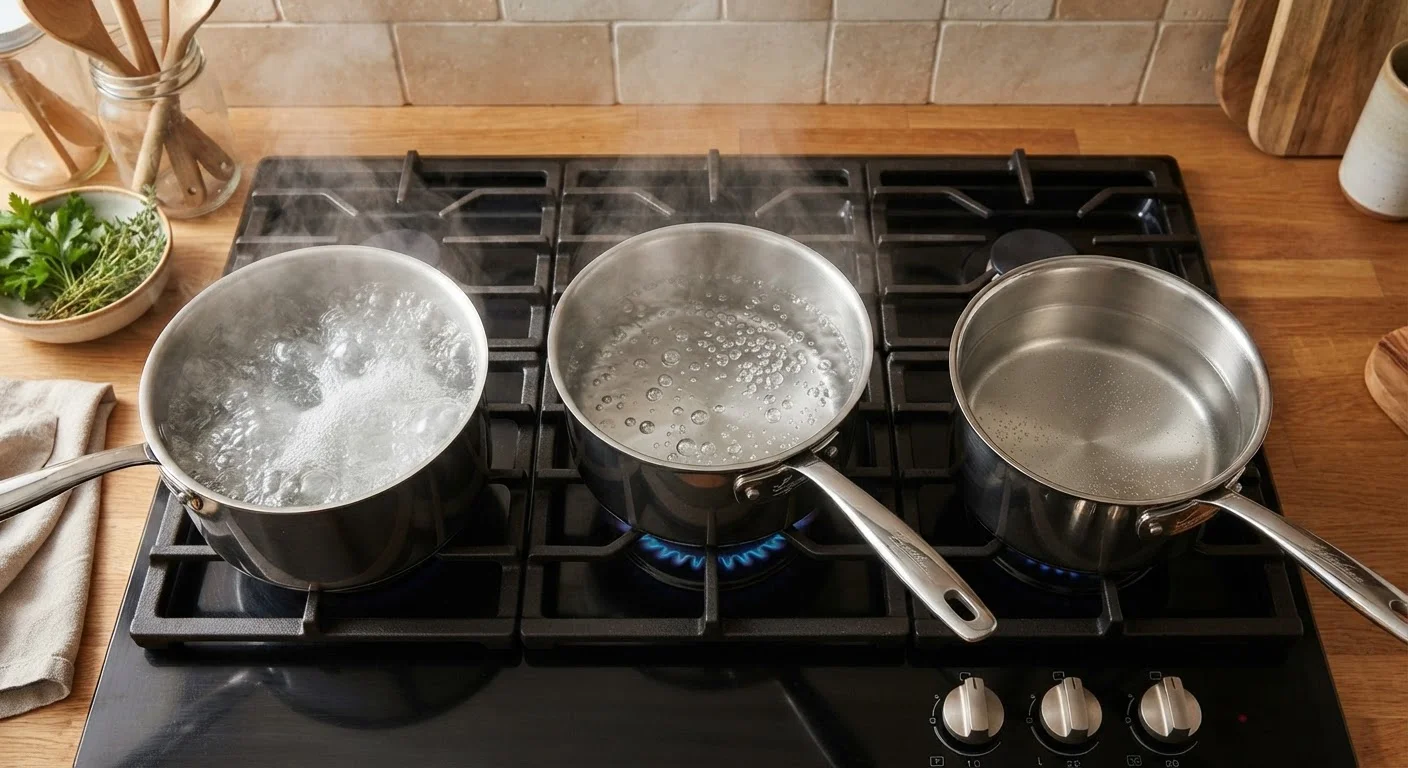
Photo: HorizonMetric.com | One Destination For Everyday Insights editorial
—— In This Article
Key Takeaways
- Boiling reaches 212°F; simmering sits around 180–205°F; poaching is gentlest at 160–180°F.
- Visual cues in the pot — bubble size and frequency — are the easiest way to judge temperature without a thermometer.
- Delicate proteins like fish and eggs become tough or fall apart in a full boil; poaching or simmering protects them.
- Boiling is ideal for starchy foods like pasta and potatoes that can handle aggressive heat.
- Simmering is the default setting for most soups, stews, and braises where slow flavor development matters.
Reading the Pot: What Each Method Actually Looks Like
Most beginner cooks learn to boil water and never look back — but knowing the difference between a boil, a simmer, and a poach is one of the most practical upgrades you can make in the kitchen. These are all moist-heat methods, meaning they cook food in liquid, but the temperature at which that liquid is held changes everything about the result.
Boiling is unmistakable. Water at a full boil (212°F at sea level) churns vigorously, with large, fast-rising bubbles that break the surface constantly. You'll hear it. The liquid is in continuous motion.
Simmering is quieter and more controlled. At roughly 180–205°F, you'll see small, steady bubbles rising from the bottom and occasionally breaking the surface — not the rolling chaos of a boil. If you've turned your boiling pasta water down to cook a sauce, that lazy bubble activity is a simmer.
Poaching looks almost still. At 160–180°F, the liquid is hot but barely moving — perhaps a stray bubble every few seconds near the edges. It's easy to mistake for water that hasn't come to temperature yet, but that gentle heat is intentional and precise.
| Criterion | Boiling | Simmering / Poaching |
|---|---|---|
| Temperature range | 212°F (full boil) | 160–205°F (varies by method) |
| Visual cue | Large, constant, churning bubbles | Small steady or barely-there bubbles |
| Best for | Pasta, grains, vegetables | Proteins, soups, braises, eggs |
| Risk of overcooking | Low for starches; high for proteins | Low; gentler on delicate foods |
| Flavor development | Minimal (fast cooking) | High (slow, gradual infusion) |
| Speed | Fastest moist-heat method | Slower, but more forgiving |
Why Temperature Changes the Food
Heat does different things to different foods, and moist-heat methods make that strikingly clear. For starchy foods — pasta, potatoes, grains — boiling works perfectly. The starch granules need substantial heat to fully hydrate and soften, and the vigorous motion prevents clumping. A simmer won't hurt pasta, but it'll take noticeably longer and can turn gummy.
For proteins, the story flips. Muscle fibers in chicken, fish, or eggs begin to tighten as they heat. Past a certain point, they squeeze out moisture and become dry or rubbery. A full boil can turn a chicken breast from tender to chewy in a matter of minutes. Poaching holds the temperature in a range where proteins cook through gently, staying moist and cohesive.
Soups and stews land in the middle. A long, steady simmer breaks down collagen in meat into gelatin (giving body to the broth) and melds flavors over time. Cooks often bring a pot to a boil first to get things moving, then reduce to a simmer for the long haul — that two-stage approach is a standard technique for good reason.
212°F
Boiling point of water at sea level
Water's boiling point drops roughly 1°F for every 500 feet of elevation, which is why pasta cooks slower at altitude.
160–180°F
Ideal poaching temperature range
Most culinary references and food safety guidelines place safe poaching of proteins in this range to preserve texture and moisture.
For more on how heat and fat interact differently in other techniques, see our guide to sauté, pan-fry, and stir-fry. And if you'd like a broader map of cooking methods, The Foundational Cooking Methods reference is a solid starting point.
Practical Tips for Getting It Right
You don't need a thermometer to hit the right temperature — the visual cues described above are reliable enough for everyday cooking. Here's how to put them to work:
- Bring to a boil first, then adjust. It's much easier to lower heat than to raise it. Bring your liquid to a full boil, then reduce the burner until you reach the activity level you need.
- Use a lid strategically. Covering the pot raises the liquid's temperature and speeds things up. Remove the lid (or tilt it) to drop down to a simmer.
- Season your poaching liquid. Plain water produces bland results. Add salt, aromatics like bay leaf, peppercorns, or a splash of wine to flavor the food from the outside in.
- Don't walk away from a poach. Because the window between perfectly cooked and overdone is narrow at low temperatures, poaching benefits from attention. Check for doneness a minute or two before you expect it.
Altitude Affects Boiling Temperature
If you live or cook at high altitude, water boils at a lower temperature — around 202°F at 5,000 feet above sea level. This means pasta and grains can take longer to cook through, even in what looks like a vigorous boil. Adjusting cook times upward is often necessary in mountain cities.
Once you're comfortable with these three methods, you'll find them referenced throughout recipe writing — and you'll instinctively know when a recipe's instruction to "simmer gently" actually matters versus when a vigorous boil is fine.

Food Editorial Team
Food Editorial Team is the collective byline for our editorial team and contributor network. Articles published under this byline or an editorial pen name are researched, written, and reviewed according to our editorial standards for clarity, consistency, and independence before publication.
View author profile