
The Foundational Cooking Methods — A Plain-Language Reference
A clear, no-jargon reference to roasting, braising, steaming, grilling, and more — what each method does and the foods it suits best.
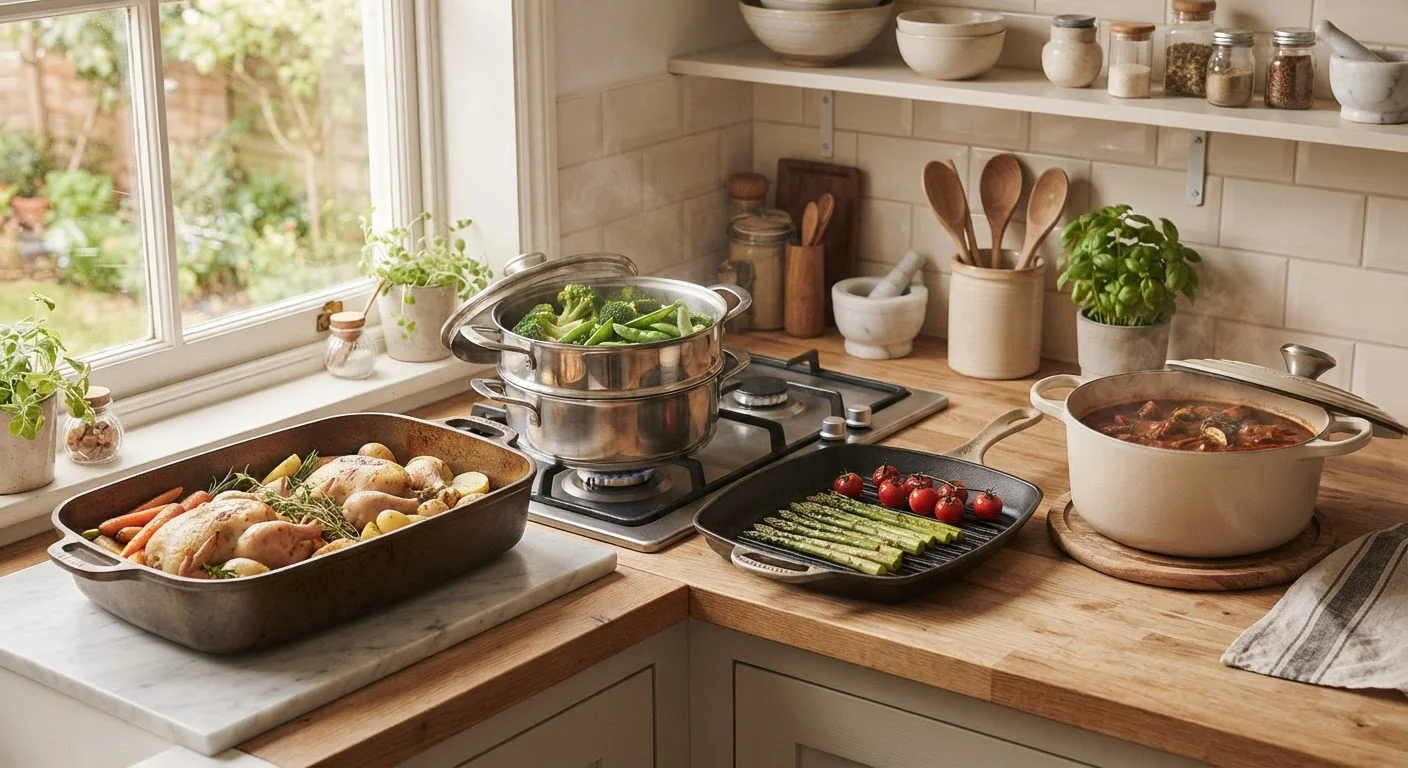
Photo: HorizonMetric.com | One Destination For Everyday Insights editorial
—— In This Article
Dry Heat vs. Moist Heat: The Big Picture
Every cooking method falls into one of two broad families: dry heat and moist heat. Understanding which family a method belongs to tells you a lot about what it will do to your food before you even start cooking.
| Dry-heat methods | Roasting, baking, grilling, broiling, sautéing |
| Moist-heat methods | Steaming, braising, poaching, simmering, boiling |
| Browning requires | Surface temperatures above 212°F (dry heat only) |
| Best method for tough cuts | Braising or low-and-slow roasting |
| Best method for delicate fish | Steaming, poaching, or quick grilling |
| Nutrient retention advantage | Steaming retains more water-soluble vitamins than boiling |
Dry-heat methods use hot air, direct flame, or hot metal surfaces to cook food. Because no water is involved, surface temperatures can climb well above 212°F — the point at which browning and crisping happen. Roasting, grilling, broiling, and sautéing all fall here.
Moist-heat methods use water, steam, or a water-based liquid as the cooking medium. These methods are gentler and ideal for tenderizing tougher cuts or delicate proteins. Steaming, braising, poaching, and simmering belong to this group.
Some methods — like braising — combine both. You start with a dry sear for color, then finish in liquid. That combination is what makes certain dishes so satisfying. For a deeper look at stovetop techniques in particular, see our guide to understanding your stovetop.
The Core Methods, Explained
Here is a plain-language breakdown of the methods you'll encounter most often in everyday recipes.
Dry Heat
A cooking method that uses hot air, direct flame, or a hot surface without water. Allows surface temperatures above 212°F, enabling browning and crisping.
Moist Heat
A cooking method that uses water, steam, or a water-based liquid as the primary medium. Temperatures are capped near boiling, making it ideal for tenderizing and gentle cooking.
Braising
A combination method: food is first seared in dry heat, then cooked slowly in a small amount of liquid in a covered pot. Excellent for tough cuts that need time to become tender.
Caramelization
The browning of natural sugars in food when exposed to high, dry heat. It creates complex, slightly sweet flavors on the surface of vegetables and proteins.
Collagen
A protein found in connective tissue of meat. When cooked slowly in moist heat, it breaks down into gelatin, which gives braised and slow-cooked dishes their rich, silky texture.
Blanching
Briefly cooking food in boiling water, then plunging it into ice water to stop the cooking. Used to set color, soften slightly, or prepare vegetables for freezing.
Roasting and Baking
Both use dry oven heat, but the terms are applied differently by convention. Roasting typically refers to vegetables, meats, and poultry cooked uncovered at higher temperatures (375°F–450°F), producing browned, caramelized exteriors. Baking describes the same process applied to breads, pastries, and casseroles, often at more moderate temperatures. The technique is identical — the label just follows the food.
Grilling and Broiling
Grilling cooks food over direct heat from below; broiling does the same from above using your oven's broiler element. Both methods work fast and create charred, flavorful surfaces. They suit thinner cuts — chicken breasts, fish fillets, vegetables — better than thick roasts, which can char outside before cooking through.
Braising
Braising starts with a sear in a hot, lightly oiled pot, then finishes slowly in a small amount of liquid (broth, wine, or water) with the lid on, usually in a low oven or over low stovetop heat. The slow, humid environment breaks down collagen in tough cuts like short ribs or pork shoulder, turning them tender. It is one of the most forgiving methods for beginner cooks.
Steaming
Food sits above — never in — boiling water and cooks in the rising steam. Steaming is exceptionally gentle, making it ideal for fish, dumplings, and most vegetables. Because food never touches water directly, water-soluble nutrients are better retained compared with boiling.
Stovetop Methods
Sautéing, pan-frying, and stir-frying are all high-heat, fat-based stovetop methods, but they differ in the amount of fat used and how the food moves in the pan. For a full side-by-side breakdown, see Sauté, Pan-Fry, and Stir-Fry: What Sets Them Apart.
Liquid Levels Matter in Braising
A common beginner mistake is adding too much liquid when braising — turning the dish into a stew. For a true braise, liquid should reach only one-third to halfway up the side of the meat. The steam trapped under the lid does the rest of the work, keeping the environment moist without submerging the food.
Moist stovetop methods — boiling, simmering, and poaching — are often used interchangeably in conversation, but each operates at a distinct temperature range that produces different results in the pot. Our article on boiling vs. simmering vs. poaching covers exactly that.
Choosing the Right Method for Your Ingredient
A simple rule: match the method to the nature of the food.
- Tough, collagen-rich cuts (chuck roast, pork shoulder, lamb shank) — braise or slow-roast. Long, moist heat melts connective tissue into gelatin, creating tenderness.
- Tender, lean proteins (chicken breast, fish fillet, shrimp) — grill, broil, steam, or poach. Fast, careful heat prevents drying out.
- Root vegetables (carrots, potatoes, beets) — roast for caramelization or steam for a cleaner, softer texture.
- Leafy and delicate vegetables (spinach, bok choy, asparagus) — steam, blanch briefly, or sauté quickly over high heat.
- Grains and legumes — simmering is almost always the right call; it hydrates and softens without breaking them apart.
Once you recognize these patterns, you can adapt almost any recipe — or improvise confidently when a method isn't specified. Pair good technique with umami-rich ingredients and you can elevate simple preparations without extra complexity. For a deeper reference on recipe language you'll encounter along the way, our plain-English glossary of cooking terms is a useful companion to this guide.

Food Editorial Team
Food Editorial Team is the collective byline for our editorial team and contributor network. Articles published under this byline or an editorial pen name are researched, written, and reviewed according to our editorial standards for clarity, consistency, and independence before publication.
View author profile