
Getting Comfortable with Heat: Understanding Your Stovetop
High, medium, low — but what do those settings actually mean for your food? Learn to read your pan's signals and control heat with confidence.
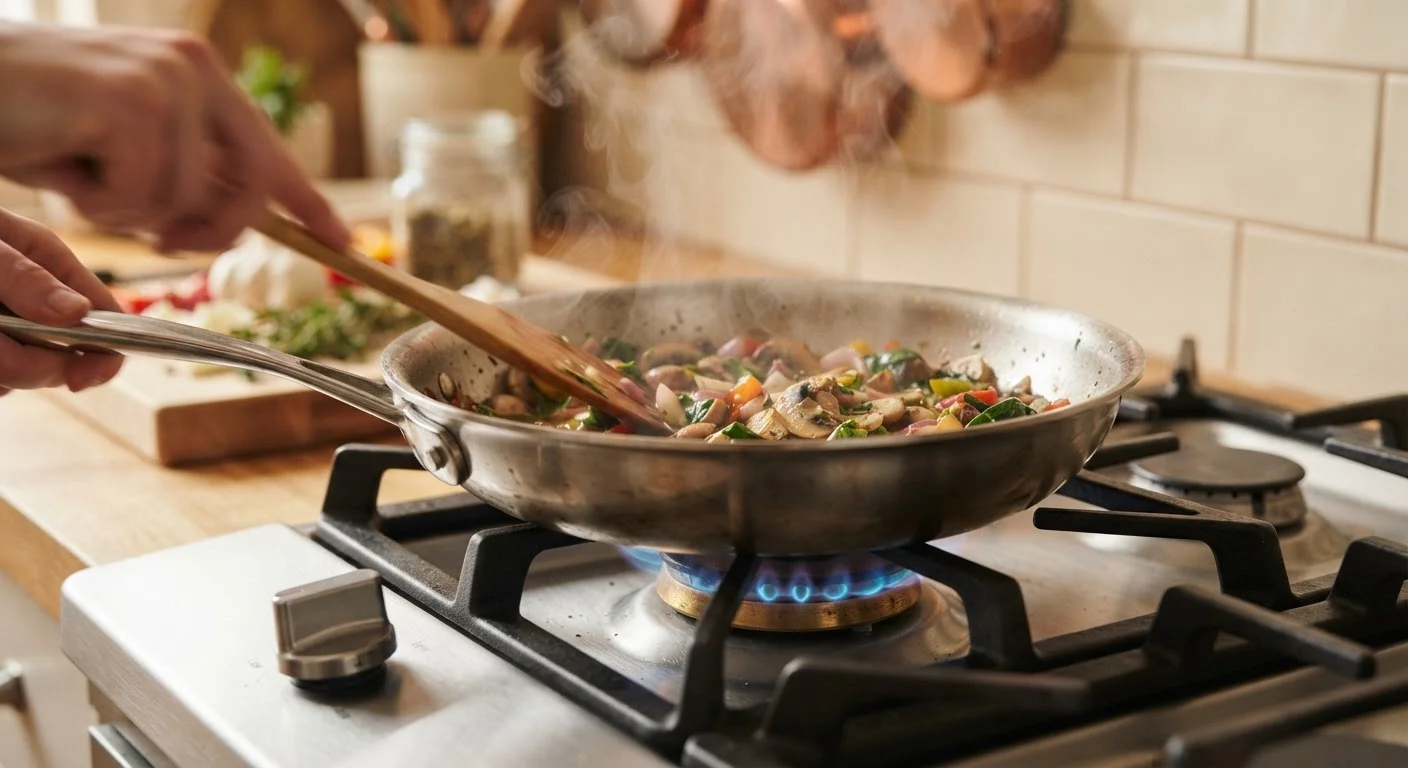
Photo: HorizonMetric.com | One Destination For Everyday Insights editorial
—— In This Article
Key Takeaways
- Heat settings on stoves are relative — what matters most is how your food and pan respond.
- You can tell if heat is right by watching and listening, not just by reading the dial.
- Different stovetop types heat differently; learning yours builds real control.
- Most stovetop problems stem from heat that's too high too fast or a pan that wasn't preheated.
- Adjusting heat mid-cook is a normal, skilled part of the process — not a mistake.
What Heat Settings Actually Mean
Every stovetop dial has the same labels — low, medium, high — but those words don't correspond to a fixed temperature. They're relative to your burner's output, which varies by stove model, age, and even the size of the burner you're using. A "medium" setting on one stove may run significantly hotter than medium on another.
Rather than chasing a specific number, think of heat settings as zones with different jobs:
- Low heat is for gentle tasks — keeping a sauce warm, melting butter or chocolate, simmering a broth for a long time.
- Medium heat is your workhorse setting. It's right for cooking eggs, sautéing onions, and heating through already-cooked food without burning it.
- Medium-high heat builds a crust on proteins, sears vegetables, and is often the entry point for stir-frying.
- High heat is reserved for quick, intense tasks — boiling water faster, achieving a hard sear, or flash-cooking thin cuts.
Understanding these zones makes reading recipes much easier. When a recipe says "heat over medium until golden," it's describing a result, not a precise dial position. Your job is to manage the dial until the result appears. For more on navigating recipe language like this, see how to read a recipe like a cook.
Preheat
Warming up a pan (or oven) before adding food so the cooking surface is already at the right temperature when food touches it.
Smoke point
The temperature at which a cooking fat starts to break down and produce smoke. Exceeding it can make food taste bitter and is a sign to lower the heat.
Shimmer
The slight rippling or wavy appearance oil gets when a pan reaches cooking temperature. It's a visual cue that the pan is ready for food.
Sear
Cooking food over high heat to form a browned, flavorful crust on the outside — typically the first step when cooking proteins like chicken or steak.
Simmer
Cooking liquid at a temperature just below a full boil, where small bubbles rise steadily but the surface doesn't churn aggressively.
Deglaze
Adding liquid (like water, broth, or wine) to a hot pan after cooking to lift the flavorful browned bits stuck to the bottom into a sauce.
Reading Your Pan's Signals
Your pan tells you everything — if you know how to listen and look. These are the signals every cook learns to read:
Sound
A gentle sizzle when food hits oil means the pan is at a good working temperature. A loud, aggressive spatter suggests heat is too high. Silence means the pan is likely too cool — food will absorb oil rather than cook in it, leading to greasiness.
Appearance of oil
Cold oil sits flat and still. As the pan heats, oil begins to shimmer and move fluidly. When you see faint wisps of smoke starting to rise from oil, that's a sign it's at or past its smoke point — reduce heat or add food immediately. Burnt oil makes food taste bitter.
How food behaves
Proteins like chicken or fish will stick initially and then release naturally once a crust forms — this is normal. If they're sticking and tearing, resist the urge to force them; wait another 30–60 seconds. If the pan looks or smells like it's burning, lower the heat right away and add a splash of liquid if needed.
The Water Drop Test
Before adding oil to a pan, flick a single drop of water onto the surface. If it evaporates instantly with a sharp sizzle, the pan is ready for oil. If it just sits there and slowly disappears, give the pan another minute. This simple test works on any stovetop type.
Once you get comfortable reading these cues, you'll find that recipes like sauté, pan-fry, and stir-fry start to make much more intuitive sense.
Gas vs. Electric vs. Induction
The type of stovetop you have shapes how you interact with heat — and knowing your equipment is part of cooking well.
Gas
Gas burners provide immediate, visible heat you can adjust on the fly. Lower the flame, and the pan begins cooling within seconds. This responsiveness makes gas intuitive for beginners once they understand the basics. The downside is that heat distribution across the bottom of the pan can be uneven, with the center running hotter than the edges.
Electric coil
Electric coil burners are slower to heat up and, crucially, slower to cool down. If you turn the dial to low, the coil stays hot for a minute or two. This means you need to anticipate — reduce heat earlier than you think, and slide the pan half-off the burner if you need to cool things down fast.
Induction
Induction cooktops heat the pan directly using magnetic energy rather than a flame or hot coil. They're highly responsive (close to gas) and energy-efficient, but they require cookware made from magnetic materials — cast iron and most stainless steel work; copper and aluminum alone do not.
Check Your Pan Before You Buy Induction
If you're cooking on induction or thinking of switching, test your existing pans with a refrigerator magnet. If the magnet sticks to the bottom of the pan, it will work on an induction cooktop. If there's no magnetic pull, that pan won't heat on induction and you'll need different cookware.
Common Beginner Mistakes and How to Fix Them
Most stovetop struggles come down to a handful of fixable habits. Here's what to watch for:
- Starting with a cold pan
- Adding food to a cold pan means the food heats up with the pan — leading to uneven cooking and sticking. Preheat your pan for 1–2 minutes on medium before adding fat or food.
- Cranking heat to save time
- High heat doesn't always mean faster cooking — it often means burnt outsides and raw insides. Patience at medium heat gives you more control and better results.
- Crowding the pan
- Too much food at once drops the pan temperature sharply. Food steams in its own moisture rather than browning. Cook in batches when needed.
- Walking away
- Stovetop cooking requires attention. Even a low simmer can boil over. Stay nearby, especially while you're learning.
- Not adjusting mid-cook
- Changing the heat partway through isn't a mistake — it's the job. Experienced cooks move the dial constantly. Start on medium-high to heat the pan, drop to medium once food is in, lower again if it's browning too fast.
Building these habits takes a little practice, but they compound quickly. From here, you'll be ready to explore specific techniques — like the difference between boiling, simmering, and poaching — with real confidence. For a broader map of what's possible on the stovetop, the foundational cooking methods reference is a helpful next step.
Essential Cooking Terms Explained Simply
A plain-English glossary of the cooking terms beginners encounter most often — from fold and deglaze to blanch and reduce. A useful companion as you practice stovetop basics.
The Foundational Cooking Methods Reference
A clear, no-jargon overview of roasting, braising, steaming, grilling, and more — what each method does and which foods suit it best.
Frequently Asked Questions

Food Editorial Team
Food Editorial Team is the collective byline for our editorial team and contributor network. Articles published under this byline or an editorial pen name are researched, written, and reviewed according to our editorial standards for clarity, consistency, and independence before publication.
View author profile