
Reading a Recipe Like a Cook, Not Just a Reader
Most recipe failures happen before the stove turns on. Learn how to read through, timeline, and prep a recipe so nothing catches you off guard.
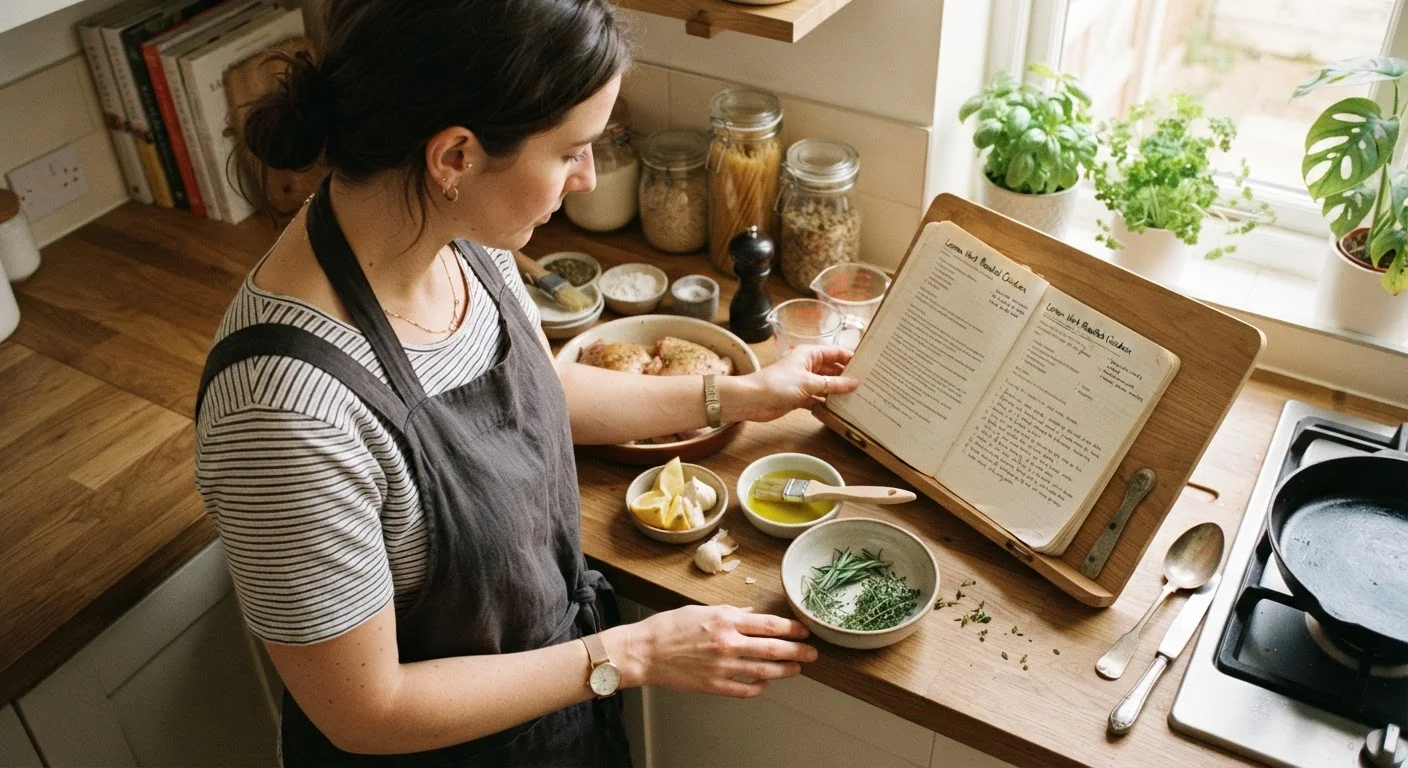
Photo: HorizonMetric.com | One Destination For Everyday Insights editorial
—— In This Article
Key Takeaways
- Always read the entire recipe before touching a single ingredient or turning on the stove.
- Identify time-sensitive steps in advance so nothing catches you mid-cook and unprepared.
- Understanding technique words like 'fold,' 'deglaze,' or 'reduce' prevents costly mid-recipe confusion.
- Mise en place — prepping and measuring ingredients ahead — is the single biggest reducer of cooking stress.
- Recipe timing is often approximate; learn to read your food's signals, not just the clock.
Why Most Recipe Failures Start Before the Stove
The majority of kitchen mishaps — burned garlic, lumpy sauces, undercooked chicken — aren't caused by bad technique at the stove. They happen because something in the recipe surprised the cook at exactly the wrong moment. A step that required an ingredient already chopped. A sauce that needed constant stirring while something else finished in the oven. A rest time that nobody accounted for.
Reading a recipe the way a cook reads it — not just skimming for the ingredient list — is a foundational skill that pays off every single time you cook. It's also the kind of habit that separates confident, relaxed cooks from frantic ones. Our prep checklist for stress-free meals covers the full setup process, but it all starts with how you engage with the recipe itself.
The First Read: Get the Big Picture
Before you measure a single thing, read the recipe from top to bottom — all the way through. This isn't about memorizing every step. It's about understanding the overall shape of the dish: how many stages are involved, roughly how long it takes, and what kind of attention it demands from you.
As you read, ask yourself a few questions:
- Are there any hands-off periods? Marinating overnight, chilling dough, or resting meat all affect your timeline significantly.
- Are there any technique words I don't recognize? If the recipe says to 'fold,' 'bloom,' or 'temper,' look those up before you start — not when you're mid-step with a hot pan. Our guide on kitchen myths that trip up new cooks can also help clarify terms that get misused.
- Are multiple things happening at once? If so, map out which tasks overlap and what needs to be ready when.
Recipe Serving Sizes Are Approximate
When a recipe says it serves four, that estimate is based on a specific portion size that may not match how you or your household eats. If you're feeding big appetites or want leftovers, scale up before you shop. Scaling down is equally important — cutting a recipe in half may require adjustments to pan size and cook time, not just ingredient quantities.
Build Your Timeline Before You Prep
After your first read, work backward from when you want to serve the dish. If dinner is at 6:30 p.m. and the roast needs 90 minutes in the oven plus 15 minutes of rest, it needs to go in no later than 4:45 p.m. — which means your prep needs to be done before that.
This kind of reverse planning prevents the most common timing failures in home cooking. It also reveals whether a recipe is realistic for a weeknight or better saved for a Sunday when you have more room to breathe.
Mise en Place: Prep Before the Heat Goes On
The French culinary term mise en place (pronounced MEEZ-ahn-plahs) means 'everything in its place.' Professional cooks don't reach for raw garlic mid-sauté — they have it minced and ready in a small bowl before the pan heats up. You can apply the same principle at home.
After building your timeline, go through the ingredient list and complete all the prep that can be done in advance: chopping, measuring, rinsing, draining. Group ingredients that get added at the same time. This way, when you're cooking, your only job is to cook — not to scramble.
For more on building the physical skills that make prep faster, see our guide to knife skills every home cook should build.
Read the recipe in full before touching any ingredient.
A first-pass read reveals the recipe's full shape — its stages, timing, and demands. It prevents mid-cook surprises that cause rushed decisions and mistakes.
Look up any unfamiliar technique before you begin.
Technical terms like 'fold,' 'deglaze,' or 'reduce by half' have specific meanings that affect the dish's outcome. Misunderstanding them mid-step often can't be corrected.
Measure and prep all ingredients before heat touches the pan.
Cooking often moves faster than prep. Having everything chopped and measured removes the scramble and lets you focus fully on the cooking itself.
Build a backward timeline from when you plan to serve.
Most recipes list steps forward but don't tell you what time to start. Working backward ensures resting, chilling, and passive cook times are accounted for.
Use recipe times as estimates, not absolutes.
Oven calibration, pan material, ingredient size, and starting temperature all affect cooking time. Treating times as exact leads to over- or undercooked food.
Trust Doneness Cues Over Exact Times
Recipe times are written for an average stove, an average pan, and ingredients at roughly room temperature. Your kitchen may be different. A chicken breast described as 'cooked in 12 minutes' might take 9 or 15 depending on its thickness, your pan's material, and your burner's actual output.
Experienced cooks learn to read their stovetop and pan signals rather than relying purely on the clock. Use the recipe time as a starting estimate, then check for visual and textural cues: golden color, a fork sliding in easily, juices running clear, a sauce coating the back of a spoon.
The same applies to seasoning. Recipe quantities are guidelines, not absolutes. Tasting as you cook — and adjusting — is how you make a recipe yours. And learning when and how to salt at each stage is one of the highest-value skills you can develop.
~70%
Of home cooks who report recipe failures
Culinary educators commonly note that the majority of home cooking errors stem from skipping or skimming the recipe rather than from poor technique at the stove.
15–20 min
Typical time saved by full mise en place
Professional kitchen training programs emphasize that pre-measured and pre-prepped ingredients routinely cut active cook time and reduce errors during service.

Food Editorial Team
Food Editorial Team is the collective byline for our editorial team and contributor network. Articles published under this byline or an editorial pen name are researched, written, and reviewed according to our editorial standards for clarity, consistency, and independence before publication.
View author profile