
Before You Start Cooking: A Prep Checklist for Stress-Free Meals
Use this step-by-step checklist to organize your workspace, review your recipe, and prep ingredients before heat ever meets pan.
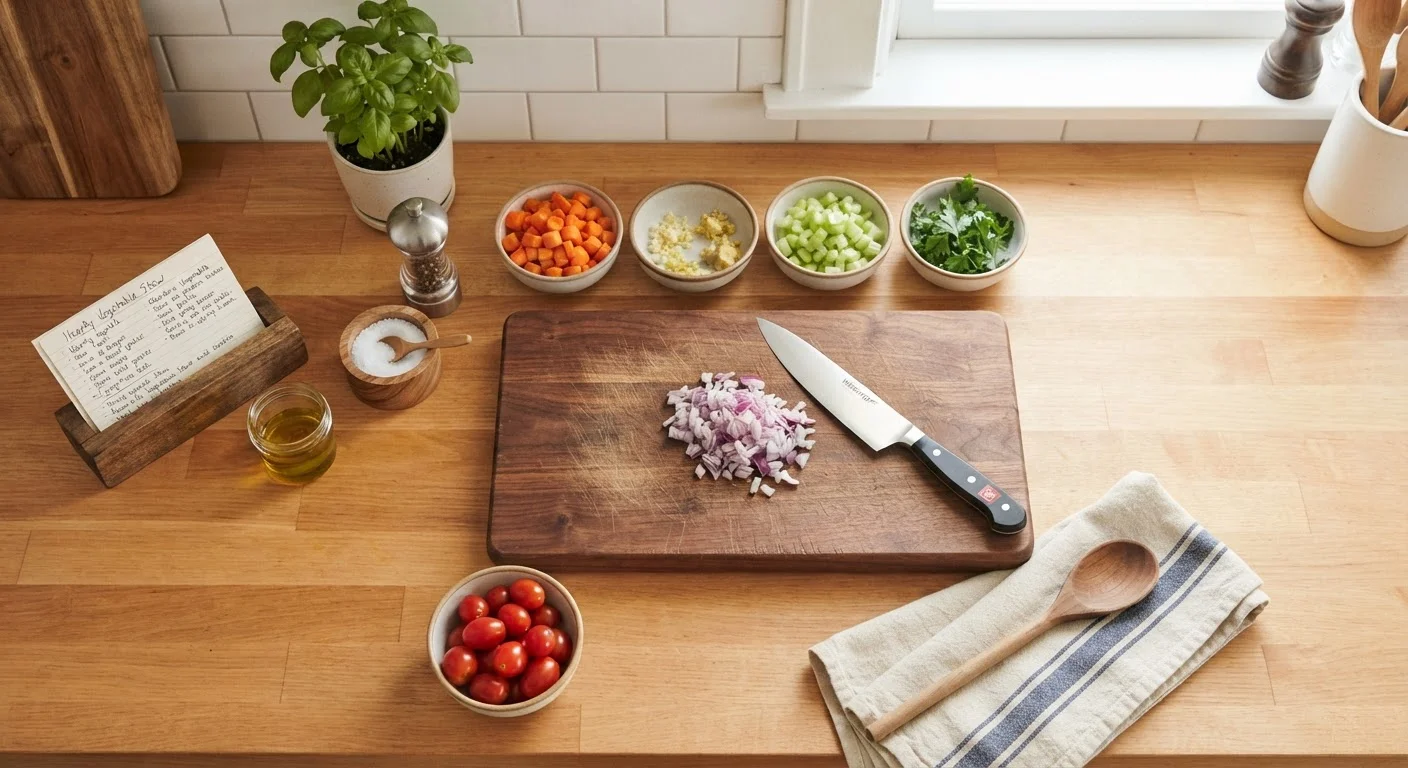
Photo: HorizonMetric.com | One Destination For Everyday Insights editorial
—— In This Article
Key Takeaways
- Reading the full recipe before touching a single ingredient prevents most common cooking mistakes.
- Clearing and cleaning your workspace before prep reduces errors and kitchen stress significantly.
- Gathering all tools and ingredients upfront — mise en place — is the single habit that separates confident cooks from frustrated ones.
- Prepping ingredients to the right size and shape before heat goes on gives you control over cooking times.
- A quick pantry and fridge check before you start prevents mid-recipe discovery of missing staples.
Why What You Do Before Cooking Matters More Than the Recipe Itself
Most cooking frustrations — burned garlic, overcooked proteins, timing chaos — don't start at the stove. They start five minutes before, when a cook is still hunting for a lid or realizing the onion isn't chopped yet. A little structured preparation changes all of that.
This checklist walks you through every step between opening a recipe and turning on a burner. It's built around the professional kitchen concept of mise en place, which simply means "everything in its place." When your workspace is clear, your ingredients are prepped, and your tools are ready, cooking becomes a process you can actually enjoy rather than survive.
Work through this checklist each time you cook — especially on weeknights when time feels tight — and you'll find that meals consistently come together faster and with fewer surprises. Pair it with a solid understanding of how to read a recipe like a cook and you'll be starting every meal from a position of confidence.
Recipe Review
Workspace Setup
Ingredient Check
Active Prep
Tools, Setup, and Making This a Habit
You don't need a professional kitchen to cook like you have one. What you do need is consistency. Running through this prep checklist — even a shortened version of it — before every meal trains your brain to slow down before the heat goes on, which is exactly when most decisions get made.
Cutting board
Your primary surface for all vegetable, herb, and protein prep — use one large enough to work comfortably.
Chef's knife
The single most-used tool in prep work; a sharp knife makes cutting safer and more consistent.
Small prep bowls or ramekins
Used to hold pre-measured spices and ingredients so they're ready to add without interrupting your flow.
Measuring cups and spoons
Needed for accurate dry and liquid measurements, especially important in baking.
Kitchen timer
Keeps track of cook times so you can step away from the stove without losing track.
Digital kitchen scale
Provides more accurate measurements than volume cups, particularly useful when scaling recipes up or down.
If knife work feels like a bottleneck in your prep, that's worth addressing directly. Building a few core cutting techniques makes every other step on this list faster and safer. Our guide to knife skills every home cook should build covers the grip, the rock chop, and the cuts you'll use in nearly every recipe.
Finally, keep your pantry working in your favor. A well-stocked kitchen means fewer last-minute substitutions and less stress during the recipe-review step. If your staples need an audit, the household pantry audit guide is a useful starting point.
Don't Skip Food Safety During Prep
Cross-contamination is one of the most common kitchen risks, and it happens during prep, not just cooking. Use separate cutting boards for raw proteins and produce, and wash your hands thoroughly between handling different ingredient types. Perishable ingredients left at room temperature for more than two hours can enter the food safety danger zone — keep prep efficient and return items to the fridge promptly if you're working slowly.

Food Editorial Team
Food Editorial Team is the collective byline for our editorial team and contributor network. Articles published under this byline or an editorial pen name are researched, written, and reviewed according to our editorial standards for clarity, consistency, and independence before publication.
View author profile