
What 'Mise en Place' Actually Means — and Why It Changes How You Cook
Mise en place is more than a chef term. Learn what it means, how to apply it at home, and why it makes cooking less stressful.
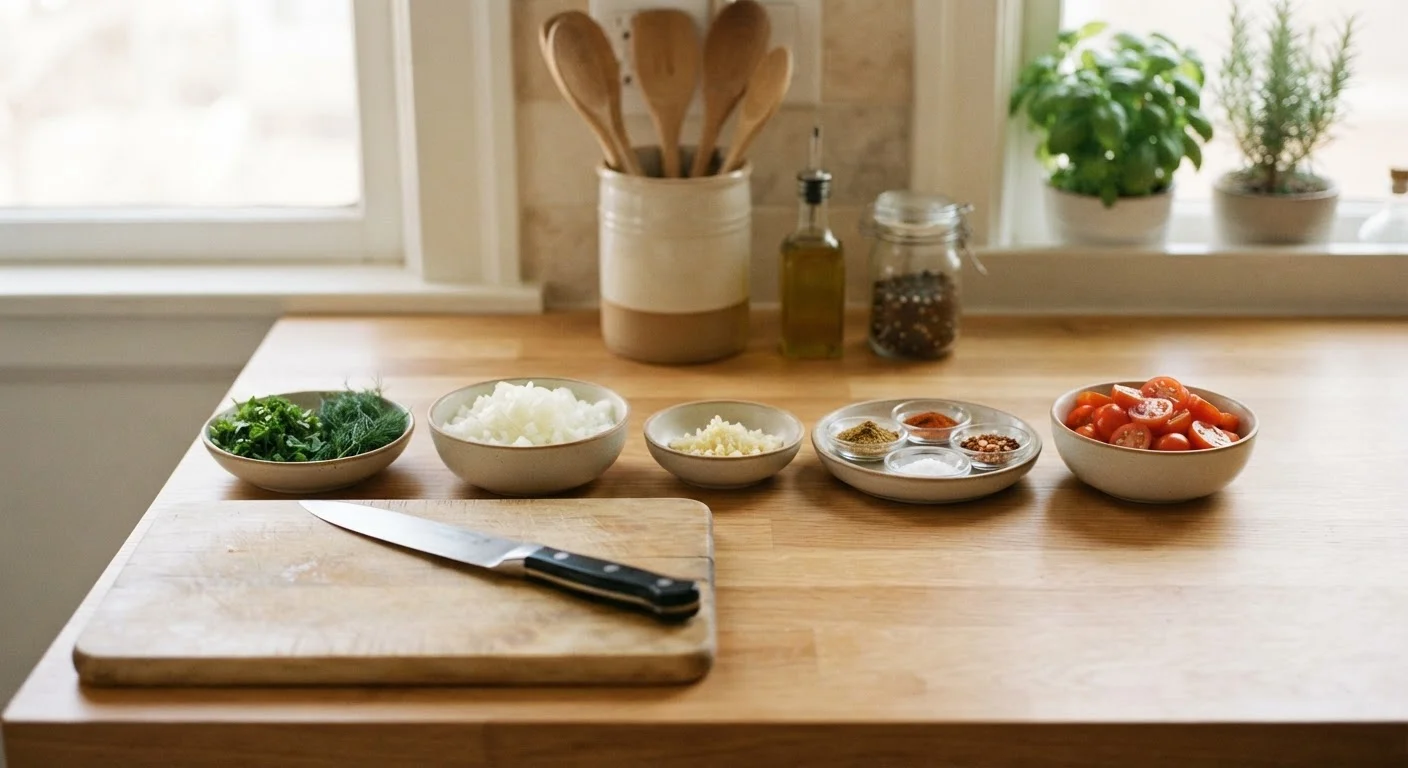
Photo: HorizonMetric.com | One Destination For Everyday Insights editorial
—— In This Article
Key Takeaways
- Mise en place means prepping and organizing all ingredients before you start cooking.
- It reduces mid-cook stress by eliminating last-minute scrambling for tools or ingredients.
- Home cooks at any skill level benefit from this simple preparation habit.
- Even a basic version — reading the recipe and pre-measuring key items — makes a real difference.
- Good prep work is the foundation most cooking failures happen without.
Where the Concept Comes From — and Why It Crossed Over
Mise en place originated in professional French kitchens, where timing and coordination are everything. In a restaurant, a cook can't pause mid-service to chop shallots or find a ladle. Everything needed for a dish must be ready and within reach before the rush begins. The phrase became a guiding principle — not just a task, but a mindset.
It crossed into home cooking not because home cooks needed to act like chefs, but because the underlying logic is universally useful: cooking goes better when you're not trying to prep and cook at the same time. If you've ever burned garlic while scrambling to dice an onion, or skipped an ingredient because you realized it too late, you've already felt the problem mise en place solves.
For a broader look at culinary vocabulary you'll encounter while cooking, see this plain-English glossary of cooking terms.
What Mise en Place Actually Looks Like at Home
You don't need restaurant-grade prep bowls or a brigade of sous chefs. A practical home version looks like this:
- Read the whole recipe first. Before touching a single ingredient, understand what you're about to do and in what order.
- Measure and prep ingredients. Dice the onions. Mince the garlic. Measure out the spices. Pour the broth. Set each component in a small bowl or on the cutting board, ready to go.
- Set up your equipment. Get the pan out. Know which burner you'll use. Preheat the oven if needed.
- Identify timing-sensitive steps. Some ingredients need to go in fast — knowing this in advance means you won't be caught scrambling.
This process doesn't require perfection. Even partially prepping — measuring spices ahead, having your protein ready to go — meaningfully improves the experience.
Start With Just Your Spices
If full mise en place feels overwhelming, begin with one small habit: pre-measure every spice and seasoning before you turn on the stove. Spices are easy to forget, quick to burn, and simple to prep ahead. It's a low-effort starting point that immediately reduces mid-cook stress.
Good knife work is central to efficient mise en place. Foundational knife skills make chopping faster and more consistent, which is where most prep time is spent.
Why It Changes How You Actually Cook
The real benefit of mise en place isn't efficiency — it's presence. When ingredients are already prepped, you can focus entirely on what's happening in the pan: how the oil is shimmering, whether the onions are caramelizing evenly, when to add the next element. You're cooking, not multitasking.
~30 sec
Time to go from golden to burned garlic at high heat
Culinary educators commonly cite this window to illustrate why pre-prepped ingredients matter during active high-heat cooking.
10–20 min
Typical prep time added by mise en place
Most home cooking guides estimate this upfront investment is recovered in calmer, faster, more accurate cooking throughout the recipe.
This matters especially for high-heat cooking, where a 30-second delay can mean the difference between golden-brown and burned. When you're not chopping while something is sizzling, you make better decisions.
There's also a confidence effect. Cooking with a clear workspace and prepped ingredients simply feels more in control. That sense of readiness is what transforms cooking from stressful to enjoyable — and it's available to anyone willing to slow down the start so the rest can flow.
To take this further, a step-by-step prep checklist can walk you through organizing your workspace before you ever turn on the heat.
Building the Habit: Starting Small
The best way to start is with one recipe you already make. Before you do anything else, read it fully — then set up every ingredient before turning on the stove. Notice how the cooking itself feels different.
From there, the habit builds naturally. You'll find yourself automatically reaching for a prep bowl, or scanning a recipe for timing notes before diving in. That instinct is mise en place becoming second nature.
Learning to read a recipe strategically pairs directly with this habit. Reading a recipe like a cook — not just a reader — helps you anticipate what needs to happen before the stove is ever on.
Mise en place isn't a technique you apply to cooking. It's a shift in how you approach it — and that shift pays off every single time.
Frequently Asked Questions

Food Editorial Team
Food Editorial Team is the collective byline for our editorial team and contributor network. Articles published under this byline or an editorial pen name are researched, written, and reviewed according to our editorial standards for clarity, consistency, and independence before publication.
View author profile