
The Case for Tasting as You Cook — Not Just at the End
Tasting throughout the cooking process is a skill, not a habit. Learn what to pay attention to at each stage and how to adjust what you find.
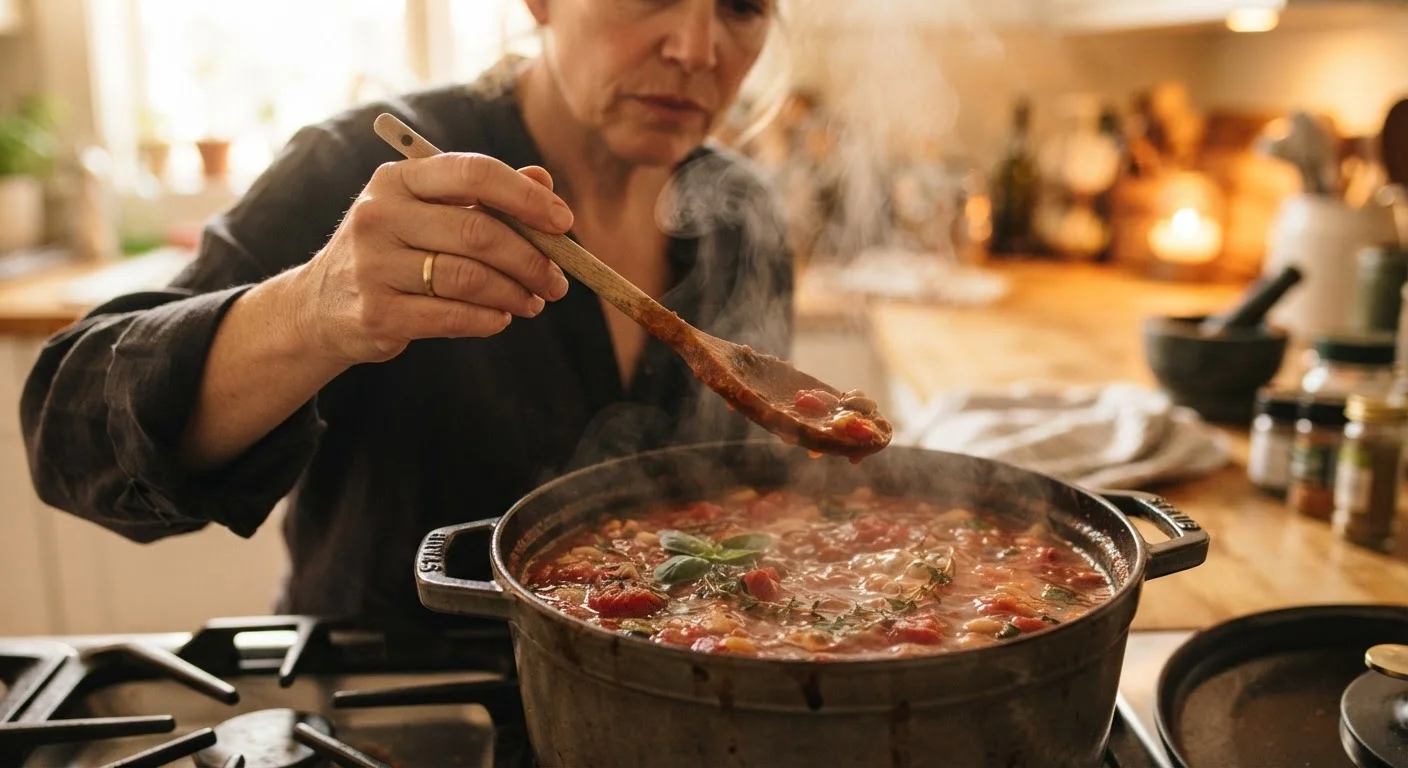
Photo: HorizonMetric.com | One Destination For Everyday Insights editorial
—— In This Article
Key Takeaways
- Tasting throughout cooking helps you catch and correct problems before they become permanent.
- Each stage of cooking changes flavor, so what tastes right early may need adjustment later.
- Developing a tasting habit builds intuition that makes you a more confident, flexible cook.
- Knowing what to look for — salt, acid, sweetness, depth — makes each taste more purposeful.
- Adjusting seasoning incrementally is safer and more effective than large last-minute corrections.
Why Tasting at the End Is Too Late
Most beginner cooks taste their food once: right before serving. By then, the pasta is already plated, the sauce has reduced, and fixing anything requires either heroics or resignation. Tasting only at the end treats cooking like a recipe formula — follow the steps and hope for the right output. But cooking is a live process, and flavor changes at every stage.
Salt added to raw chicken before searing behaves differently than salt stirred into a finished pan sauce. Acid brightens a dish mid-cook but can turn sharp if over-reduced. A braise that tastes perfectly balanced after two hours may taste flat or heavy by hour three. None of these shifts are flaws — they're just how cooking works. The cook who tastes along the way catches them; the cook who doesn't is left guessing.
Tasting as you cook is less about finding problems and more about staying in dialogue with your dish. It's how professional kitchens operate, and it's a habit any home cook can build — starting tonight. For a deeper look at one of cooking's most important variables, see our guide on when and how to add salt.
What to Taste For — and When
Purposeful tasting means knowing which qualities to evaluate at each stage. Early in cooking, you're checking foundational seasoning — does the base have enough salt? Is there enough aromatic depth from onion, garlic, or spice? These are easy to build on now and hard to fix later.
Mid-cook, shift your attention to balance. Is the dish leaning too sweet, too sour, or too one-dimensional? This is the right moment to add a splash of vinegar, a pinch of sugar, or an umami-rich ingredient to round things out. The article on umami in everyday cooking is a useful companion here — ingredients like miso, soy sauce, or a parmesan rind can add the depth you're missing without changing the dish's character.
Near the finish, your focus moves to brightness and lift. A squeeze of lemon, a few fresh herbs, or a small knob of butter can elevate a dish that tastes dull. These final touches are lost if added too early — they're meant to be the last conversation, not the first.
Taste your base before adding anything else to it.
The flavor of your aromatics and fat sets the foundation for everything that follows. Catching a bland or over-salted start now costs you nothing; catching it after you've added broth, protein, and seasoning costs you the whole dish.
Taste every time you add a major ingredient or significant seasoning.
Each addition changes the flavor profile of the whole pot. Checking in after each significant step keeps you oriented and prevents compounding errors.
Make adjustments in small increments, then taste again before adding more.
Over-correcting is one of the most common cooking mistakes. Adding too much acid or salt all at once can push a dish past the point of rescue. Small additions let you find the line gradually.
Always taste the dish at the temperature it will be served.
Flavor perception changes with temperature. A soup that tastes perfectly seasoned piping hot may taste under-salted once it cools to serving temperature, and vice versa.
Finish every dish with a brightness check.
A touch of acid — lemon juice, vinegar, or even a fermented condiment — lifts flavors that have become muted during long cooking. This final check often makes the difference between a dish that tastes good and one that tastes great.
Building the Habit: Simple Rules for Every Cook
Tasting intentionally is a skill that gets easier with repetition. A few straightforward habits can make it second nature in just a few weeks of regular cooking.
One important note: avoid tasting directly from the stirring spoon and returning it to the pot — use a separate spoon or a small bowl when tasting hot dishes. This is both a food safety practice and a good way to get a clean, undistracted read on flavor.
If you want to sharpen your overall kitchen instincts, pairing tasting habits with reading recipes like a cook makes a real difference. Understanding what a recipe is trying to achieve at each step gives your tasting more context — so you know not just what you're tasting, but what you should be tasting for.

Food Editorial Team
Food Editorial Team is the collective byline for our editorial team and contributor network. Articles published under this byline or an editorial pen name are researched, written, and reviewed according to our editorial standards for clarity, consistency, and independence before publication.
View author profile