
Umami in Everyday Cooking: Ingredients That Add Depth Without a Recipe Overhaul
Anchovies, miso, parmesan rinds, soy sauce — discover how to use umami-rich ingredients to make ordinary home cooking taste more complete.
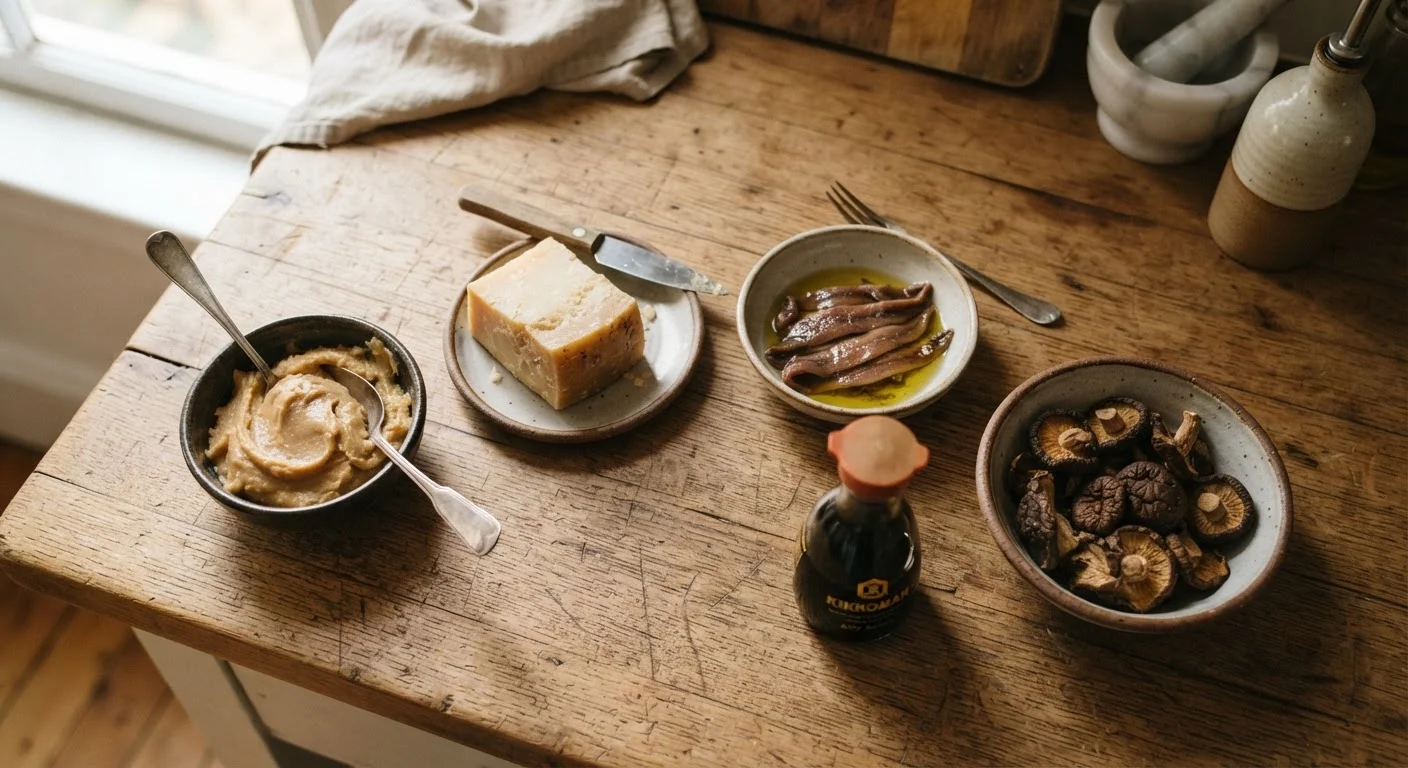
Photo: HorizonMetric.com | One Destination For Everyday Insights editorial
—— In This Article
Key Takeaways
- Umami is the fifth basic taste — a savory, deeply satisfying quality found in many everyday ingredients.
- Small amounts of miso, anchovies, soy sauce, or parmesan rind can dramatically deepen a dish's flavor.
- Umami boosters work by layering, not overpowering — they make a dish taste more like itself.
- You rarely need to change a recipe structure; just add one umami ingredient at the right stage.
- Tasting as you go is the best way to gauge how much depth you've added.
What Umami Actually Means — and Why It Matters
Umami (pronounced oo-MAH-mee) is widely recognized as one of the five basic tastes, alongside sweet, sour, salty, and bitter. The term comes from Japanese and roughly translates to pleasant savory taste. It's the quality in a slow-simmered beef stew, a long-aged cheese, or a bowl of ramen that makes food feel satisfying in a way that salt alone can't achieve.
The science behind it involves glutamates — amino acids that occur naturally during fermentation, aging, drying, and extended cooking. These compounds interact with taste receptors on the tongue in a distinct way, producing a mouth-coating, savory sensation. When a dish feels like it's missing something even though it's been properly salted, that something is often umami depth.
Understanding this fifth taste isn't just a culinary curiosity. It's a practical tool. When you know which ingredients carry strong umami character, you can build more satisfying meals with the same time, effort, and basic recipe you already use. For a broader grounding in how flavors interact and layer, our explainer on seasoning without a recipe is a natural companion to this guide.
Miso paste
Stirred into soups, dressings, or braising liquids to add fermented, savory depth.
Anchovy fillets or anchovy paste
Melted into oil at the start of cooking to build a savory base without fishy flavor.
Soy sauce or tamari
Added in small amounts to sauces, marinades, or stews to amplify overall savoriness.
Parmesan rind
Simmered in soups or braises to release a slow, rich, savory flavor over cooking time.
Tomato paste
Browned briefly in oil before adding liquid to create a concentrated, roasted umami foundation.
Dried mushrooms (porcini or shiitake)
Rehydrated and added to broths or sauces for an earthy, deeply savory character.
Fish sauce
Used a few drops at a time in soups, stir-fries, or pan sauces to deepen flavor without identifiable fishiness.
How to Use Umami Ingredients Step by Step
Watch Your Salt When Adding Umami
Many umami-rich ingredients — soy sauce, miso, anchovies, fish sauce — are also high in sodium. When you add them to a dish, reduce the amount of salt you'd otherwise use. Taste before you season, not after. See our guide to salting at the right stage for more on balancing sodium as you cook.
Understand what you're trying to add
Umami is often described as savory, satisfying, or mouth-filling — a quality that makes food taste more complete. It's triggered by glutamates, naturally occurring compounds concentrated in fermented, aged, dried, or slow-cooked foods. Recognizing when a dish tastes flat or one-dimensional is your cue that it could use an umami boost. You're not changing the dish; you're helping it reach its full potential.
Choose one ingredient to start with
Pick a single umami ingredient suited to what you're cooking. Anchovy paste or soy sauce works well in tomato-based sauces and braises. Miso pairs naturally with soups, roasted vegetables, and salad dressings. Dried mushrooms are ideal for broths and grain dishes. Tomato paste suits almost anything savory. Starting with one ingredient prevents muddying the flavor.
Add it at the right moment
Timing matters. Anchovy fillets and tomato paste should go in early — add them to hot oil before any liquid, so they can caramelize slightly and develop complexity. Soy sauce and fish sauce can be splashed in toward the end of cooking for a brighter, sharper lift. Miso should never boil — whisk it into soups or sauces off the heat or just before serving to preserve its delicate flavor. Parmesan rinds go in at the beginning of a long simmer and come out before serving.
Use less than you think you need
Umami ingredients are concentrated. A teaspoon of miso, half a teaspoon of fish sauce, or one small anchovy fillet is usually enough to shift a pot of soup or a pan of vegetables. Start small, stir, and taste before adding more. The goal is a background savory lift — not a flavor you can name and point to.
Taste and adjust
After adding your umami ingredient, give it a moment to integrate, then taste. Ask yourself: does the dish taste more rounded and satisfying? If it still tastes flat, a small addition of acid — a squeeze of lemon or a splash of vinegar — can help activate the savory notes. If it tastes muddy or too intense, a pinch of sugar or a little more liquid can pull it back. This kind of active tasting is a core kitchen skill — see our guide to tasting as you cook for a deeper look at the habit.
Save Parmesan Rinds — They're Liquid Gold
Instead of discarding the hard rind after finishing a block of parmesan, store rinds in a sealed bag in the freezer. Drop one into a simmering soup, stew, or braise and remove before serving. The rind slowly releases savory, milky depth without making anything taste cheesy.
Once you've worked through this process a few times, it stops feeling like an extra step and becomes instinct. You'll find yourself reaching for a spoonful of miso when a soup tastes thin, or melting an anchovy into a butter sauce without a second thought. That kind of confident, improvisational cooking is the goal — and it fits naturally alongside the foundational cooking methods that form the backbone of most home-cooked meals.
Pairing Umami Ingredients with Common Dishes
Not every umami ingredient belongs in every dish. Here's a quick reference for where each one tends to shine:
- Miso paste: Soups, roasted root vegetables, salad dressings, glazed proteins, grain bowls
- Anchovy fillets or paste: Tomato sauce, braised greens, Caesar-style dressings, roasted lamb or beef
- Soy sauce or tamari: Stir-fries, marinades, pan sauces, fried rice, roasted mushrooms
- Parmesan rind: Minestrone, bean soups, tomato braises, risotto broths
- Tomato paste: Meat sauces, chili, lentil dishes, any braised protein
- Dried mushrooms: Vegetable broths, pasta sauces, stuffings, grain pilafs
- Fish sauce: Thai-inspired dishes, salad dressings, pork and poultry braises
There's a lot of crossover — soy sauce, for instance, is far more versatile than its association with Asian cooking might suggest. A small splash into a pot of chili or a pan of roasted vegetables works just as well. Experiment within your usual rotation and let the habit of tasting as you cook guide your adjustments.
Anchovy and Fish Sauce Are Not Vegetarian
If you're cooking for guests with dietary restrictions, be mindful that anchovies and fish sauce are animal products. Miso paste, soy sauce, dried mushrooms, and tomato paste are all reliable plant-based alternatives that deliver comparable depth.

Food Editorial Team
Food Editorial Team is the collective byline for our editorial team and contributor network. Articles published under this byline or an editorial pen name are researched, written, and reviewed according to our editorial standards for clarity, consistency, and independence before publication.
View author profile