
Building Flavor Without a Recipe: How Seasoning Actually Works
Seasoning isn't just salt. This explainer covers acid, fat, heat, and layering so you can adjust flavors confidently on the fly.
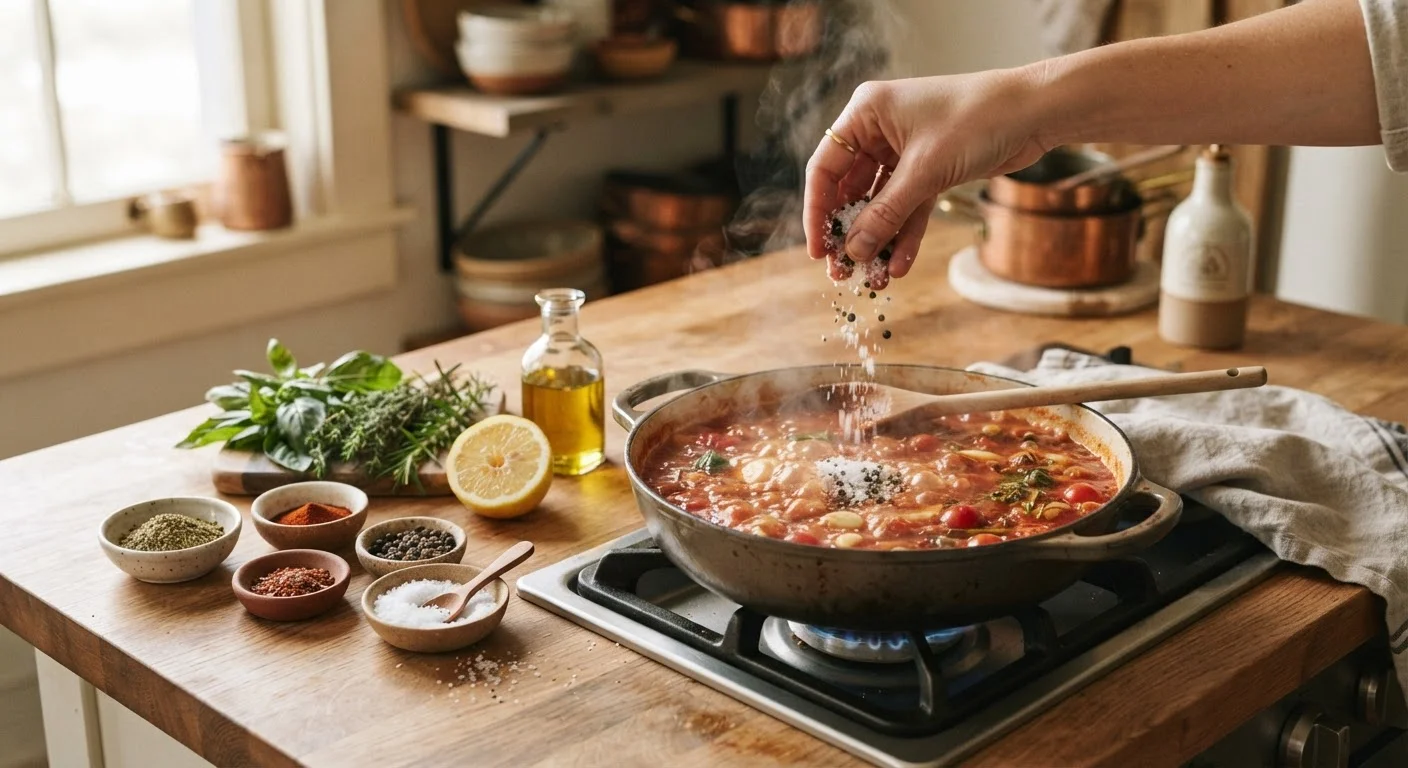
Photo: HorizonMetric.com | One Destination For Everyday Insights editorial
—— In This Article
Key Takeaways
- Seasoning includes salt, acid, fat, and heat — not just spices from a jar.
- Each seasoning element plays a distinct role in how a dish tastes and feels.
- Layering flavor throughout cooking produces better results than adjusting only at the end.
- Tasting as you go is the most reliable tool for building confident seasoning instincts.
- A flat-tasting dish usually needs one specific adjustment, not more of everything.
The Four Elements of Flavor Balance
Most home cooks think of seasoning as salt plus pepper. In practice, professional cooks think in terms of four levers: salt, acid, fat, and heat. Each does something distinct, and learning to use them deliberately transforms how you cook.
Salt is foundational. It suppresses bitterness, amplifies sweetness, and makes every other flavor more vivid. For a deeper look at when to add it and in what amounts, see our guide to salt in cooking.
Acid — lemon juice, vinegar, yogurt, wine — brightens and lifts. When a dish tastes heavy or one-dimensional, acid is usually what it's missing. A splash of red wine vinegar in a braise or a squeeze of citrus over roasted vegetables can make flavors pop instantly.
Fat carries flavor and adds richness. It smooths out harsh edges and gives food a satisfying weight in the mouth. A drizzle of good olive oil at the end, a pat of butter stirred into a sauce, or a spoon of tahini can round out a dish that tastes sharp or thin.
Heat changes flavor chemically. High, dry heat produces browning — the Maillard reaction — which creates hundreds of new flavor compounds and the deep, savory notes we associate with roasted or seared food. Low, slow heat develops sweetness and tenderness. Understanding which kind of heat you're applying shapes the flavor outcome before a single spice touches the pan.
5
Basic tastes human tongue detects
Salt, sweet, sour, bitter, and umami are the five recognized basic taste qualities — seasoning works by balancing all five, not just enhancing saltiness.
300+
Flavor compounds produced by browning
The Maillard reaction, triggered by high dry heat, generates hundreds of distinct flavor compounds that cannot be replicated by adding spices alone.
Layering: Why You Season Throughout Cooking
Seasoning at the very end is a common beginner mistake. When you add salt only to a finished dish, it sits on the surface. When you season at each stage — salting vegetables before sautéing, seasoning a sauce as it reduces, adjusting again before plating — the flavor becomes part of the food rather than a coating on top.
Aromatics follow the same principle. Garlic, onion, ginger, and dried spices need fat and heat to release their full flavor. Adding them raw to a finished dish produces a harsh, one-note result. Cooked into the base at the right moment, they become the background richness that makes a dish feel complete.
Season Early, Adjust Late
Build your flavor base by seasoning ingredients at each stage of cooking — not just at the end. Then do a final tasting before serving and make small, targeted adjustments. Adding a pinch of salt or a squeeze of lemon at the finish is calibration, not correction.
For a deeper dive into the ingredients that build savory depth, our explainer on umami in everyday cooking covers pantry staples like miso, soy sauce, and parmesan rinds that work quietly in the background.
Fresh herbs are the one exception: delicate leaves like basil, cilantro, or parsley lose their brightness quickly with heat. Add them at the very end — or use them as a garnish — to get the full effect of their volatile aromatic compounds.
Reading What a Dish Needs
Developing seasoning instincts is mostly about learning to taste with intention. Instead of asking does this taste good?, ask what is this dish missing? The answer usually points to one of the four elements.
A useful framework: if a dish tastes dull or muted, it likely needs salt. If it tastes heavy or flat, it needs acid. If it tastes sharp or harsh, it needs fat or more cooking time. If it tastes pale and one-dimensional, it may need more browning or a longer build of aromatics.
Our article on tasting as you cook explains how to develop this habit stage by stage — including what to look for at the beginning, middle, and end of a recipe.
Over time, these adjustments stop feeling like guesswork. You start to recognize a dish's needs the way you recognize when a conversation has gone quiet — intuitively, and early enough to fix it.
“Seasoning is not about making food taste salty — it's about making food taste like itself, only more so.”
— Samin Nosrat, Culinary educator and author of Salt Fat Acid Heat
Frequently Asked Questions

Food Editorial Team
Food Editorial Team is the collective byline for our editorial team and contributor network. Articles published under this byline or an editorial pen name are researched, written, and reviewed according to our editorial standards for clarity, consistency, and independence before publication.
View author profile