
Kitchen Myths That Trip Up New Cooks
Searing doesn't seal in juices, and rinsing pasta water is a missed opportunity. Here are widely believed cooking myths — and the facts behind them.
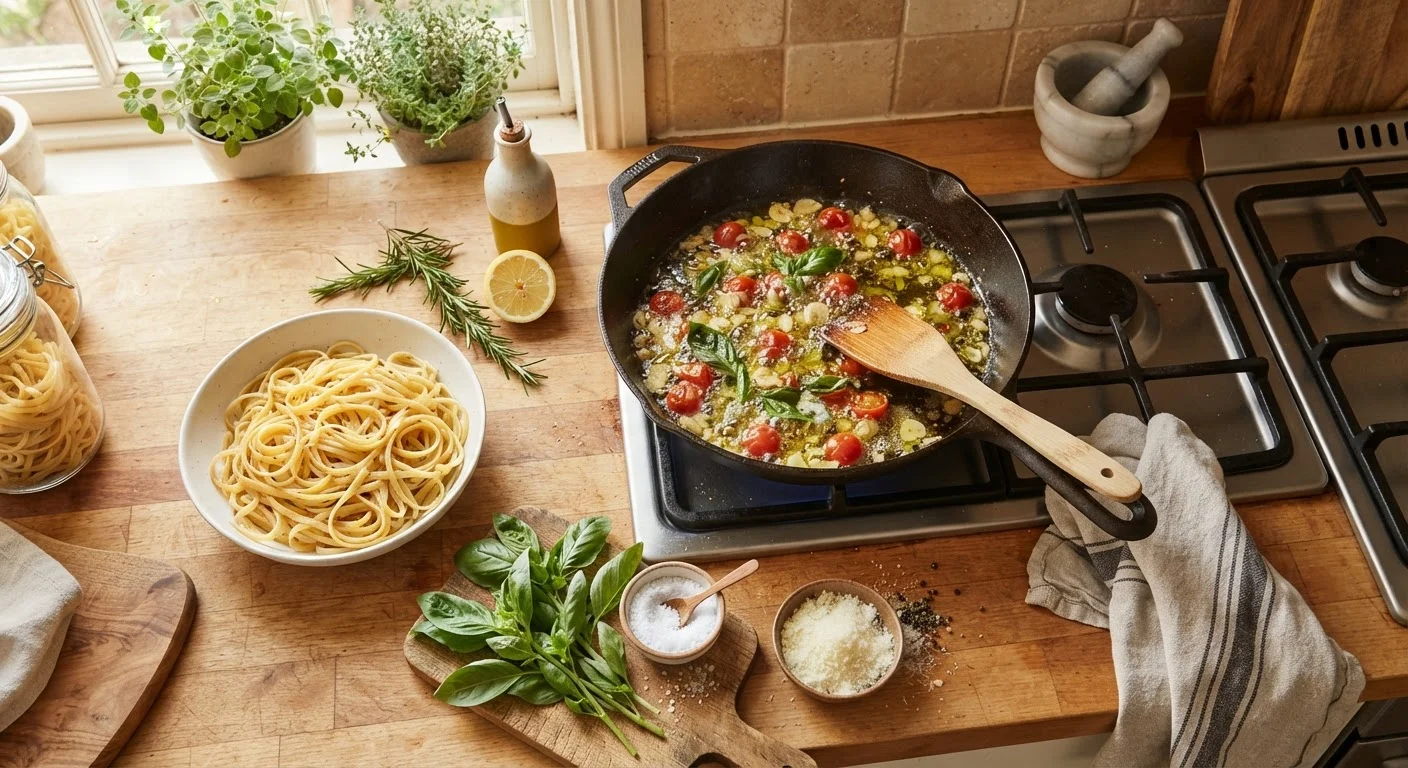
Photo: HorizonMetric.com | One Destination For Everyday Insights editorial
—— In This Article
Key Takeaways
- Searing meat does not seal in juices — it creates flavor through browning reactions.
- Pasta water should be salty but not rinsed off — the starch helps sauce cling.
- A sharp knife is actually safer than a dull one in everyday kitchen use.
- Adding oil to pasta water does not prevent sticking and can harm sauce adhesion.
Why Kitchen Myths Stick Around
Cooking advice gets passed down through generations, shared in recipe comments, and repeated on cooking shows — and not all of it holds up. Some myths started as partial truths that got oversimplified. Others sound so logical that nobody thinks to question them. For new cooks especially, acting on bad information can mean wasted ingredients, frustrating results, and a growing hesitation to experiment.
The good news is that understanding why something works in the kitchen is more useful than memorizing rules. Once you know the real mechanics behind a technique, the myth loses its grip. Below, we break down some of the most persistent cooking misconceptions and replace them with what's actually happening at the stove. You can also find a broader look at food fundamentals in our Food & Drinks Guide.
Myth
Searing meat seals in the juices, keeping it moist.
Fact
Searing does not create a moisture barrier. Meat loses liquid during cooking regardless of whether it is seared first.
The "sealing" idea has been around for well over a century, but food scientists have consistently shown it isn't true. A seared steak loses roughly the same amount of moisture as an unseared one cooked to the same internal temperature. What searing does do is trigger the Maillard reaction — a heat-driven chemical process that produces hundreds of flavor and aroma compounds on the meat's surface. That browned crust is all about flavor and texture, not moisture retention. Sear your proteins for taste, not as a preservation technique.
Myth
Adding oil to pasta water keeps the noodles from sticking together.
Fact
Oil floats on water and has almost no contact with pasta during cooking. It can actually make sauce slide off noodles after draining.
Oil and water don't mix, so the oil simply pools on the surface of the boiling water rather than coating each noodle. After you drain the pasta, any residual oil coats the noodles in a thin, slippery film — which is precisely what you don't want when you're trying to get sauce to cling. The real secret to pasta that doesn't clump is using enough water, stirring frequently in the first couple of minutes of cooking, and moving the drained pasta directly into your sauce before it has time to cool and stick. Save the olive oil for finishing the dish.
Myth
A sharp knife is more dangerous than a dull one.
Fact
Dull knives require more force and are more likely to slip, making them a greater hazard in everyday kitchen use.
This myth likely comes from the intuition that a sharper edge can cause a worse cut. While that's technically true in the event of an accident, the more important factor is control. A sharp blade glides through food with predictable, light pressure. A dull blade skids across surfaces and needs you to push hard — and when it finally catches, the extra force sends it somewhere unintended. Professional kitchens maintain sharp knives precisely because control reduces accidents. Our knife skills guide explains the foundational habits that make cutting both faster and safer.
Myth
You should rinse pasta after draining to stop it from cooking.
Fact
Rinsing washes away surface starch that helps sauce adhere to the noodles. It is only appropriate in specific cold-dish preparations.
The starch on freshly cooked pasta is a feature, not a flaw. It creates a slightly tacky surface that allows tomato sauce, cream sauces, and olive oil preparations to actually grip the noodle rather than pool at the bottom of the bowl. Rinsing removes that starch and simultaneously cools the pasta, which causes the strands to seize up and stick together anyway — the opposite of what you wanted. If you're making a cold pasta salad, rinsing makes sense because you want to halt cooking and cool the noodles quickly. For any hot pasta dish, transfer noodles straight from the pot into your sauce with a splash of the starchy cooking water, which also helps the sauce come together.
Myth
Cooking wine should be low quality because the alcohol 'burns off' any flaws.
Fact
Alcohol does cook off, but flavor compounds — including off-flavors from poor wine — concentrate in the dish as liquid reduces.
When you reduce a liquid, you're driving off water and alcohol while concentrating everything else that was in the glass. A wine that smells sharp, acidic, or musty will make your sauce taste sharp, acidic, or musty. The standard guidance from culinary educators is to cook only with wine you'd be willing to drink — not your finest bottle, but not something unpleasant either. Look for a dry wine that is neither too sweet nor too tannic, and buy it in a format you'll use within a few days. Cooking wine sold in bottles labeled specifically for cooking often contains added salt, which can make seasoning harder to control.
Putting the Facts to Work
Correcting these myths isn't about making cooking more complicated — it's about freeing you from rules that were slowing you down or producing disappointing results. Sear your steak knowing you're building flavor, not sealing anything in. Salt your pasta water generously and skip the rinse. Trust a sharp knife. Let your sauce coat pasta that hasn't been oiled into a slippery mess.
Don't Let Myth-Based Habits Ruin a Dish
Some of these myths cause real cooking failures: rinsed pasta that won't hold sauce, oiled noodles that turn into a slippery pile, or meat rested on no basis. Before trying a new technique, it's worth asking whether the rule came from a recipe developer, a food scientist, or just habit. When in doubt, read your recipe like a cook — understanding the why behind each step makes you far less likely to follow bad advice on autopilot.
Each of these adjustments is small, but together they represent a shift in how you think about the kitchen. Technique grounded in reality is easier to adapt and troubleshoot. If you want to keep building your foundational skills, our guide on knife skills every home cook should build is a practical next step. And since salt plays a role in several of these myths, understanding when and how to salt can sharpen your instincts even further.
Curious whether nutrition myths follow similar patterns? Our common nutrition myths article covers a similar landscape — widely repeated claims that don't hold up under scrutiny.

Food Editorial Team
Food Editorial Team is the collective byline for our editorial team and contributor network. Articles published under this byline or an editorial pen name are researched, written, and reviewed according to our editorial standards for clarity, consistency, and independence before publication.
View author profile