
Hot Sauce Isn't Just Heat: Understanding Flavor, Fermentation, and Pepper Variety
Dive into what actually separates hot sauces — from vinegar-forward Louisiana styles to thick Mexican salsas and fermented Caribbean blends.
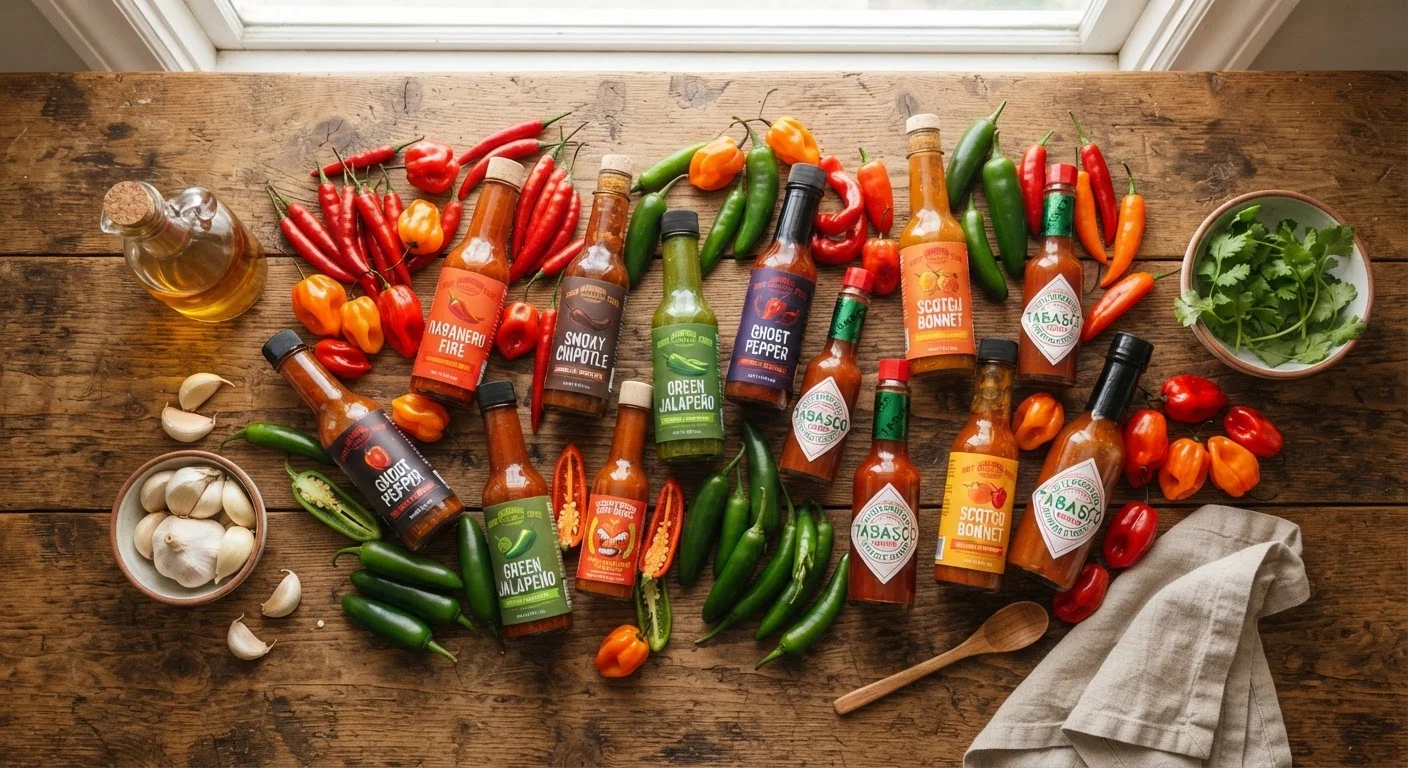
Photo: HorizonMetric.com | One Destination For Everyday Insights editorial
—— In This Article
Key Takeaways
- Pepper variety shapes not just heat level but flavor — fruity, smoky, grassy, or earthy notes all come from the pepper itself.
- Fermentation adds depth and tangy complexity that vinegar alone cannot replicate.
- Louisiana-style, Mexican salsa-style, and Caribbean-style hot sauces follow distinctly different flavor logic.
- Heat level (Scoville rating) is only one of several dimensions that define a hot sauce's character.
- Understanding these differences helps you match the right hot sauce to the right dish.
Why Hot Sauce Is About More Than Heat
Walk down the condiment aisle and you'll find dozens of bottles labeled "hot sauce" — but calling them interchangeable is like calling all wine the same because it contains alcohol. Pepper variety, fermentation method, acid source, and regional culinary tradition all shape what ends up in each bottle in dramatically different ways.
Heat is the one thing every hot sauce shares. But the experience of that heat — whether it arrives fast and sharp at the tip of your tongue or builds slowly at the back of your throat — depends entirely on the pepper variety used. And surrounding that heat is a world of fruity, smoky, tangy, or earthy flavor that gets overshadowed whenever we reduce hot sauce to a simple spice scale.
Understanding these distinctions is genuinely useful in the kitchen. Matching the right hot sauce to a dish — the way you'd choose between a squeeze of lemon and a splash of red wine vinegar — is part of building flavor with confidence.
50,000+
Hot sauce products sold in the U.S. market
Industry analysts tracking specialty food sales have noted consistent growth in the hot sauce and spicy condiment category over the past decade.
2,000,000+
Scoville Heat Units in the hottest cultivated peppers
Peppers like the Carolina Reaper have been measured at over two million SHU, compared to roughly 2,500–8,000 SHU for a typical jalapeño.
3–6 weeks
Typical fermentation time for lacto-fermented hot sauces
Traditional fermentation timelines vary by recipe and climate, but most small-batch producers ferment their pepper mash for at least several weeks before blending.
Pepper Variety: The Foundation of Flavor
Every hot sauce starts with a pepper, and the choice of pepper is the single most important flavor decision. Cayenne peppers — the backbone of classic Louisiana-style sauces — are sharp and direct, with clean heat and minimal fruitiness. Chipotle peppers (dried, smoked jalapeños) bring a deep smokiness that makes them ideal for thick, earthy Mexican-style preparations.
Scotch bonnets and habaneros, central to Caribbean hot sauces, have a distinctly fruity, almost floral character that no amount of seasoning can reproduce from another pepper. Anchos and pasillas provide mild heat with raisin-like sweetness. Pequíns are tiny, intensely hot, and have a sharp, grassy bite.
The Scoville Scale Has Limits
The Scoville Heat Unit scale measures capsaicin concentration, but it doesn't capture the character of heat — whether it's sharp and immediate or slow and lingering. Some chili varieties, like the ghost pepper, deliver a delayed burn that builds minutes after eating. The scale is a useful reference point, but it doesn't tell the whole flavor story.
The same pepper grown in different soils and climates can also taste different — which is part of why regional hot sauce traditions developed the way they did. Peppers are hyperlocal ingredients that carry a sense of place.
Three Distinct Styles Worth Knowing
Louisiana-style: These are the thin, pourable, bright-red sauces most Americans grew up with. They're built on aged cayenne peppers blended with vinegar and salt — the formula is simple, the flavor is tangy and direct. The vinegar does most of the flavor work, which makes these sauces excellent for cutting through rich foods like fried chicken or eggs.
Mexican salsa-style: Thicker, often roasted, and far more varied. These sauces may include tomatoes, tomatillos, garlic, or dried chilies rehydrated and blended together. The flavors are earthy and complex, and the texture coats food rather than drizzling over it. They're closer to a cooked sauce than a condiment.
Caribbean-style: Scotch bonnet or habanero-based, these sauces are intensely fruity and aromatic. Mustard, mango, or papaya frequently appear as supporting ingredients. The heat is substantial and builds with each bite, but the tropical fruitiness is always present underneath.
Fermentation: The Slow Route to Complexity
Some of the most flavorful hot sauces on the market owe their depth not to vinegar but to fermentation. In a fermented hot sauce, peppers are packed with salt and left to ferment — sometimes for weeks — in an environment where naturally occurring bacteria convert sugars into lactic acid. The result is a layered, funky, rounded tang that vinegar can't replicate.
Fermentation is also a preservation method, and it has a long history in pepper-growing cultures around the world. The process softens the pepper's raw sharpness while amplifying its underlying flavor, which is why fermented sauces tend to taste more complex even at lower heat levels.
“Fermentation is one of the oldest food technologies humans have, and when applied to peppers, it does something vinegar simply cannot — it creates flavor compounds that take weeks to develop and taste like nothing else.”
— Harold McGee, Food science writer and author of 'On Food and Cooking'
If you're cooking with hot sauce as an ingredient rather than a finish, understanding how it was made matters. A fermented sauce added to a braise behaves differently from a sharp vinegar-based one. For a broader look at how cooking methods change flavor, see our guide on moist-heat cooking techniques.
Frequently Asked Questions

Food Editorial Team
Food Editorial Team is the collective byline for our editorial team and contributor network. Articles published under this byline or an editorial pen name are researched, written, and reviewed according to our editorial standards for clarity, consistency, and independence before publication.
View author profile