
Street Foods That Became American Staples
Hot dogs, tacos, pretzels, and more — explore how foods from pushcarts and sidewalk stalls became fixtures of everyday American eating.
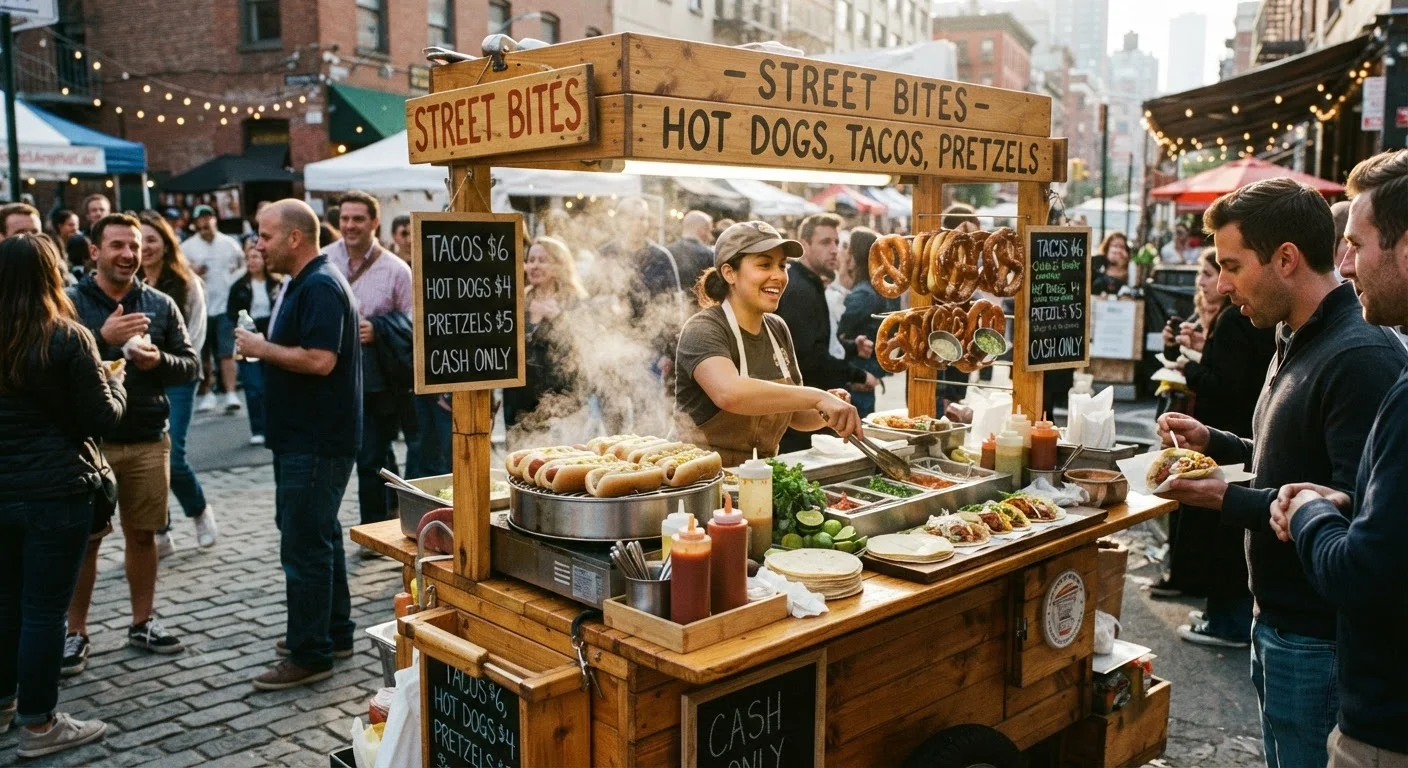
Photo: HorizonMetric.com | One Destination For Everyday Insights editorial
—— In This Article
Key Takeaways
- Many foods now central to American eating were first sold from immigrant-run pushcarts and sidewalk stalls.
- Street foods often entered mainstream culture through urban immigrant communities in the 19th and early 20th centuries.
- Regional adaptations transformed these foods, giving each a distinct American identity over time.
- Understanding the origins of street foods reveals the broader story of immigration and cultural exchange in the U.S.
How the Street Became America's Kitchen
Long before drive-throughs and food courts, American city streets were alive with vendors selling hot, cheap, ready-to-eat food from carts and wooden stalls. These weren't novelties — they were the lunch counter of the working class, the quick meal between shifts, the snack bought with pocket change. For millions of immigrants arriving in the late 1800s and early 1900s, street vending was also a way to make a living while sharing foods from home.
What happened next is one of the quieter stories in American food history: those sidewalk staples crossed over. They showed up at baseball parks, county fairs, lunch counters, and eventually in every grocery store freezer aisle. Foods that began as practical street food became embedded in American culture so completely that few people pause to wonder where they came from. The list below traces that journey for a handful of the most recognizable examples. For a broader look at how regional cultures shaped American eating, see our guide to regional American soups.
Hot Dogs
The hot dog is arguably the most iconic American street food, yet its roots are firmly European. German and Central European immigrants brought sausage-making traditions with them to cities like New York and Chicago in the mid-1800s. Vendors began selling frankfurters from heated carts, tucking them into rolls for easy handling. The format was practical, portable, and cheap — qualities that made it a natural fit for ballparks and boardwalks. By the early 20th century, the hot dog was synonymous with American leisure. Regional variations followed: Chicago's dragged-through-the-garden style, the Coney Island chili dog, and the New York water dog each reflect local identity layered onto a shared foundation.
German immigrant vendors turned the humble frankfurter into America's most recognized handheld meal.
Soft Pretzels
The twisted bread snack has roots in German and Alsatian baking traditions, and Pennsylvania Dutch communities brought pretzel-making to the United States as early as the 18th century. By the 19th century, street vendors in Philadelphia and New York were selling soft pretzels from baskets and carts. Philadelphia developed a particularly strong pretzel culture — the city's soft pretzels are denser and chewier than the versions sold elsewhere, and locals eat them plain, with mustard, or as an accompaniment to a cheesesteak. Today soft pretzels appear in stadiums, airports, and shopping malls nationwide, a direct line from immigrant street food to mass-market snack.
Philadelphia's dense, chewy soft pretzel culture traces directly to German immigrant bakers selling from sidewalk baskets.
Tacos
Tacos have been central to Mexican food culture for centuries, but their presence in the United States deepened significantly after large-scale Mexican migration in the early 20th century. Mexican workers in the Southwest and California brought taco-making with them, and informal street stands served tacos to both immigrant communities and curious locals. From those sidewalk origins, the taco moved steadily into American mainstream consciousness. Today it appears in virtually every region of the country in dozens of interpretations — from the Mission-style burrito's smaller cousin to Korean-Mexican fusion. The taco's journey is a clear example of how street food carries cultural history across borders.
The taco traveled from Mexican street stalls to become one of the most eaten foods across every U.S. region.
Corn on the Cob
Roasted or boiled corn sold from street carts has a long history in the Americas, predating European contact. In the United States, street corn became a fixture at summer fairs and markets throughout the 19th century, especially in the Midwest and South where corn cultivation dominated agriculture. Vendors roasted ears directly over coals and sold them with salt and butter — simple preparation that highlighted fresh, seasonal flavor. Mexican-American elote, corn on the cob dressed with crema, cotija cheese, chili, and lime, has more recently expanded the street corn tradition for a new generation of American eaters, appearing at food trucks and summer markets across the country.
Roasted street corn has roots older than the country itself, still evolving with new cultural influences today.
Knishes
The knish — a baked or fried dough pocket filled with mashed potato, meat, or cheese — arrived with Ashkenazi Jewish immigrants from Eastern Europe, concentrated initially in New York City's Lower East Side. By the early 1900s, knish vendors were a defining feature of the neighborhood's street food landscape. Yonah Schimmel's Knish Bakery, which opened in 1910 on Houston Street, is a documented example of how these street foods transitioned into permanent storefronts. While the knish never achieved the nationwide reach of the hot dog, it remains a recognized New York food institution and an important marker of the Jewish immigrant community's contribution to American food culture.
Eastern European Jewish immigrants built a knish street economy on the Lower East Side that still endures today.
Cotton Candy
Cotton candy's American story begins at the 1897 Tennessee State Fair, where confectioner William Morrison and candy maker John C. Wharton introduced a machine-spun sugar novelty they called "Fairy Floss." It was a sensation. The treat spread quickly through fairs and carnivals, becoming a staple of American outdoor events throughout the 20th century. Unlike most street foods on this list, cotton candy has no direct immigrant origin — it's a home-grown American invention born in the street fair tradition. That said, the carnival and fair circuit that carried it nationwide was itself shaped by immigrant workers and traveling communities, making its story still one of cultural movement and exchange.
Cotton candy is a rare American-invented street fair food, introduced at an 1897 Tennessee state fair.
Still Moving, Still Evolving
Street food has never stopped traveling. Today's food truck scene continues the tradition that pushcart vendors started — introducing unfamiliar flavors, testing what cities are hungry for, and eventually feeding those ideas into the broader American diet. If you want to see this process in real time, food is one of the best reasons to explore America's back roads and regional markets, as our guide to regional food stops on an American road trip makes clear.
The foods below didn't become staples by accident. They traveled with people, adapted to local tastes, and earned their place at the American table one transaction at a time.
Explore Street Food History Locally
Many American cities have neighborhoods or markets where traditional street food traditions remain active. Visiting a local public market, cultural festival, or historic district is a practical way to experience firsthand how immigrant food traditions continue to shape what Americans eat. Look for neighborhood food festivals, ethnic grocery districts, and weekend farmers markets as starting points.

Food Editorial Team
Food Editorial Team is the collective byline for our editorial team and contributor network. Articles published under this byline or an editorial pen name are researched, written, and reviewed according to our editorial standards for clarity, consistency, and independence before publication.
View author profile