
Regional Food Stops That Belong on Any American Road Trip
From green chile in New Mexico to fried catfish in the Delta, regional food is one of the best reasons to drive America's back roads.
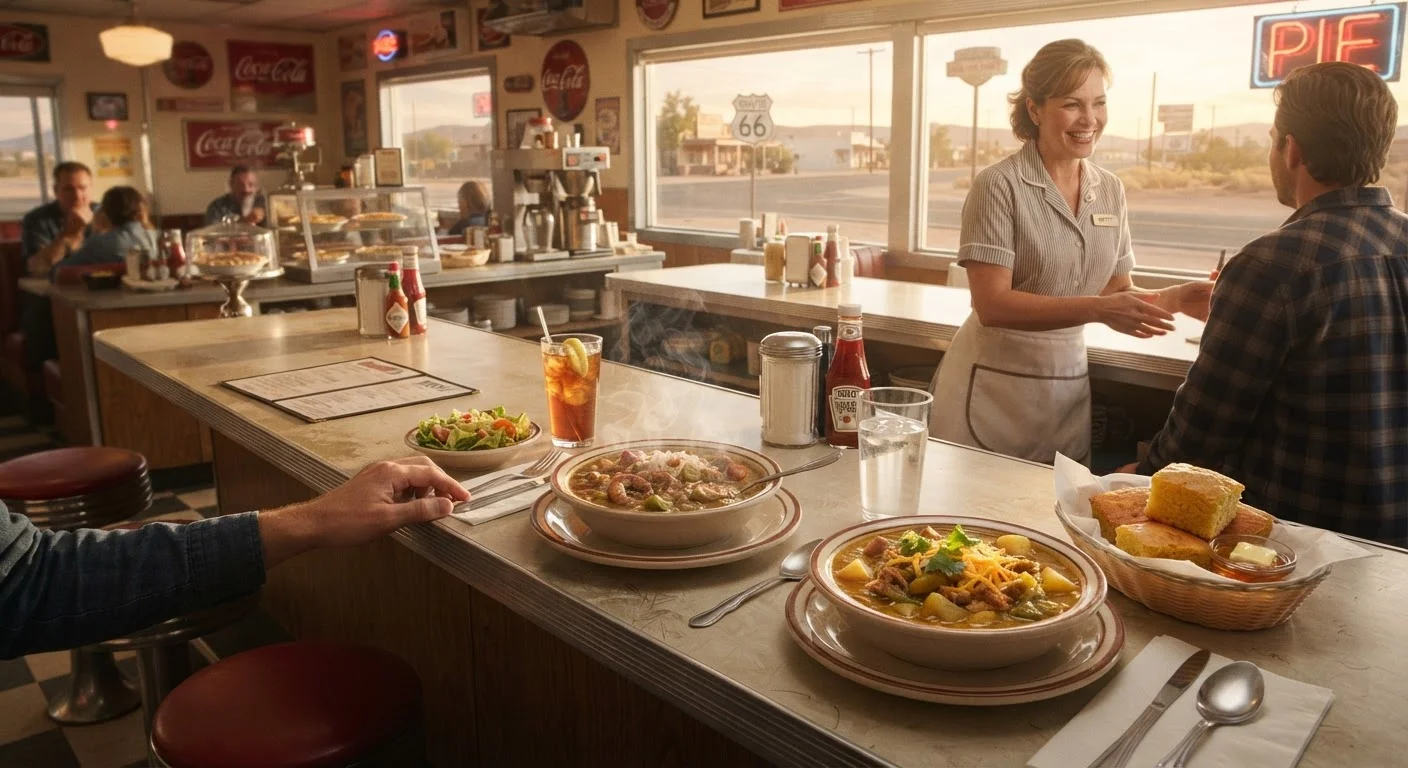
Photo: HorizonMetric.com | One Destination For Everyday Insights editorial
—— In This Article
Key Takeaways
- Regional food is one of the most authentic — and delicious — reasons to plan a road trip route.
- From New Mexico green chile to Mississippi Delta catfish, distinct flavors are tied to specific geography.
- Small towns and roadside stops often deliver more memorable meals than major city restaurants.
- Planning detours around local food culture can transform a drive into a genuine cultural experience.
Why Food Should Shape Your Route
The interstate gets you there. The back road feeds you something worth remembering. Every region of the United States has developed its own edible identity — shaped by immigration, agriculture, Indigenous tradition, and geography — and driving through those regions is one of the most direct ways to taste the difference.
Whether you're plotting a Southwest loop or threading through the Mississippi Delta, the food stops along the way aren't just pit stops. They're the story. Think of them as living history you can order at a counter. The iconic road trip routes of America all pass through distinct culinary corridors — and that's not a coincidence.
Below are seven regional food stops and traditions that genuinely deserve a place on any driving itinerary. None of these require a reservation at a fancy restaurant. Most require only hunger, curiosity, and a willingness to get off the main highway.
New Mexico Green Chile
In New Mexico, the question isn't whether your food comes with chile — it's whether you want red, green, or "Christmas" (both). Hatch green chile, grown in the Hatch Valley of southern New Mexico, has a roasted, earthy intensity that defines the state's cuisine from breakfast burritos to cheeseburgers.
Roadside chile stands along US-25 and NM-1 near Hatch are a natural stop if you're driving through the Southwest. September harvest season brings roasters to parking lots across the state, filling the air with a smell that's genuinely unforgettable. The American Southwest road trip passes directly through this chile country.
New Mexico's green chile is so central to local identity it carries official state question status.
Mississippi Delta Fried Catfish
Drive the flat, hypnotic stretch of US-61 through the Mississippi Delta and you'll find catfish joints that have been frying fish the same way for generations. Cornmeal-crusted, deep-fried, and served with hush puppies and coleslaw, this is the kind of meal that tastes like the landscape around it — unhurried, generous, and deeply local.
The Delta's catfish culture is tied to the region's agricultural history and the rich culinary legacy of Southern Black cooking traditions. Small family-run spots in towns like Greenville and Clarksdale serve plates that carry decades of flavor memory. It's regional food as cultural identity at its most honest.
Delta catfish joints serve plates that taste like generations of Southern cooking tradition.
Gulf Coast Boiled Seafood
From the Florida Panhandle through Louisiana and into coastal Texas, boiled seafood — shrimp, crawfish, blue crab — eaten at picnic tables covered in newspaper is less a meal and more a ritual. Seasoned with Old Bay or Cajun spice blends and piled high on trays, this is communal, hands-on eating at its most joyful.
Small seafood shacks near working docks often offer the freshest catch at the most honest prices. The Gulf Coast's underappreciated food culture is reason enough to route your drive along this stretch rather than the interior.
Gulf Coast boiled seafood eaten at a dockside shack is a road trip experience, not just a meal.
Kansas City Barbecue
Kansas City has legitimate claim to one of America's most argued-over barbecue traditions. Low-and-slow smoked meats — burnt ends, ribs, pulled pork — finished with a thick, molasses-dark sauce distinguish KC 'cue from its Texas, Memphis, and Carolina cousins. The city sits at a natural crossroads for Midwest road trippers, making it an easy and rewarding detour.
Historically, Kansas City's barbecue scene grew out of the stockyards era and the African American community's culinary contributions in the 18th and Vine district. Knowing that history makes the food taste even richer.
Kansas City's burnt ends became legendary through generations of pitmaster craft, not marketing.
Maine Lobster Rolls on the Coast
Drive US-1 through coastal Maine and the lobster shack becomes an institution. A cold lobster roll — chilled lobster meat lightly dressed with mayo, served in a split-top hot dog bun — is the standard, though warm, butter-dressed versions have their devoted fans too. The debate between the two styles is, in Maine, a deeply serious matter.
The best rolls tend to come from unassuming, often cash-only stands near working harbors. Prices vary with the season and market, so don't expect consistency — expect freshness. This coastal food tradition is a natural pairing for anyone comparing coastal vs. interior driving routes.
The best Maine lobster rolls come from roadside shacks near working harbors, not tourist centers.
Appalachian Soup Beans and Cornbread
Slow-cooked pinto beans with a ham hock, served alongside a skillet of cornbread — this is the foundational comfort food of the Appalachian mountains. Humble in ingredients, extraordinary in execution when done well, soup beans represent a cooking tradition shaped by isolation, resourcefulness, and community.
Small diners along the mountain routes of eastern Kentucky, southwestern Virginia, and western North Carolina still serve this dish as a daily special. It's inexpensive, filling, and quietly profound — the kind of meal that makes you understand a place better than any guidebook could.
Appalachian soup beans are proof that the simplest ingredients, cooked with care, tell the deepest stories.
Texas Hill Country Kolaches
Czech and German immigrants who settled the Texas Hill Country in the 19th century left behind a pastry tradition that has become one of the region's most beloved road-trip foods. Kolaches — soft, pillowy pastries filled with fruit, cheese, or savory sausage (the latter technically called klobasnek by purists) — are sold at bakeries and gas stations throughout central Texas.
Driving through towns like West, TX on I-35 is practically incomplete without stopping for a bag of these. They're warm, portable, and a genuine taste of how immigrant foodways became American regional identity — right alongside the street foods that became American staples.
Texas kolaches trace directly to Central European immigrant settlers and have never left the roadside.
Build the Trip Around the Table
Food-focused driving isn't just for enthusiasts — it's one of the most practical ways to pace a long trip. Meals become natural waypoints, small-town stops give you a reason to slow down, and the flavors you bring home in your memory tend to outlast the scenic photos.
Ask Locals Where They Actually Eat
Gas station attendants, motel desk clerks, and hardware store employees will almost always point you to better food than any travel app. Regional gems often have no web presence, inconsistent hours, and a handwritten menu — and that's usually a very good sign. When in doubt, follow the parking lot with the most pickup trucks.
If you're already exploring lesser-known driving corridors, you're already positioned to stumble into some of the country's most authentic regional kitchens. And if you're curious how America's food culture extends beyond the road, the story of American street foods reveals just how deeply rooted these regional traditions really are.
Drive hungry. Eat locally. The American road trip rewards it.

Travel Editorial Team
Travel Editorial Team is the collective byline for our editorial team and contributor network. Articles published under this byline or an editorial pen name are researched, written, and reviewed according to our editorial standards for clarity, consistency, and independence before publication.
View author profile