
Healthy Eating on a Tight Schedule: Strategies for Households With No Spare Time
Practical approaches for getting nutritious meals on the table when time, energy, and mental bandwidth are all running low.
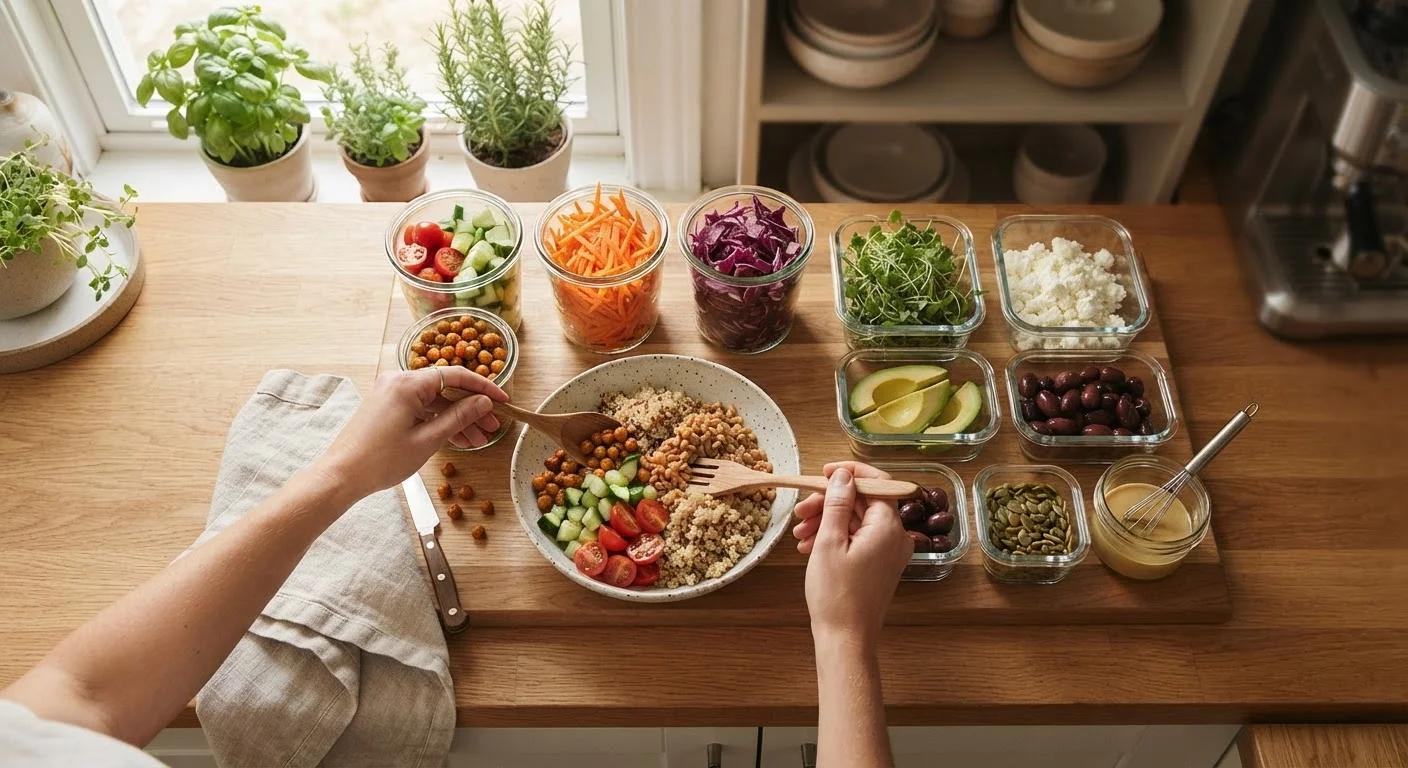
Photo: HorizonMetric.com | One Destination For Everyday Insights editorial
—— In This Article
Key Takeaways
- Batch cooking once or twice a week dramatically reduces daily decision fatigue around meals.
- Keeping a stocked pantry of versatile staples makes nutritious eating faster than ordering out.
- Simple meal frameworks — not rigid recipes — are the most sustainable approach for busy households.
- Frozen vegetables and canned legumes are nutritionally comparable to fresh and save significant prep time.
- Lowering the standard for 'cooking' to include assembling, reheating, and combining is a practical mindset shift.
Why Healthy Eating Breaks Down for Busy Households
For most families, the obstacle to nutritious eating isn't knowledge — it's time, energy, and the mental load of planning. By Tuesday evening, the carefully packed lunch and the Monday dinner ambition have already given way to drive-throughs and cereal. That pattern is extremely common, and it doesn't reflect a lack of motivation.
The strategies below aren't about cooking elaborate meals or following a rigid plan. They're about reducing the number of daily decisions your household has to make, building flexibility into your kitchen setup, and redefining what a healthy meal actually looks like on a Tuesday at 6 p.m. A well-stocked pantry is a strong foundation — see our household pantry audit guide for a practical starting checklist.
Cook once, eat three times
Batch cooking doesn't require a full Sunday afternoon. Roasting a sheet pan of vegetables, cooking a large pot of grains, and preparing a protein source — all at the same time — gives you building blocks for three or four dinners and several lunches. The key is cooking components, not complete dishes, so they stay flexible throughout the week.
A pot of brown rice can become a grain bowl Monday, a stir-fry base Wednesday, and a filling for burritos Friday. Roasted sweet potatoes work in salads, tacos, and alongside eggs. This approach trades one 45-minute session for near-zero effort the rest of the week.
Cooking components rather than complete dishes keeps your options open all week.
Keep frozen and canned staples stocked at all times
Frozen vegetables are harvested and frozen quickly, which preserves most of their nutritional value — they are nutritionally comparable to fresh produce by most measures. Canned legumes like chickpeas, black beans, and lentils require no soaking and cook in under five minutes. Together, these items form the backbone of dozens of fast meals.
A reliable shortlist might include: frozen edamame, peas, corn, and spinach; canned tomatoes, beans, and fish; dried pasta and quick-cooking grains like couscous or farro. With these on hand, a nutritious dinner is always 15 minutes away regardless of what the week has thrown at you.
Frozen and canned staples make a nutritious dinner achievable in 15 minutes or less.
Use meal frameworks instead of recipes
Following a recipe requires ingredients to be exact and steps to be followed in order. Meal frameworks are more forgiving: grain + protein + vegetable + sauce is a bowl. Tortilla + filling + toppings is a taco. Broth + aromatics + whatever's in the fridge is a soup. These templates let you use what you have rather than shopping for what a recipe requires.
Once a household internalizes two or three frameworks, the number of viable meals multiplies dramatically. This also reduces the cognitive overhead of deciding what to cook — a genuine source of exhaustion for busy adults.
Meal frameworks let you cook well with whatever's on hand, no recipe required.
Do the smallest useful prep when energy is available
Full batch cooking sessions aren't always realistic. But five minutes of low-effort prep during a calm moment — washing salad greens, dicing an onion, hard-boiling a few eggs — pays dividends later when energy is depleted. The goal isn't a perfectly prepped fridge; it's removing one or two friction points that typically cause a healthy choice to lose to an easy one.
Even putting a pot of water on to boil before you change out of work clothes counts. Small acts of preparation, done consistently, have an outsized effect on weeknight outcomes.
Five minutes of prep during a calm moment beats zero prep during a rushed one.
Expand your definition of a 'real' meal
Many households skip nutritious eating because what they picture as a proper dinner — a protein, two sides, something from scratch — doesn't fit into a 20-minute window. Reframing what counts as dinner removes a lot of unnecessary pressure. A plate of hummus, sliced vegetables, whole-grain crackers, and hard-boiled eggs is a legitimate, balanced meal. So is a bowl of Greek yogurt with fruit and nuts.
Assembly is cooking. Reheating is cooking. Combining real foods into a nourishing plate is cooking, regardless of whether a burner was involved. Letting go of the idea that effort determines nutritional value frees households to make better choices consistently.
Assembly and reheating are legitimate cooking strategies, not shortcuts to feel guilty about.
Plan for failure, not just success
Most meal planning advice assumes things will go according to plan. A more durable approach builds in a backup. Designating one or two "emergency meals" — items that are always on hand and require minimal effort — means a derailed evening doesn't automatically become fast food. Scrambled eggs with toast, pasta with canned tomatoes and beans, or a simple grain bowl all qualify.
Knowing these options exist reduces the decision fatigue that often leads to the most nutritionally poor choices. The goal isn't perfection; it's having a reasonable answer ready when the plan falls apart.
Designating two reliable emergency meals removes the fast-food default when plans fall apart.
Building a Realistic System That Sticks
The households that consistently eat well on tight schedules tend to share one trait: they rely on systems, not willpower. That means deciding in advance what categories of food are always on hand, defaulting to a small rotation of reliable meal frameworks, and accepting that some meals will be imperfect — and that's fine.
Lower the bar to raise consistency
Nutritional quality over a week matters far more than perfection on any single night. A household that assembles quick, reasonable meals five evenings a week will generally outperform one that cooks elaborate healthy meals twice and defaults to takeout the rest. Consistency beats ambition when time is the real constraint.
Even modest changes accumulate meaningful nutritional benefits over time. If you're curious about common shortfalls that develop even in health-conscious households, our piece on nutritional gaps in otherwise healthy diets is worth a read. And if you want to nudge more vegetables onto the plate without overhauling everything, eating more plants without overhauling your diet offers low-friction ways to start.
This article is for general informational purposes only and is not a substitute for advice from a registered dietitian or qualified healthcare professional.

Food Editorial Team
Food Editorial Team is the collective byline for our editorial team and contributor network. Articles published under this byline or an editorial pen name are researched, written, and reviewed according to our editorial standards for clarity, consistency, and independence before publication.
View author profile