
Eating More Plants Without Overhauling Your Entire Diet
Practical ways to shift toward a more plant-forward plate without abandoning foods you already enjoy.
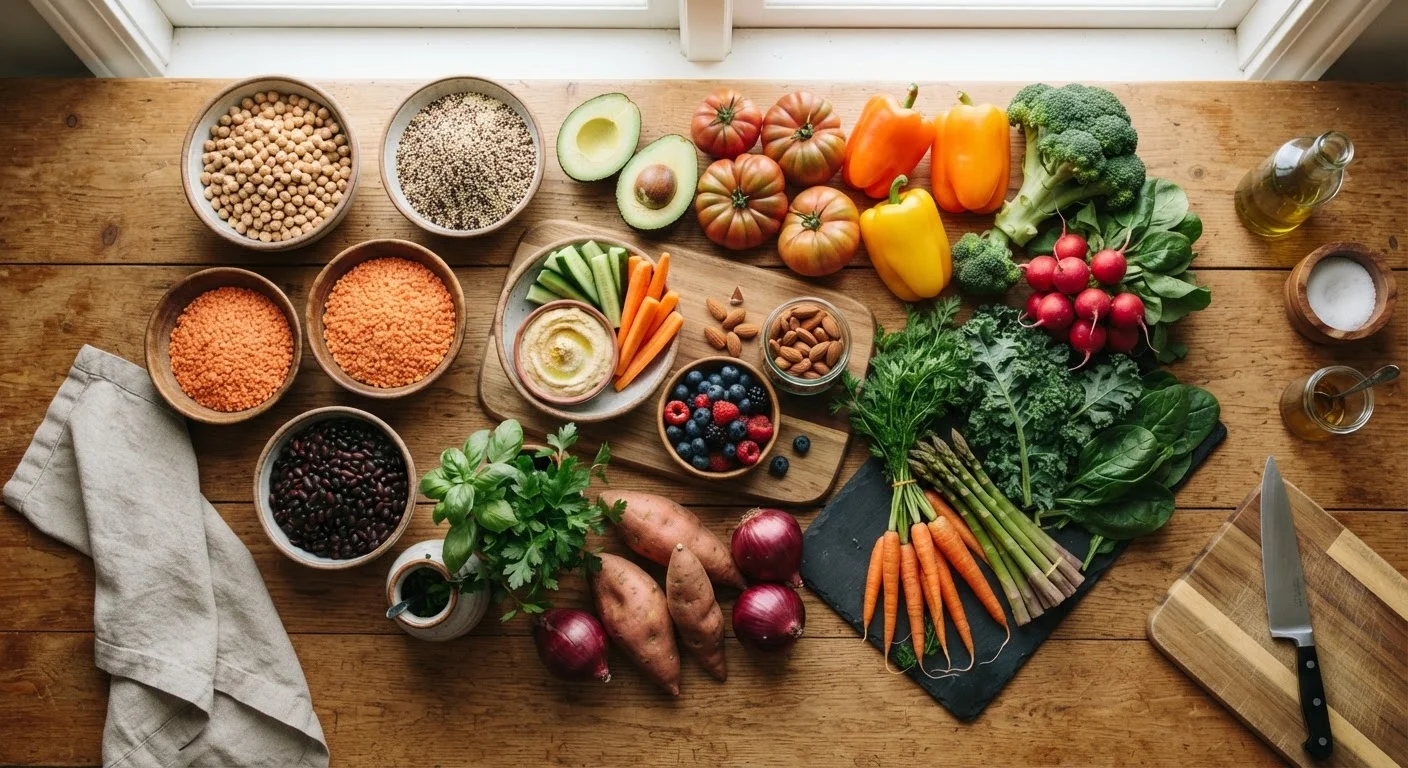
Photo: HorizonMetric.com | One Destination For Everyday Insights editorial
—— In This Article
Key Takeaways
- Adding plants to existing meals is more sustainable than replacing everything you eat.
- Small, consistent swaps — like stirring beans into soups — reliably increase plant intake over time.
- Most Americans fall well short of daily fiber and vegetable targets without realizing it.
- Plant proteins like lentils and edamame integrate easily into familiar American dinners.
- You don't need to adopt a vegetarian or vegan label to benefit from eating more plants.
Why 'More Plants' Doesn't Mean All-or-Nothing
Decades of nutrition research link higher plant food consumption — vegetables, fruits, legumes, whole grains, nuts, and seeds — to reduced risk of cardiovascular disease, type 2 diabetes, and certain cancers. Yet the practical question for most Americans isn't whether plants are beneficial; it's how to actually eat more of them without throwing out every habit their household depends on.
The answer isn't a dietary identity. You don't need to call yourself vegetarian, vegan, or anything else. A plant-forward approach simply means plants take up more of your plate more often — while meat, dairy, and other foods you enjoy remain available. This framing matters because behavioral science suggests that flexible, additive goals are far more durable than rigid restriction.
Canned or dried legumes (beans, lentils, chickpeas)
Provide quick, affordable plant protein and fiber that blend into soups, stews, and grain bowls.
Frozen vegetables
Offer a convenient, nutrient-preserved way to add vegetables to any meal without prep time.
Whole grains (oats, brown rice, farro, quinoa)
Replace refined grains to increase fiber, B vitamins, and overall nutrient density.
Nut butters and seeds (chia, flax, hemp, sunflower)
Add plant protein, healthy fats, and micronutrients with minimal effort.
Nutritional needs also vary by age and life stage. If you're adjusting how you eat, it's worth considering how those needs shift over time — see how nutrition changes across every decade of adult life for useful context.
This Is General Nutrition Information
The guidance in this article is for educational purposes and is not a substitute for personalized medical or dietary advice. If you have a chronic health condition, food allergy, or specific nutritional concern, consult a registered dietitian or your healthcare provider before making significant dietary changes.
How to Start Adding More Plants Step by Step
What you will need
Audit what you already eat
Before changing anything, spend a few days noticing where plants already appear in your meals — and where they don't. Identify two or three recurring dishes (a weekly pasta, a weekend stew, a weekday lunch salad) that could absorb more vegetables or legumes without tasting different to your household.
Add before you subtract
Rather than eliminating foods you enjoy, focus first on adding plants alongside them. Stir a handful of spinach into scrambled eggs. Add a can of white beans to your next pot of chicken soup. Toss frozen peas into pasta the last two minutes of cooking. These additions require no recipe overhaul and contribute meaningful fiber and micronutrients. Research consistently shows that an additive approach is more sustainable than restriction for long-term habit change.
Swap one protein serving per week for a plant source
You don't need to abandon meat to benefit from plant proteins. Start by replacing one weekly protein with lentils, black beans, edamame, or tofu. Lentil tacos, black bean chili, and edamame stir-fry all map onto familiar American meal formats. See plant proteins that work for meat-eating households for specific ideas that fit conventional American dinners.
Upgrade your snacks and breakfast first
Breakfast and snacks are the lowest-friction places to increase plant intake because they carry fewer household taste preferences. Add chia seeds or berries to oatmeal. Choose whole-grain toast with nut butter over a pastry. Snack on hummus with raw vegetables rather than crackers alone. These shifts can meaningfully raise your daily fiber intake — an area where most Americans fall significantly short.
Build a rotating set of plant-forward meals you actually like
Sustainability depends on enjoying what you eat. Identify three or four plant-forward meals that your household genuinely likes and add them to your regular rotation. A structured weeknight dinner rotation prevents decision fatigue and makes it easier to shop consistently. Having anchors — meals you return to without thinking — is how plant-rich eating becomes a baseline rather than a project.
Check for nutrient gaps over time
As plant foods increase in your diet, it's worth knowing which nutrients deserve attention. Vitamin B12, iron, zinc, calcium, and omega-3 fatty acids can be less abundant or less bioavailable in plant-heavy eating patterns. Nutrient gaps often go unnoticed even in well-intentioned diets. A registered dietitian can help you assess whether your current intake is meeting your individual needs.
Rapid Diet Changes Can Cause Digestive Discomfort
Dramatically increasing fiber and legume intake in a short period can cause bloating and gas. Introduce new plant foods gradually — adding one or two per week — and drink plenty of water to help your digestive system adjust comfortably.
Stock the Pantry, Lower the Barrier
Keeping canned beans, frozen vegetables, and pre-cooked grains on hand means plant-forward additions take seconds rather than extra meal-planning. Research on food environment consistently shows that what's visible and accessible is what gets eaten most.
If time is a recurring barrier, a practical guide to healthy eating on a tight schedule covers strategies specifically designed for households juggling limited time and energy. Plant-forward eating is most sustainable when it fits inside the life you already have, not an idealized version of it.
For a broader look at how plant and animal proteins compare on protein quality and everyday practicality, see protein sources across every type of diet.
This article is for general informational and educational purposes only and does not constitute medical or dietary advice. Consult a qualified healthcare professional or registered dietitian for guidance tailored to your individual health needs.

Health Editorial Team
Health Editorial Team is the collective byline for our editorial team and contributor network. Articles published under this byline or an editorial pen name are researched, written, and reviewed according to our editorial standards for clarity, consistency, and independence before publication.
View author profile