
Common Storage Terms Explained: Zones, Decanting, Categorizing, and More
A plain-language glossary of home organization terms you'll encounter in articles, videos, and advice — from 'zoning' to 'decanting.'
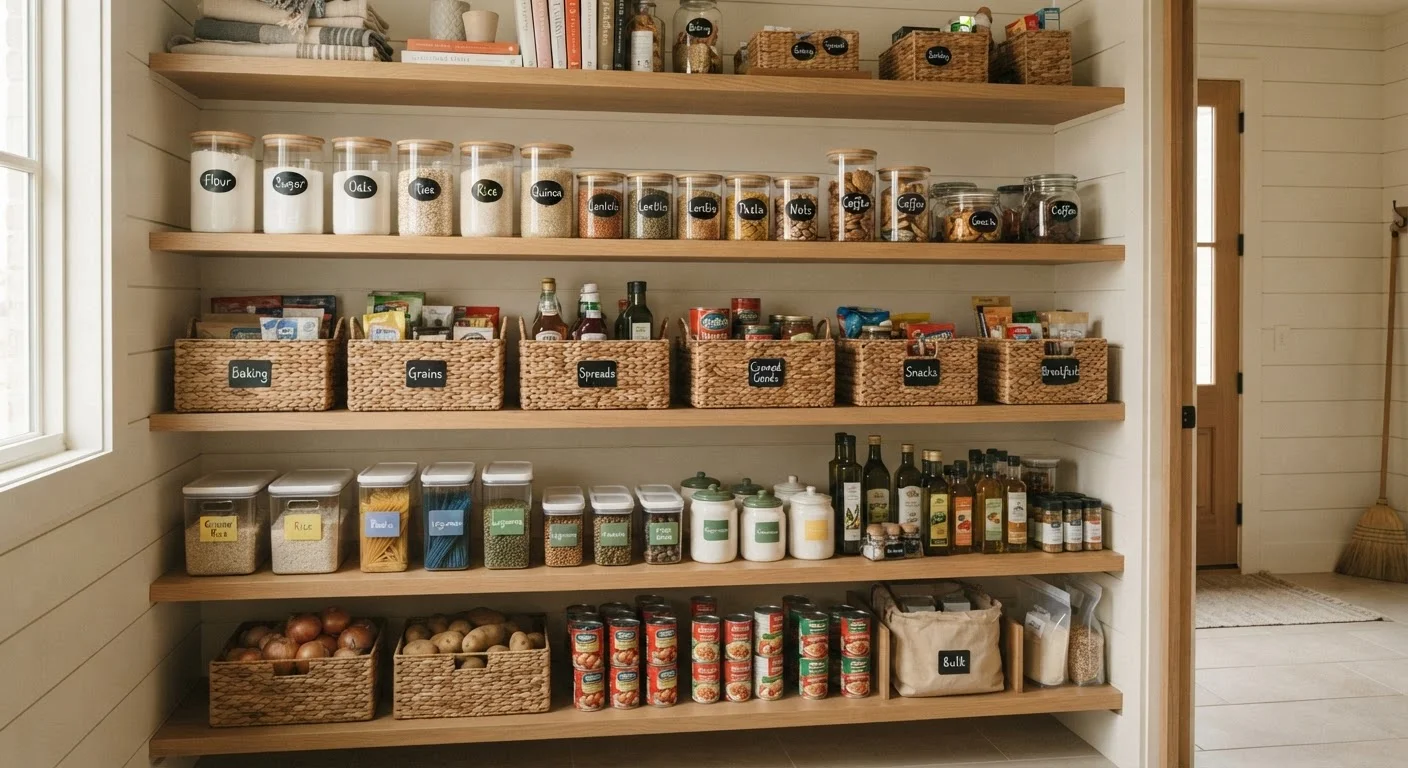
Photo: HorizonMetric.com | One Destination For Everyday Insights editorial
—— In This Article
Why Organization Has Its Own Vocabulary
If you've watched a home organization video or read a tidying guide recently, you've probably come across terms like decanting, zoning, or prime real estate used as if everyone already knows what they mean. They aren't complicated concepts — but without a quick orientation, the jargon can make organizing feel more intimidating than it needs to be.
This glossary explains the terms you're most likely to encounter, so you can follow any advice confidently and decide which approaches actually fit your space and lifestyle. If you're brand new to home organization altogether, our introduction to home organization is a good place to start alongside this reference.
| Most common starting point | Purging before organizing |
| Key pantry technique | Decanting into uniform containers |
| Core organizing principle | Like with Like |
| Best spot for everyday items | Prime real estate (eye level, easy reach) |
| Maintenance habit to prevent re-clutter | One-In, One-Out Rule |
The Core Terms, Defined
The following terms appear repeatedly in organizing articles, videos, and advice. You don't need to apply all of them — but knowing what they mean lets you evaluate which strategies make sense for your home.
Zone
A dedicated area in a room assigned to a specific activity or category of items. For example, a 'homework zone' in a bedroom keeps school supplies together and separate from toys or clothing.
Decanting
The practice of transferring items from their original packaging into uniform, often clear, containers. Common in pantries, where pasta, cereal, or rice are moved into matching jars for easier access and a tidier appearance.
Categorizing
Grouping items by shared type, purpose, or use so they are stored together. Categories might be broad (all cleaning supplies) or narrow (all bathroom cleaning supplies vs. all kitchen cleaning supplies).
Purging
The process of removing items you no longer need, use, or want before organizing what remains. Purging first prevents you from neatly organizing clutter.
Like with Like
A core organizing principle meaning similar items should be stored together. All batteries in one drawer, all medications in one cabinet — this reduces searching and prevents duplicate purchases.
Vertical Storage
Using wall height, stackable bins, and shelving above eye level to store items, rather than relying only on floor or surface space. Especially useful in small homes or tight closets.
Containerizing
Placing grouped items into a bin, basket, box, or other vessel to keep them contained as a unit. Containerizing makes it easy to grab an entire category at once and prevents items from spreading.
Dead Zone
Storage space that is rarely or never accessed due to poor placement — such as high shelves, deep cabinet corners, or awkward undersink areas. Identifying dead zones helps you decide what to store there (rarely used items) or how to improve access.
One-In, One-Out Rule
A maintenance habit where every new item brought into the home displaces one existing item. It prevents gradual accumulation and keeps storage from exceeding its capacity over time.
Editing
In organization contexts, editing means reviewing a collection of items and deciding what to keep, donate, relocate, or discard. It is similar to purging but often more selective and routine.
Prime Real Estate
The most accessible storage locations — at eye level or within easy arm's reach. Items you use most frequently should occupy prime real estate; rarely used items should not.
Overflow Storage
Secondary storage space — such as a garage shelf, hall closet, or under-bed area — used to hold backup or bulk quantities of items that do not fit in the main storage area.
For smaller homes where space is especially limited, concepts like vertical storage, dead zones, and overflow storage become particularly important. See our guide on making the most of vertical and underbed storage for practical applications of these ideas.
How These Concepts Work Together
Most organizing projects follow a natural order, even if the steps aren't labeled out loud. You typically begin with purging or editing — removing what you don't need. Then you categorize what remains and identify your zones. Next, you containerize categories so they stay together, and place the most-used items in prime real estate. Finally, you establish a maintenance habit like the one-in, one-out rule so the system holds over time.
Decanting is optional but popular — it works especially well in pantries and bathrooms where uniform containers help you see quantities at a glance. It's not a requirement for an organized home; it's a tool that suits certain spaces and preferences.
You Don't Need Every System at Once
Organization vocabulary can make methods sound more rigid or complex than they need to be. Most households use a loose mix of these concepts without following any single framework. Start with one or two terms that feel relevant to your current frustration and build from there. A perfectly labeled, decanted pantry is not the goal — a home that works for your daily life is.
Understanding these terms also helps when evaluating storage products or reading organizing advice — you can assess whether a suggested method suits your actual habits rather than following a system that looks good in photos but doesn't hold up in daily use.

Home Editorial Team
Home Editorial Team is the collective byline for our editorial team and contributor network. Articles published under this byline or an editorial pen name are researched, written, and reviewed according to our editorial standards for clarity, consistency, and independence before publication.
View author profile