
Starting From Zero: A Practical Introduction to Home Organization
Never organized your home before? This beginner-friendly guide walks you through the core principles and where to start without feeling lost.
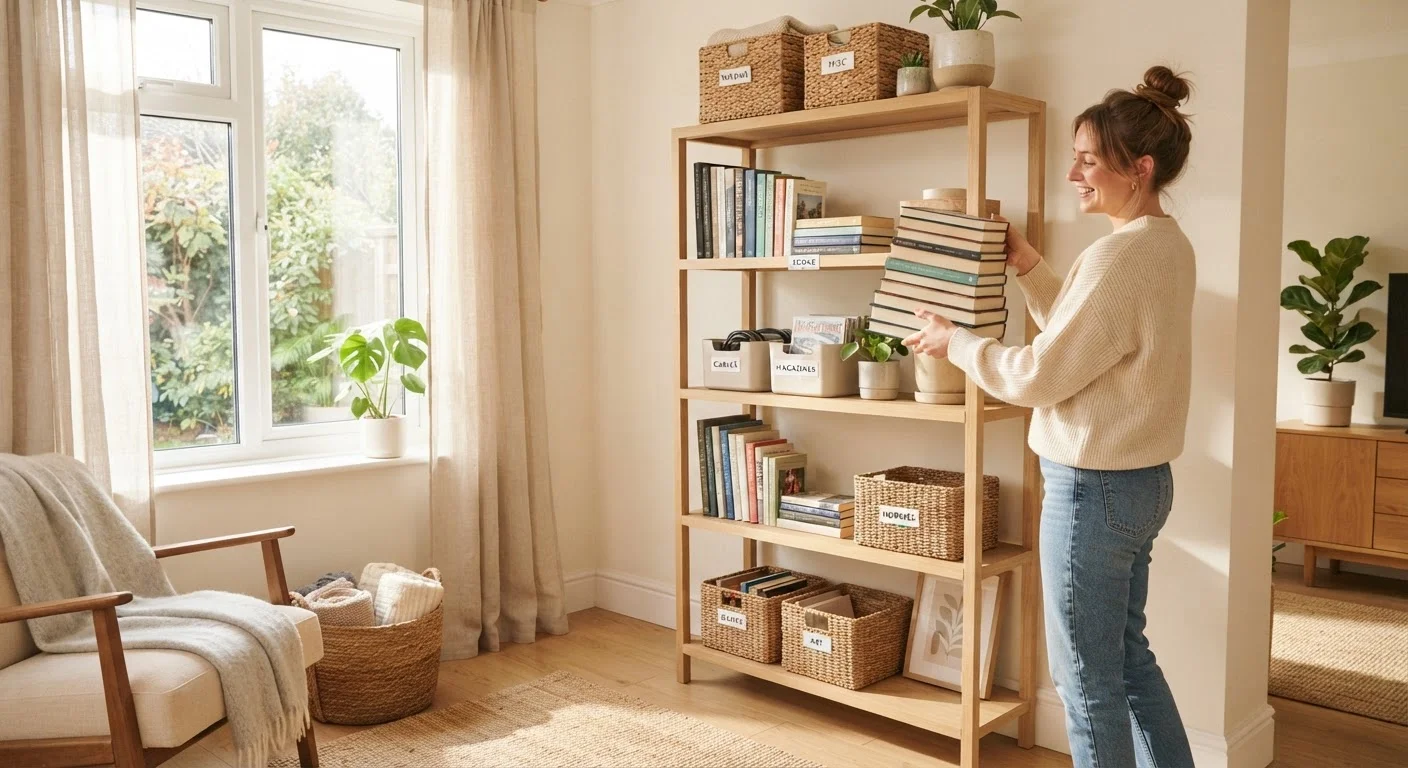
Photo: HorizonMetric.com | One Destination For Everyday Insights editorial
—— In This Article
Key Takeaways
- Organization is about making your home functional for your life, not achieving a magazine-perfect look.
- Decluttering before buying storage prevents wasted money and cluttered shelves.
- Starting with one small, manageable area builds momentum and confidence.
- Consistent daily habits maintain organization far better than occasional deep-clean sessions.
- There is no single right system — the best one is the one you can actually maintain.
What Home Organization Actually Means
Home organization is simply the practice of arranging your belongings so they are easy to find, easy to put away, and suited to how you actually live. It is not about achieving a spotless, aesthetically perfect space. It is about reducing daily friction — the scramble for your keys, the overflowing junk drawer, the closet you have to wrestle open.
If you are unfamiliar with terms like zoning, decanting, or categorizing, the plain-language glossary of storage terms is a helpful companion to this article. Understanding the vocabulary makes the process less intimidating.
Decluttering
The process of deliberately deciding which items to keep and which to remove from your home before organizing what remains.
Zone
A defined area of your home designated for a specific activity or category of items, such as a cooking zone in the kitchen or a reading zone in the living room.
Designated home
The specific, consistent spot where a particular item is always stored so it can be found and returned easily.
Decanting
Transferring items from their original packaging into uniform containers, usually to save space and make contents easier to see and access.
One-in, one-out rule
A habit of removing one comparable item from your home whenever a new item of the same type comes in, keeping overall volume stable.
The Core Principles Every Beginner Should Know
Before touching a single shelf, it helps to understand a few guiding ideas that experienced organizers return to again and again.
- Declutter before you organize. No storage system can fix too much stuff. Deciding what to keep, donate, or discard is the essential first step.
- Give everything a home. Items without a designated place drift back to surfaces and floors. Every item you keep needs a specific, logical location.
- Store things where you use them. Dish towels belong near the sink, not across the kitchen. Proximity reduces the effort of putting things away, which means you actually will.
- Make it easy to return things, not just to find them. A system that takes ten seconds to use and thirty seconds to restore will not survive daily life. Simplicity is the priority.
These principles apply whether you are tidying a studio apartment or a four-bedroom house. For a room-by-room application of these ideas, see the complete room-by-room organization walkthrough.
Take a Photo Before You Start
Snap a quick photo of any space before you organize it. Comparing the before and after is motivating and helps you assess what actually changed. It also gives you a reference point if you want to reorganize the area later with a different approach.
Where to Start When Everything Feels Overwhelming
The biggest barrier for most beginners is knowing where to begin. The answer: start small and finish completely. Choose one drawer, one cabinet, or one countertop. Empty it entirely, wipe it down, sort what belongs back inside, and return only what earns its place. Then stop. That finished space is proof you can do this.
A practical first-session sequence:
- Choose your starting zone — ideally somewhere you use daily, like a kitchen counter or bathroom cabinet.
- Empty everything out onto a flat surface.
- Sort into keep, donate/sell, and discard piles.
- Clean the empty space.
- Return only the keep items, grouped logically.
- Note any storage gaps before shopping for solutions.
Resist the urge to tackle multiple rooms in one day. Focused, completed sessions build the momentum that keeps you going.
Building Habits That Stick
One-time organizing sessions fade without supporting habits. The goal is to make tidiness the path of least resistance in your daily routine.
Three habits that make the biggest difference:
- The daily reset. Spend five to ten minutes each evening returning items to their homes. This prevents small messes from compounding into overwhelming clutter.
- One in, one out. When something new enters your home, something comparable leaves. This keeps volume stable over time without requiring periodic purges.
- The weekly walk-through. A brief scan of each room once a week catches drift early — before it becomes a project.
Consistency matters far more than perfection. A system that is maintained imperfectly every day is more effective than a perfect system you abandon by Tuesday.
Your System Should Fit Your Life
There is no universal organization method that works for every household. Factors like the number of people in your home, your work schedule, and how you naturally tend to move through spaces all affect which systems will hold up over time. Treat any method you try as a starting point, not a final answer, and adjust it as you learn what works for you.
Common Mistakes to Avoid
Many beginners get tripped up by the same handful of missteps. Knowing them in advance saves time and money.
- Buying storage before decluttering. Containers bought before you know what you are keeping often do not fit, do not suit your needs, and add to the clutter they were meant to solve.
- Organizing for someone else's lifestyle. A system copied from a social media video will fail if it does not match how you actually move through your home. Adapt ideas; do not adopt them wholesale.
- Setting unrealistic timelines. Expecting to organize your entire home in a weekend frequently leads to burnout and half-finished spaces that are harder to maintain than what you started with.
- Ignoring maintenance. Organization is not a one-time event. Without daily habits, even the most thoughtfully designed system will gradually revert to chaos.
If you are also building other positive routines in your life, you may find that the discipline of starting a holistic wellness routine or building a savings habit reinforces the same consistency skills that make home organization stick.
Avoid Over-Investing in Products Early
It can be tempting to spend on matching bins, labels, and shelving before you have established a working system. Storage products bought at the beginning of the process are frequently the wrong size or style once you actually see what you need. Organize first with what you have, then shop intentionally for specific gaps.
Frequently Asked Questions

Home Editorial Team
Home Editorial Team is the collective byline for our editorial team and contributor network. Articles published under this byline or an editorial pen name are researched, written, and reviewed according to our editorial standards for clarity, consistency, and independence before publication.
View author profile