
Room-by-Room Organization: A Complete Walkthrough for Every Home
From kitchen to bedroom, this end-to-end guide covers realistic, effective strategies for organizing every room in your home.
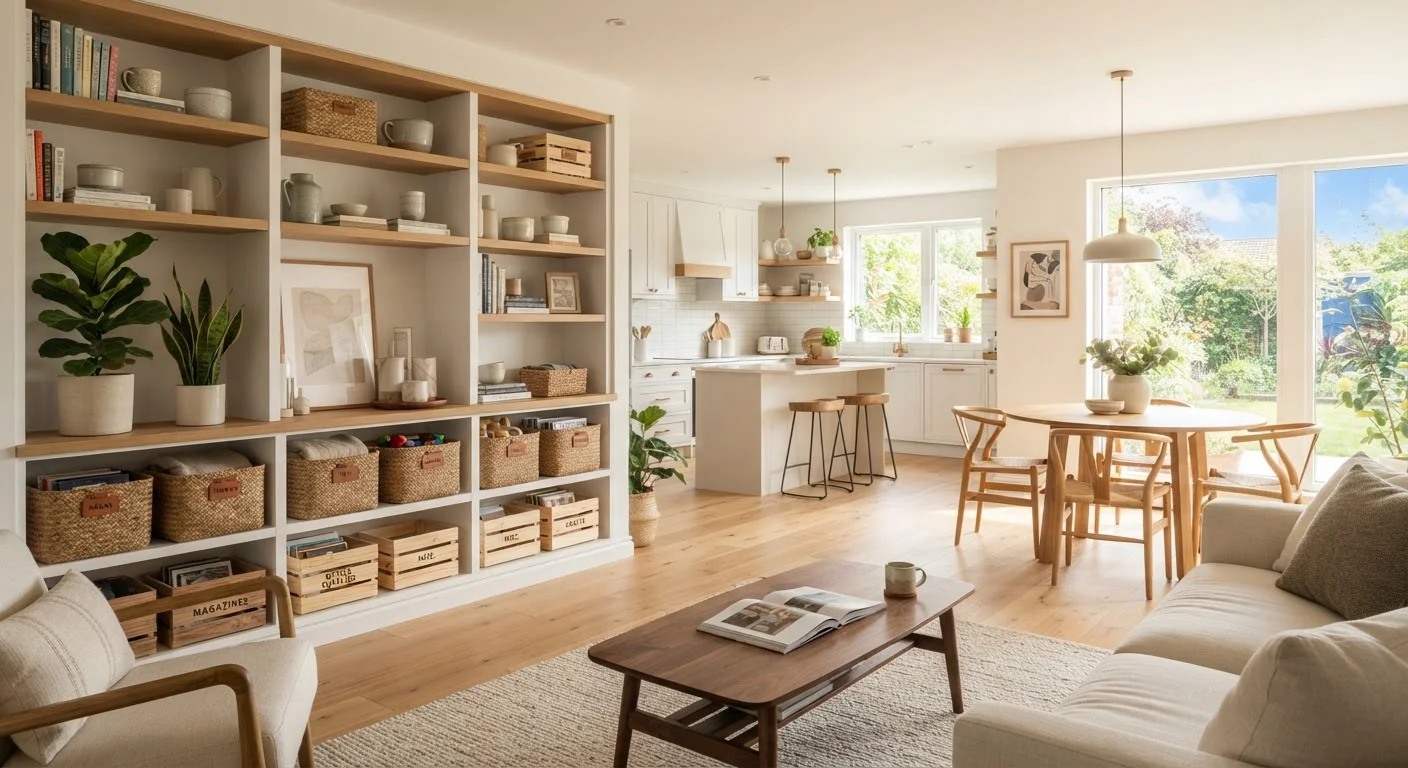
Photo: HorizonMetric.com | One Destination For Everyday Insights editorial
—— In This Article
Key Takeaways
- Start with the room that causes the most daily friction, not the easiest one.
- Assign every item a fixed home — unclear ownership is the root cause of clutter.
- Use zones to organize by activity, not just by category.
- Maintenance habits matter more than the initial organizing session.
- Involve all household members so the system works for real life, not just one person.
Where to Begin: The Right Mindset
Before touching a single drawer, it helps to understand what makes organization stick. Most efforts stall not because of a lack of storage products, but because the system doesn't match how the household actually lives. A well-organized home reflects your real routines — not an idealized version of them.
If you're new to this process, the beginner's guide to home organization walks through the core principles before you dive room-by-room. The key question to ask in every space: What happens here daily, and does the layout support it?
Start With the Highest-Friction Room
Choose the space that creates the most daily stress or wasted time — often the kitchen or entryway. Solving friction there first builds momentum and shows tangible results quickly. Avoid starting with sentimental areas like attics or childhood keepsakes, which slow progress and drain energy.
Tackle one room fully before moving to the next. Partial progress in multiple rooms creates visual chaos that quickly kills motivation.
Kitchen: Function First
The kitchen is the highest-traffic room in most homes, which makes disorganization here especially disruptive. The goal is to reduce the steps between intention and action.
- Zone by task: Group prep tools near the cutting board, coffee supplies near the coffeemaker, and baking items together in one cabinet or drawer.
- Clear the counters: Keep only what's used daily on the surface. Everything else earns cabinet space.
- Audit the pantry: Pull everything out, check dates, and return only what's actually used. Organize by category — grains, canned goods, snacks — and place frequently used items at eye level.
- Drawer dividers: A simple, inexpensive addition that prevents the utensil jumble that wastes time every morning.
When organizing kitchen cabinets, store items based on where you use them — not where they fit. A pan stored near the stove will always get put back; one stored across the kitchen won't.
Proximity to point of use is the single strongest predictor of whether a storage system actually gets maintained over time.
Label every bin, basket, and shelf — even in a single-person household. Labels remove the mental decision about where something belongs, which is what makes systems sustainable.
Decision fatigue is a real barrier to maintaining organization. Clear labels eliminate the micro-decisions that gradually erode a system.
Living Room: Calm in the Common Space
The living room collects items from everyone in the household, which means organization here requires shared buy-in. Focus on containing, not eliminating.
- Designate drop zones: A small basket near the sofa catches remotes, chargers, and reading glasses so they're always findable.
- Storage furniture: Ottomans with internal storage, media consoles with closed doors, and bookshelves with baskets keep the room functional without looking cluttered.
- Books and media: Cull seasonally. If shelves are overflowing, it's time to donate.
If your living room doubles as a workout space, the room-by-room home workout guide can help you think through how to configure the layout for both purposes without sacrificing either.
1 in 4
Americans can't park in their own garage due to clutter
According to a survey by the National Association of Professional Organizers, overcrowded garages and living spaces are among the most commonly reported household frustrations.
~40%
Of household items are rarely or never used
Home organization research consistently suggests a large share of possessions go unused, pointing to accumulation rather than storage as the core problem.
Bedroom: Rest-Ready Routines
Clutter in the bedroom has a measurable effect on sleep quality for many people. The organizing priority here is reducing visual noise and making the morning routine effortless.
- The closet: Sort clothes by category and frequency of use. Donate anything that hasn't been worn in a full year. Use shelf dividers or clear bins for folded items.
- Under-bed storage: Use low-profile bins for off-season clothing or extra linens — but only if you'll actually access them.
- Nightstand discipline: Limit the surface to three or four items. Everything else finds a drawer.
Don't Organize Before You Declutter
Buying bins and organizers before editing down your belongings is one of the most common — and costly — mistakes. You'll end up neatly storing things you don't need. Always sort and remove first; only then decide what containers, if any, are actually needed.
Families with children face an additional layer of complexity. The guide to organizing with kids at home addresses how to build systems that hold up under real family conditions.
Bathroom: Small Space, Big Impact
Bathrooms are small but accumulate products quickly. The organizing principle here is edit ruthlessly, then contain.
- Under-sink cabinets: Use stackable bins or pull-out organizers to make the back of the cabinet accessible. Group by type: first aid, cleaning supplies, hair care.
- Counter clutter: Move daily-use items to a small tray so the surface feels intentional rather than chaotic.
- Medicine cabinet audit: Check expiration dates on medications and products at least once a year. Dispose of expired items safely according to local guidelines.
- Towels and linens: If you can't store them folded neatly, you have too many. Two to three sets per person is a practical benchmark.
Medication Disposal Guidelines Vary by Location
Many communities offer drug take-back programs for expired or unused medications — check with your local pharmacy or municipality for options. Avoid flushing medications unless the label or official guidance specifically permits it, as this can affect water systems.
Home Office and Entryway: Transition Zones
These two spaces serve as filters — the entryway between outside and home life, the office between work and personal space. Disorganization here bleeds into everything else.
Entryway
- Install hooks at a consistent height for bags and coats.
- Use a tray or small bin for shoes to prevent scatter.
- A wall-mounted mail sorter prevents paper from spreading to the kitchen counter.
Home Office
- Cable management: Label cables at both ends and route them behind or below the desk surface.
- Paper system: Adopt a simple inbox/action/archive triage. Process paper weekly, not when the pile becomes alarming.
- Digital clutter counts: A disorganized desktop or overflowing inbox creates the same mental friction as physical clutter.
If your office includes smart home devices, the guide to setting up a smart home from scratch covers how to integrate and organize technology without adding visual noise.
Keeping It Going Long-Term
The organizing session is only the beginning. What determines whether a home stays organized is the reset habit — a short, regular routine to return things to their assigned homes before they accumulate.
- Daily resets: Ten minutes before bed to return items to their places prevents the weekend avalanche.
- Seasonal reviews: The seasonal decluttering checklist provides a structured way to reassess each room four times a year.
- One in, one out: For categories prone to accumulation — clothes, kitchen gadgets, books — committing to removing one item when a new one arrives prevents gradual overflow.
Systems Must Fit Your Household, Not a Template
No organization method works universally. A system that suits a solo professional will break down in a household with young children or multiple adults. Before finalizing any room's layout, involve everyone who uses that space. A system people helped create is far more likely to be maintained.
Organization is a living system, not a one-time event. Build habits that fit your real schedule, not the schedule you wish you had.

Home Editorial Team
Home Editorial Team is the collective byline for our editorial team and contributor network. Articles published under this byline or an editorial pen name are researched, written, and reviewed according to our editorial standards for clarity, consistency, and independence before publication.
View author profile