
Organizing With Kids at Home: Approaches That Account for Real Life
Keeping a home organized with children around takes a different mindset. These approaches are designed around realistic family life, not Pinterest ideals.
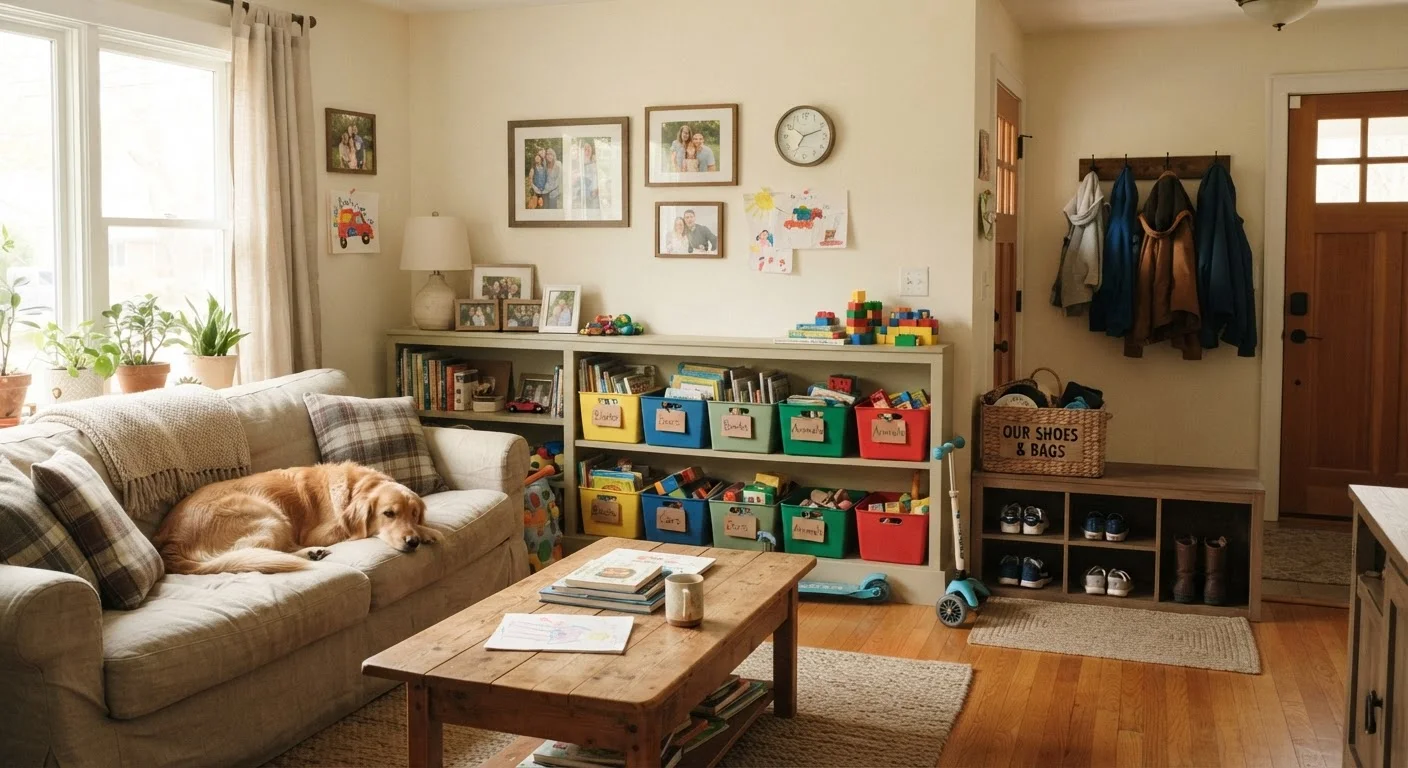
Photo: HorizonMetric.com | One Destination For Everyday Insights editorial
—— In This Article
Key Takeaways
- Organization with kids works best when systems are simple enough for children to maintain independently.
- Lowering standards slightly but consistently beats attempting perfection and burning out.
- Each room benefits from a dedicated 'landing zone' that absorbs daily kid-related chaos.
- Rotating toys and supplies reduces clutter without requiring constant purging.
- Involving children in organizing routines builds habits they carry into adulthood.
Why Standard Organizing Advice Falls Short for Families
Most home organization advice is written for adults living in calm, controlled spaces. When children are in the picture, the rules change. Backpacks land where they're dropped, art projects multiply overnight, and the playroom you organized on Sunday looks like a tornado hit it by Tuesday evening.
The problem isn't that families are disorganized — it's that conventional systems aren't designed around real family behavior. If you're just getting started with home organization, building a kid-compatible framework from the beginning will save you from constantly rebuilding systems that don't hold up. The goal isn't a showroom home; it's a home that functions well for everyone who lives in it.
A Note on Developmental Stage
Organizing expectations should scale with a child's age and ability. A three-year-old can return one type of toy to one bin; a ten-year-old can manage a multi-step cleanup routine. Building systems that match your child's current developmental stage — not an idealized version — leads to routines that actually hold. Adjusting as they grow is part of the process, not a failure of the original system.
Core Practices That Hold Up in Family Life
The following approaches are grounded in how children actually interact with space — not how we wish they would. These aren't aspirational tips; they're realistic adjustments that reduce friction for the whole household.
Design storage so children can return items without adult help.
When kids can independently put things away, maintenance becomes shared rather than falling entirely on parents. Systems children can't physically manage will always depend on adult intervention, which creates a bottleneck and resentment.
Create a dedicated landing zone in high-traffic areas.
Entryways, kitchen counters, and the foot of stairs are where clutter collects first. A single, clearly defined spot for daily items — backpacks, shoes, permission slips — absorbs chaos before it spreads to the rest of the home.
Rotate toys and supplies rather than storing everything at once.
Children engage more deeply with fewer toys at a time, and rotating what's available reduces visible clutter without requiring permanent removal. This approach also extends the life of toys by keeping them feeling novel.
Use visual cues instead of relying on verbal reminders.
Children — especially younger ones — respond better to picture labels, color coding, and floor tape zone markers than to repeated instructions. Visual systems work even when you're not in the room.
Build a short reset routine at the end of each day.
A 10–15 minute family tidy at the same time each evening prevents gradual accumulation from becoming a weekend-consuming project. Consistency matters more than thoroughness — a quick daily pass is more sustainable than occasional deep cleans.
Room-by-Room Adjustments That Actually Stick
General principles matter, but room-specific thinking makes them stick. In entryways, a low hook rail and a single bin per child for shoes dramatically reduces hallway pile-ups. In the kitchen, a lower drawer or cabinet stocked with kid-safe dishes lets children put away their own things after meals — a small change with real maintenance payoff.
Bedrooms benefit from the simplest organizing principle: if a child can't reach it, they can't put it away. Keep frequently used items at eye level or below. Playrooms and shared spaces do well with room-by-room strategies tailored to each function, especially when activity zones (art, building, reading) are visually distinct.
Adjusting Expectations Without Giving Up
One of the most effective mindset shifts for organizing with kids is separating functional order from visual perfection. A home where everyone knows where things go — even if surfaces aren't spotless — is genuinely organized. That's not lowering the bar; it's setting the right bar.
It helps to compare your current approach, not to a magazine spread, but to what minimalist organizing actually demands — a lifestyle that works for some households but creates tension in others, especially with children who are wired to accumulate, experiment, and make messes as part of healthy development.
75%
Of clutter tied to lack of system
Research cited by organizing professionals consistently finds the majority of household clutter results from a missing home for items, not from having too much stuff overall.
~10 min
Daily reset to prevent large-scale clutter
Home organization experts commonly recommend a short daily tidy of 10–15 minutes as more effective than infrequent deep-clean sessions for maintaining order in active family homes.
If a system keeps breaking down in the same spot — say, the entry or the homework area — that's useful information. It usually means the system doesn't match actual behavior, not that your family is incapable. Choosing the right decluttering method for your schedule and temperament also matters more than most people realize.

Home Editorial Team
Home Editorial Team is the collective byline for our editorial team and contributor network. Articles published under this byline or an editorial pen name are researched, written, and reviewed according to our editorial standards for clarity, consistency, and independence before publication.
View author profile