
The Honest Trade-Offs of Minimalist Home Organization
Minimalism promises calm, clear spaces — but it comes with real challenges too. A balanced look at what minimalist organizing actually involves.
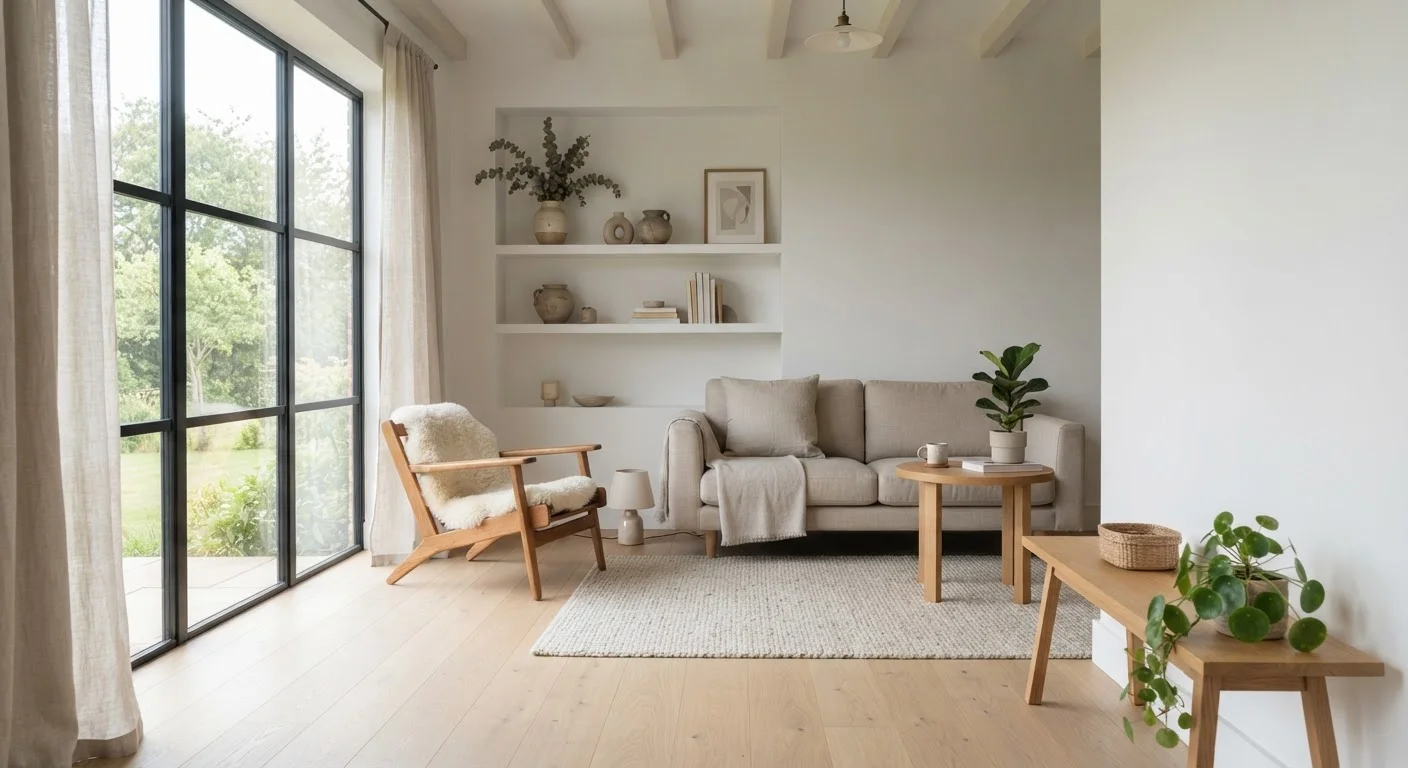
Photo: HorizonMetric.com | One Destination For Everyday Insights editorial
—— In This Article
Key Takeaways
- Minimalist organization reduces visual clutter and can lower daily decision fatigue.
- The decluttering process itself is time-consuming and emotionally demanding.
- Minimalism works best when tailored to your lifestyle, not borrowed wholesale from social media.
- Households with children or shared spaces face unique challenges maintaining a minimalist approach.
- A hybrid approach — selective minimalism by room — is often more sustainable than all-or-nothing.
Reduces visual clutter and mental load
When surfaces and storage are clear, there are fewer visual cues competing for your attention. Research in environmental psychology suggests that cluttered environments can contribute to elevated stress levels and difficulty concentrating.
Easier and faster daily tidying
With fewer possessions and clearly designated places for each item, putting things away becomes a quick habit rather than a prolonged chore. Many people report spending significantly less time tidying once a minimalist system is in place.
Saves money over time by curbing impulse buying
Living with less tends to make you more deliberate about new purchases. When you can see exactly what you own and space is intentionally limited, the urge to buy duplicates or items "just in case" tends to decrease.
Makes lost items and inventory easier to track
Fewer possessions stored in consistent locations means you spend less time searching for keys, chargers, or tools. Households that overflowed with belongings often discover they owned multiples of items simply because the originals were buried.
Supports a calmer, more functional home environment
An organized, low-clutter home can make daily routines — getting dressed, cooking, working from home — feel more manageable. The environment supports rather than competes with your daily tasks.
The initial declutter is time-consuming and tiring
Sorting through years of accumulated possessions takes far longer than most guides suggest. Many people underestimate the hours involved and abandon the process midway, leaving the home in worse temporary disorder than before.
Letting go of items can be emotionally difficult
Possessions carry memory and meaning. Deciding what to keep, donate, or discard can trigger real grief, guilt, or anxiety — especially with inherited items or gifts. This emotional labor is often invisible in how-to content.
Doesn't work as well in shared or family households
Minimalism requires buy-in from everyone who lives in the home. If partners, children, or roommates have different relationships with stuff, maintaining a minimalist system becomes a source of ongoing conflict rather than calm.
Risk of over-purging and costly re-purchasing
In the enthusiasm of a big declutter, people sometimes donate or discard items they later need — specialty tools, seasonal gear, reference books. Replacing those items costs money and undermines the financial argument for minimalism.
Upfront investment in storage and systems
Achieving the clean minimalist aesthetic often requires purchasing specific storage products, furniture with built-in storage, or custom solutions. The irony of spending money to own less is a real tension many people encounter.
Requires ongoing commitment to maintain
Minimalism isn't a one-time project — it's a practice. Mail, gifts, shopping, and normal household accumulation mean items constantly enter the home. Without regular review, a minimalist system reverts to clutter within months.
What Minimalist Home Organization Actually Means
Minimalist organization is the practice of keeping only what you genuinely use or value, then creating storage systems simple enough to maintain without much effort. It's less about bare walls and more about intentional ownership — owning fewer things so that what remains has a clear home.
This approach is popular because it addresses a real problem: most American homes contain far more than residents actively use, which creates ongoing clutter, lost items, and a low-level background stress. But minimalism isn't a single standard. What counts as "minimal" varies widely depending on family size, hobbies, lifestyle, and personal comfort.
If you're new to home organization entirely, see our beginner's guide to home organization before diving into minimalism specifically — it's helpful to understand core principles first.
The Real Advantages of Going Minimal
Minimalist organization offers benefits that extend beyond aesthetics. When done thoughtfully, the payoff is practical and durable.
Reduces visual clutter and mental load
When surfaces and storage are clear, there are fewer visual cues competing for your attention. Research in environmental psychology suggests that cluttered environments can contribute to elevated stress levels and difficulty concentrating.
Easier and faster daily tidying
With fewer possessions and clearly designated places for each item, putting things away becomes a quick habit rather than a prolonged chore. Many people report spending significantly less time tidying once a minimalist system is in place.
Saves money over time by curbing impulse buying
Living with less tends to make you more deliberate about new purchases. When you can see exactly what you own and space is intentionally limited, the urge to buy duplicates or items "just in case" tends to decrease.
Makes lost items and inventory easier to track
Fewer possessions stored in consistent locations means you spend less time searching for keys, chargers, or tools. Households that overflowed with belongings often discover they owned multiples of items simply because the originals were buried.
Supports a calmer, more functional home environment
An organized, low-clutter home can make daily routines — getting dressed, cooking, working from home — feel more manageable. The environment supports rather than competes with your daily tasks.
25%
Americans who can't fit a car in their garage
According to the U.S. Department of Energy, approximately one in four American households with a garage cannot use it for its intended purpose due to stored belongings.
40%
Of housework linked to clutter and excess stuff
The National Soap and Detergent Association has noted that the majority of household cleaning time is attributed to dealing with too much clutter rather than actual dirt or grime.
One underappreciated advantage is how minimalism simplifies cleaning. Fewer objects on surfaces means surfaces get wiped faster. Fewer items in closets means you can actually see what you own. Many people find that once the initial purge is complete, their weekly tidying time drops noticeably.
The Honest Disadvantages Worth Knowing
Minimalism is often presented online as a straightforward path to peace and clarity. In practice, the trade-offs are real and deserve honest discussion.
The initial declutter is time-consuming and tiring
Sorting through years of accumulated possessions takes far longer than most guides suggest. Many people underestimate the hours involved and abandon the process midway, leaving the home in worse temporary disorder than before.
Letting go of items can be emotionally difficult
Possessions carry memory and meaning. Deciding what to keep, donate, or discard can trigger real grief, guilt, or anxiety — especially with inherited items or gifts. This emotional labor is often invisible in how-to content.
Doesn't work as well in shared or family households
Minimalism requires buy-in from everyone who lives in the home. If partners, children, or roommates have different relationships with stuff, maintaining a minimalist system becomes a source of ongoing conflict rather than calm.
Risk of over-purging and costly re-purchasing
In the enthusiasm of a big declutter, people sometimes donate or discard items they later need — specialty tools, seasonal gear, reference books. Replacing those items costs money and undermines the financial argument for minimalism.
Upfront investment in storage and systems
Achieving the clean minimalist aesthetic often requires purchasing specific storage products, furniture with built-in storage, or custom solutions. The irony of spending money to own less is a real tension many people encounter.
Requires ongoing commitment to maintain
Minimalism isn't a one-time project — it's a practice. Mail, gifts, shopping, and normal household accumulation mean items constantly enter the home. Without regular review, a minimalist system reverts to clutter within months.
One of the most common pitfalls is the "sentimental clutter" problem. Inherited items, children's artwork, gifts — these don't fit neatly into a "keep only what sparks joy" framework. Our article on decluttering sentimental items addresses this challenge directly with practical, pressure-free strategies.
Households with children face particular difficulty. Kids accumulate toys, craft supplies, and school materials constantly — and have little interest in minimalist principles. Organizing with kids at home requires a fundamentally different mindset than solo minimalism.
Minimalism Looks Different for Everyone
There is no single standard for what a minimalist home should look like. A family of five with active hobbies will have a very different baseline than a single adult in a studio apartment. The goal of minimalist organizing isn't to match a magazine aesthetic — it's to reduce what isn't serving you and create systems that are genuinely maintainable. Applying that principle selectively, room by room or category by category, is a completely valid approach.
How to Find the Right Balance for Your Home
Rather than committing to minimalism wholesale, many households find success applying it selectively — room by room or category by category. A kitchen cleared of duplicate gadgets and expired pantry goods benefits from minimalist thinking. A craft room or garage workshop probably doesn't.
It's also worth questioning common assumptions before you start. Some popular organizing rules — like the idea that you need matching containers and color-coded systems — can make getting organized feel harder than it needs to be. Our piece on organization myths that hold people back is a useful reality check.
If you're working with limited space rather than too much stuff, the minimalist framework pairs well with creative storage strategies. Vertical and underbed storage ideas offer practical alternatives to simply owning less. Storage choices like open shelving versus closed cabinets also affect how minimalist a space feels day-to-day.
Start small, be honest about what your household actually needs, and resist the pressure to replicate curated images from social media. A home that functions calmly for the people who live in it is always the real goal.

Home Editorial Team
Home Editorial Team is the collective byline for our editorial team and contributor network. Articles published under this byline or an editorial pen name are researched, written, and reviewed according to our editorial standards for clarity, consistency, and independence before publication.
View author profile