
Open Shelving vs. Closed Cabinets: What Works Better for Home Storage
Both open shelves and closed cabinets have real trade-offs. This breakdown helps you decide which suits your space, style, and habits.
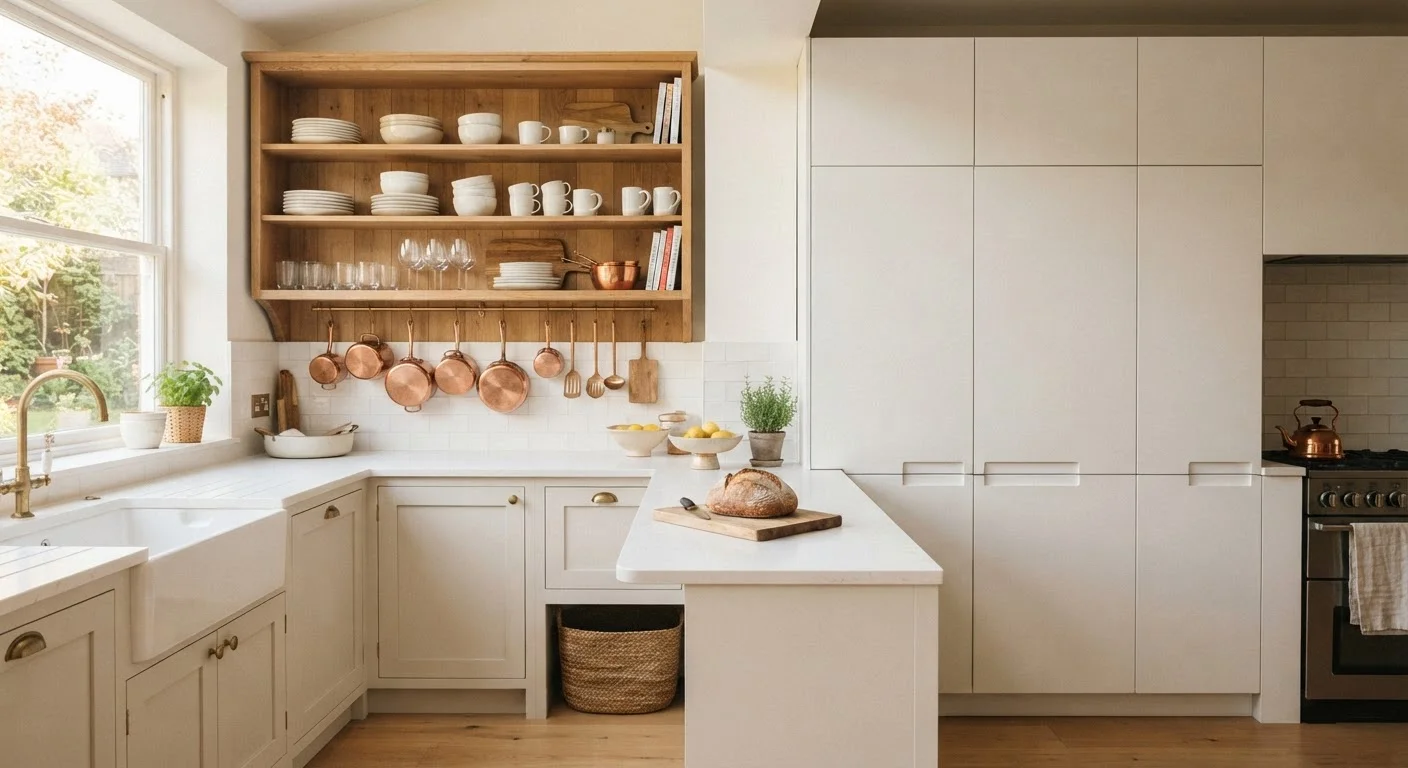
Photo: HorizonMetric.com | One Destination For Everyday Insights editorial
—— In This Article
Key Takeaways
- Open shelving suits organized households but demands consistent upkeep to avoid a cluttered look.
- Closed cabinets reduce visual noise and protect items from dust, grease, and humidity.
- Your daily habits and tolerance for tidying matter more than aesthetics alone.
- Many homes benefit from a hybrid approach — open for display, closed for utility.
- Room function should drive the decision: kitchens, bathrooms, and living rooms each have different needs.
The Core Trade-Off: Visibility vs. Containment
The fundamental difference between open shelving and closed cabinets comes down to one question: do you want to see what you store, or would you rather hide it?
Open shelving puts everything on display. That transparency has real appeal — you can grab what you need at a glance, and well-styled shelves add personality to a room. But visibility cuts both ways. Every mismatched container, stray receipt, or dusty bottle becomes part of the scenery. Maintaining that look requires consistent effort.
Closed cabinets do the opposite. Doors create a uniform surface that hides clutter, protects stored items, and gives rooms a tidier baseline without much daily intervention. The trade-off is access — you need to open a door every time, and it's easy to lose track of what's inside. This can contribute to the kind of disorganization described in why kitchen storage tends to relapse into chaos.
| Criterion | Open Shelving | Closed Cabinets |
|---|---|---|
| Visual impact | Airy, personal, curated | Uniform, clean, neutral |
| Maintenance required | High — dusting and tidying visible | Low — clutter hidden behind doors |
| Dust and grease exposure | Items exposed to air and splatter | Items protected by doors |
| Access speed | Instant — everything in view | One extra step to open door |
| Installation cost (general) | Often lower — fewer materials | Generally higher — doors and hardware |
| Works best for | Tidy households, display items | Busy households, utility storage |
| Small space suitability | Good — lighter visual weight | Can feel heavier in tight rooms |
Practical Considerations by Room
The right choice often depends on where in your home the storage will live.
Kitchen
Kitchens see grease, steam, and heavy daily use. Open shelves near a stove collect grime quickly and require regular wiping. However, open shelving near a window or on a feature wall can display everyday dishes, cutting boards, or herbs without much maintenance risk. Many kitchen designers recommend a hybrid: closed cabinets for pantry staples and under-counter storage, open shelves for items used multiple times a day.
Living Room and Bedroom
In living spaces, open shelves work well for books, plants, and decorative objects — things that benefit from being seen. Closed cabinets or media consoles better suit electronics, cables, games, and anything that looks messy when left out. For bedrooms, the same principle applies: open nightstand shelves suit minimalists; closed wardrobes suit everyone else. If square footage is limited, vertical and underbed storage strategies can stretch either option further.
Bathroom
Humidity is the deciding factor here. Closed vanity cabinets protect toiletries from moisture and keep the space looking neat. Open shelves in bathrooms work for towels and a few styled items but can make a small bathroom feel busier than it is.
~70%
Homeowners preferring concealed kitchen storage
National Kitchen & Bath Association surveys consistently show a majority of homeowners prioritize concealed storage in kitchen remodels for a cleaner look.
2–3x
More frequent dusting needed for open shelves
Home organization experts generally note that open shelving in kitchens requires cleaning two to three times more often than closed cabinet interiors.
Habits and Lifestyle: The Deciding Factor
Storage systems work best when they match how people actually behave — not how they intend to behave. Be honest about your household's routines before choosing.
If putting things back in exactly the right place every time feels natural to you, open shelving can thrive in your home. If clutter accumulates quickly or you live with multiple people whose habits vary, closed cabinets will hold up better under real-world conditions.
It's also worth considering what you're storing. Items with appealing shapes, textures, or colors — ceramic bowls, glass jars, folded linen — suit open display. Mismatched containers, cleaning supplies, and bulk quantities are better behind doors. This connects directly to the honest trade-offs that minimalist organization involves: a clean-looking home often requires making deliberate decisions about what deserves to be seen.
If you're mid-reorganization and unsure where to start, the approach you take — whole home at once or one room at a time — can shape which storage system you install first. Decluttering room by room vs. all at once explores how each method suits different personalities and schedules.
A Hybrid Layout Is Often the Most Practical Answer
Most homes don't need to commit entirely to one approach. A common strategy is to use closed cabinets for the bulk of storage — pantry items, cleaning supplies, bulk purchases — and reserve open shelving for items used daily or chosen for their appearance. This balance reduces maintenance pressure while still allowing some visual warmth and accessibility. It also makes it easier to adapt as your household's needs change over time.

Home Editorial Team
Home Editorial Team is the collective byline for our editorial team and contributor network. Articles published under this byline or an editorial pen name are researched, written, and reviewed according to our editorial standards for clarity, consistency, and independence before publication.
View author profile