
Vertical Space, Underbed Storage, and Other Small-Home Organization Ideas Worth Knowing
Limited square footage doesn't mean limited storage. These practical ideas help you make the most of every inch in a smaller home.
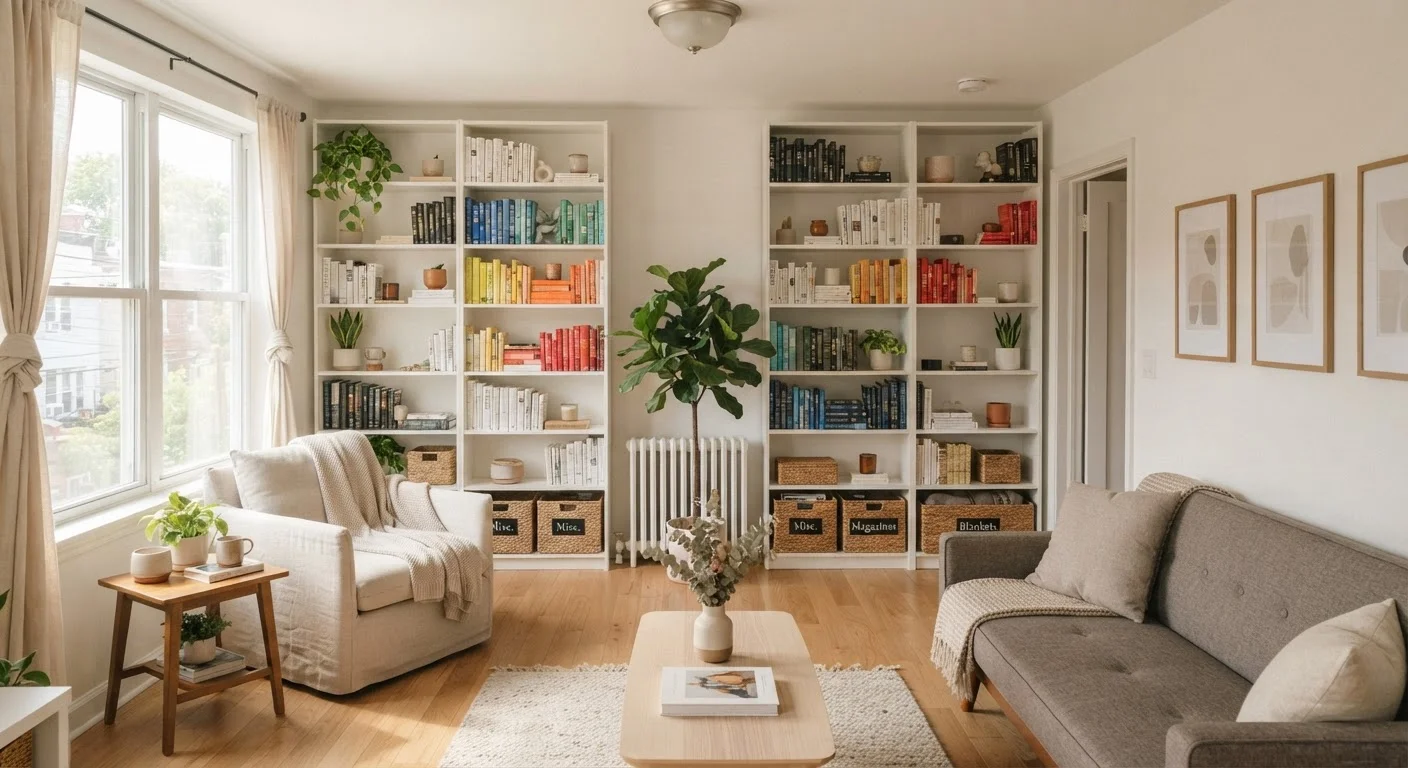
Photo: HorizonMetric.com | One Destination For Everyday Insights editorial
—— In This Article
Key Takeaways
- Vertical wall space is one of the most underused storage assets in a small home.
- Underbed storage works best when items are categorized and contained in labeled bins or bags.
- Multifunctional furniture — like storage ottomans or bed frames with drawers — can replace single-purpose pieces.
- Door-mounted organizers add usable storage without taking up any floor space.
- Decluttering before organizing prevents new systems from getting overwhelmed immediately.
- Consistent habits matter as much as the physical systems you put in place.
Making Small Spaces Work Harder
Living in a smaller home — whether a studio apartment, a compact house, or a shared space — often means storage and square footage are always in tension. The good news is that limited floor space doesn't have to mean limited storage capacity. With the right approach, even a few hundred square feet can feel organized, manageable, and calm.
If you're new to thinking systematically about home organization, it helps to start with the basics. Our beginner's guide to home organization walks through core principles before you invest in any storage solutions. The ideas below build on those fundamentals, focused specifically on the challenges and opportunities that come with smaller homes.
A Note on Wall-Mounted Storage
When mounting shelves or hooks into walls, it's important to locate wall studs or use appropriate anchors rated for the weight you plan to store. Shelves that aren't properly anchored can pull away from the wall, especially when loaded. If you're renting, check your lease before making wall modifications — many landlords require written approval for permanent installations.
The strategies here work across different room types. For a room-by-room breakdown of how to apply them throughout your home, see our complete room-by-room organization walkthrough.
Seven Practical Ideas for Small-Home Storage
Use Vertical Wall Space Deliberately
Most small homes have far more usable wall height than floor area. Shelving that runs from mid-wall up toward the ceiling — sometimes called floor-to-ceiling shelving — can hold books, bins, seasonal items, and décor without consuming any additional footprint. Wall-mounted hooks, pegboards in kitchens or entryways, and floating shelves in bathrooms all apply the same principle: store up, not out.
When planning shelves, consider what you actually need to access regularly. Items used daily should sit at eye level or below; rarely used items can go higher. For help deciding between open and closed shelf styles, our comparison of open shelving and closed cabinets covers the practical trade-offs of each.
Shelving that climbs toward the ceiling adds significant storage without using a single extra square foot of floor space.
Maximize the Space Under Your Bed
The area beneath a bed is one of the largest underused storage zones in most bedrooms. It works well for items you don't need every day — extra bedding, seasonal clothing, spare pillows, or off-season shoes. Flat, wheeled storage bins make retrieval easy, while vacuum storage bags compress bulky items like comforters significantly.
The key is keeping this space organized rather than using it as a catch-all. Labeled containers or categorized bags prevent the area from becoming an inaccessible pile. If your current bed frame sits too low, bed risers (simple platforms placed under each leg) can elevate it enough to accommodate standard storage bins.
Labeled, categorized bins under the bed turn dead space into a reliable seasonal storage zone.
Choose Furniture That Does Double Duty
In a small home, furniture that serves only one purpose is a luxury of space you may not have. Storage ottomans can hold blankets, games, or craft supplies while functioning as seating or a coffee table surface. Bed frames with built-in drawers replace the need for a dresser. Benches with interior compartments work well at entryways for shoes, bags, and outerwear.
When evaluating a furniture purchase for a small home, it's worth asking whether a piece could be replaced with one that also provides storage. You may also find that swapping out single-purpose items reduces the total number of pieces in a room — which itself frees up visual and physical space.
Every piece of furniture in a small home is an opportunity to gain storage without adding square footage.
Organize the Backs of Doors
Interior doors — on closets, pantries, bathrooms, and bedrooms — represent usable storage surface that most people overlook. Over-the-door organizers can hold cleaning supplies, shoes, pantry items, toiletries, or accessories depending on the room. Hooks rated for door installation can handle heavier items like bags, robes, or towels.
Because these solutions add no floor footprint and are generally easy to install without tools (or with only a screwdriver), they're a practical early win in any small-home organization project. Just be mindful of weight limits and ensure the door still opens and closes freely once the organizer is loaded.
Door-mounted organizers add usable storage to every room without occupying a single inch of floor space.
Decant and Consolidate to Reduce Visual Clutter
Decanting — transferring items from their original packaging into uniform, stackable containers — reduces the visual chaos that accumulates in pantries, bathroom cabinets, and linen closets. Mismatched packaging of different heights and shapes wastes space and makes it harder to see what you have. Uniform containers stack efficiently and are easier to label.
This approach also forces a useful audit: when you go to decant something, you notice what's expired, duplicated, or running low. Our glossary of common storage terms explains decanting and other frequently used organization concepts in plain language if you'd like to explore the practice further.
Decanting into uniform containers makes shelves more efficient and reveals what you actually have on hand.
Create Zones Even in Open-Plan Spaces
In a studio apartment or open-plan layout, physical room divisions don't exist — but functional zones can. A bookshelf used as a partial room divider can define a sleeping area from a living area while adding storage on both sides. A rug anchoring a seating arrangement creates a visual boundary without any walls. Lighting, too, can signal zone changes effectively.
The idea behind zoning is that everything in your home has a specific place where it lives and is returned to after use. When zones are clear — even in a single open room — it becomes much easier to maintain order without extensive daily effort. This principle also applies to exercise equipment if you work out at home; our article on exercising in small spaces shows how to designate a functional movement zone even in tight quarters.
Clear zones make it obvious where things belong — even in a single-room apartment without physical dividers.
Declutter Before Organizing, Not After
One of the most common small-home mistakes is buying more storage solutions before addressing how much stuff you actually have. More bins, baskets, and shelves won't solve an overfull space — they'll just give clutter a tidier-looking home temporarily. Decluttering first means your new systems have room to function as intended.
A useful approach: go through one category at a time rather than one room at a time. Collect all your towels, or all your books, and evaluate the full set together. This makes it easier to recognize duplication and decide what's truly worth keeping. Once you've reduced volume, the storage solutions described throughout this list become significantly more effective.
No storage system works well long-term if the volume of possessions exceeds what the space can realistically hold.
Start With One Area, Not the Whole Home
Trying to reorganize every room at once often leads to frustration and abandoned projects. Pick a single high-impact area — a cluttered closet, a chaotic kitchen cabinet, or the space under your bed — and complete it fully before moving on. Small wins build momentum and give you a working model to replicate elsewhere in your home.
Building Habits That Keep It Working
Systems only stay functional when they're maintained. One practical approach: spend five minutes at the end of each day returning items to their designated spots. This prevents clutter from accumulating faster than you can address it. It's also worth revisiting your organization setup every few months — what works in winter may not suit summer, and what worked when you moved in may not fit how you actually live now.
Small-space organization isn't about achieving a perfect, magazine-ready home. It's about reducing friction in your daily routine and making your space feel like it supports you rather than fights you. If you're weighing whether a more minimal approach might suit you, our look at the honest trade-offs of minimalist organization offers a grounded perspective on what that path actually involves.

Home Editorial Team
Home Editorial Team is the collective byline for our editorial team and contributor network. Articles published under this byline or an editorial pen name are researched, written, and reviewed according to our editorial standards for clarity, consistency, and independence before publication.
View author profile