
Decluttering All at Once vs. Room by Room: Which Approach Actually Works?
Should you tackle your whole home in a weekend or take it one space at a time? Here's what each approach involves and who it suits best.
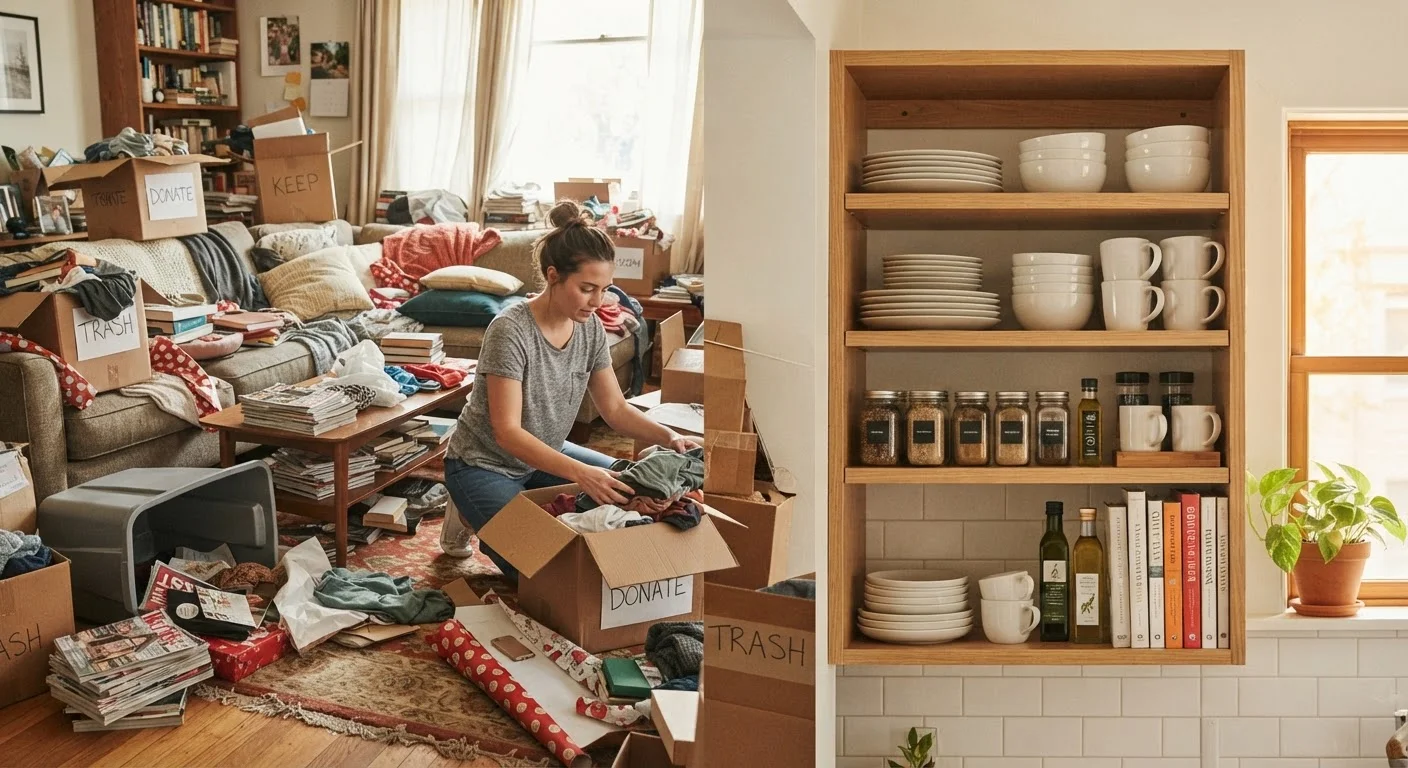
Photo: HorizonMetric.com | One Destination For Everyday Insights editorial
—— In This Article
Key Takeaways
- Whole-home decluttering delivers fast results but requires a significant, uninterrupted time commitment.
- Room-by-room decluttering fits more easily into busy schedules and reduces decision fatigue.
- Neither approach is universally superior — your household size, schedule, and stress tolerance matter most.
- Visible progress in a single room can motivate continued effort across the home.
- Combining both strategies — a big push followed by room-by-room maintenance — often works well long-term.
What Each Approach Actually Involves
Before choosing a decluttering method, it helps to understand what each one actually demands — in time, energy, and disruption.
Decluttering all at once means setting aside a dedicated block of time — typically a full weekend or a series of consecutive days — and working through every room sequentially. The idea is to create a clear before-and-after transformation without leaving the process half-finished. Proponents of this method argue that doing everything together helps you see patterns across the home: duplicate items, things stored in the wrong rooms, and categories you hadn't realized were scattered everywhere.
Room-by-room decluttering, by contrast, means choosing one space — a kitchen, a bedroom closet, a bathroom — and fully completing it before moving on. Sessions can be as short as an hour. The home stays largely functional throughout, and each finished room delivers a sense of completion that can carry you forward to the next. This approach suits people who cannot step away from daily responsibilities for an extended stretch.
As the organization myths guide notes, you don't need a free weekend to make real progress — that assumption alone keeps many people from starting at all.
| Criterion | All at Once | Room by Room |
|---|---|---|
| Time commitment | Full weekend or consecutive days | Short sessions over weeks or months |
| Household disruption | High — whole home affected | Low — one space at a time |
| Decision fatigue risk | Higher — many choices in one stretch | Lower — limited scope per session |
| Speed of visible results | Fast — whole-home transformation | Slower — one room at a time |
| Fits busy schedules | Harder — requires large free block | Easier — works around daily life |
| Suits major life events (moving, etc.) | Yes — aligns with deadlines | Less ideal for tight timelines |
| Motivation style | Big, immediate payoff | Steady, incremental wins |
The Real Trade-Offs: Speed, Stamina, and Stress
The all-at-once approach generates momentum quickly. Seeing the whole home transform over a couple of days can feel rewarding, and having everything sorted simultaneously means decisions about where items belong are made with full context — you're not moving things from room to room weeks apart. The downside is significant: it demands sustained physical and mental energy, and if life intervenes midway through, you can end up with your home more disrupted than when you started.
Room-by-room decluttering trades speed for sustainability. The pace is slower, but each completed room represents a real, usable improvement — not a work-in-progress. Decision fatigue, which is the mental exhaustion that comes from making too many choices in a row, is a genuine obstacle during long decluttering sessions. Smaller, focused sessions naturally limit how many judgment calls you face at once.
~2.5 hrs
Average daily time spent managing household clutter
Research by the National Soap and Detergent Association has suggested that clutter is a leading source of housework time in American homes.
40%
Of housework attributed to disorganization
Industry estimates frequently cite disorganization as responsible for a significant share of time spent on routine home maintenance tasks.
Families with children may find the room-by-room method especially practical. The guide to organizing with kids at home explores how to adapt organization strategies for households where routines and stability matter as much as results.
If sentimental items are a concern — and they often slow any decluttering project considerably — the guide to decluttering sentimental items offers a thoughtful framework regardless of which overall method you choose.
How to Make Either Approach Stick Long-Term
Whichever method you use, the bigger challenge is usually preventing clutter from returning. A single decluttering session — however thorough — isn't a permanent fix. The spaces you clear will gradually fill again unless you pair the initial effort with ongoing habits.
After a whole-home session, many people find it helpful to move immediately into a maintenance routine before the momentum fades. After a room-by-room effort, completing the seasonal decluttering checklist each quarter keeps individual rooms from quietly accumulating clutter again.
For the long term, the one-in, one-out rule and other daily habits can help sustain whichever reset you've achieved. The rule is simple: when something new enters the home, something old leaves. Applied consistently, it removes the need for repeated large-scale decluttering projects.
If you're ready to move into the organizational phase after decluttering, the room-by-room organization walkthrough covers practical strategies for every space in the home — from kitchen to bedroom — once the excess has been cleared.
The method you choose matters far less than whether you actually begin. Start with whichever approach feels achievable given your schedule and energy right now, and adjust from there.

Home Editorial Team
Home Editorial Team is the collective byline for our editorial team and contributor network. Articles published under this byline or an editorial pen name are researched, written, and reviewed according to our editorial standards for clarity, consistency, and independence before publication.
View author profile