
Carry-On Only vs. Checked Luggage: What Experienced Travelers Weigh
A balanced look at packing light versus packing fully—covering airline rules, trip length, and what each approach costs you in time and money.
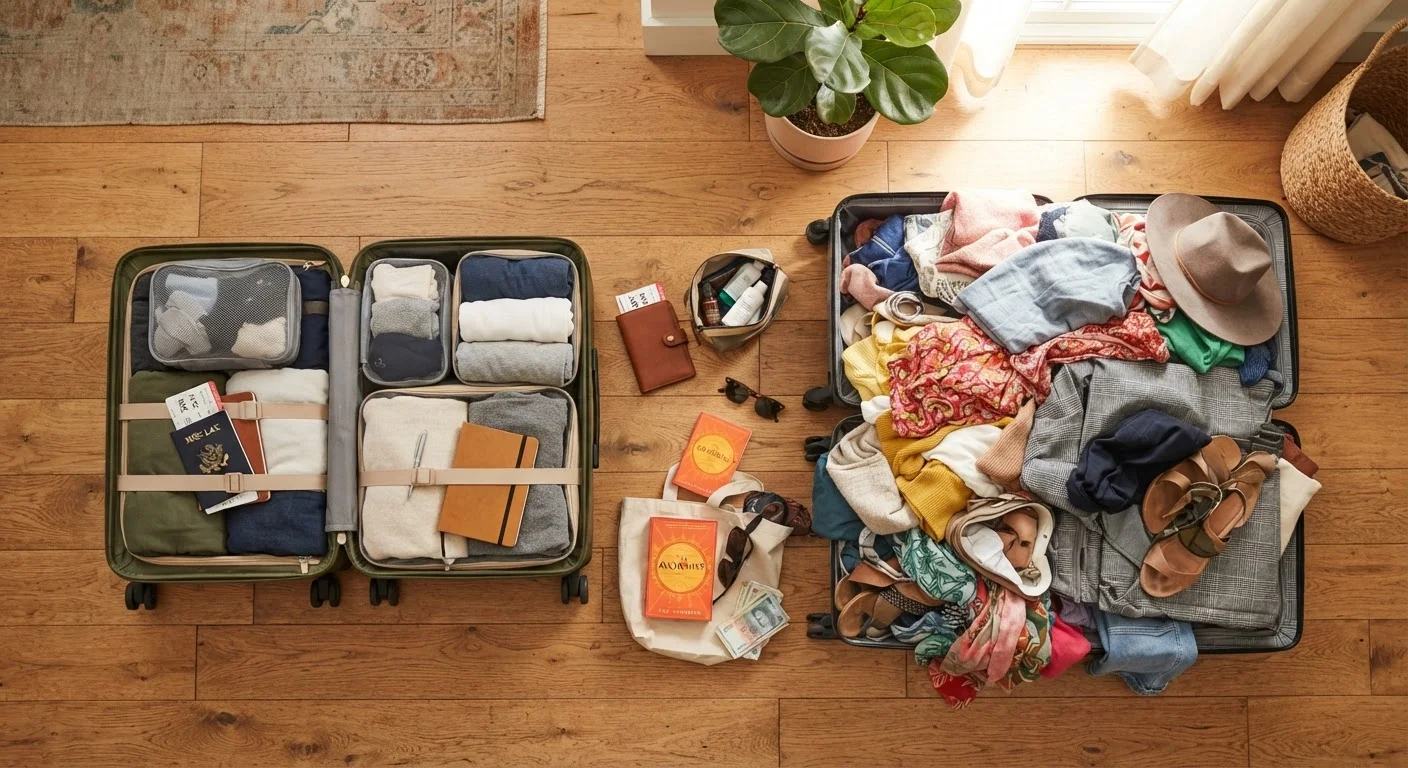
Photo: HorizonMetric.com | One Destination For Everyday Insights editorial
—— In This Article
Key Takeaways
- Carry-on travel eliminates checked bag fees and speeds up airport arrivals and departures significantly.
- Checked luggage offers packing freedom but adds cost, weight fees, and the risk of delayed or lost bags.
- Airline size and weight rules vary widely — always verify before you pack.
- Trip length, destination type, and travel style are the biggest factors in choosing your approach.
- Many experienced travelers combine both strategies depending on the trip, not one size for all.
The Real Cost Difference — In Time and Money
The financial case for carry-on travel is straightforward: most U.S. carriers now charge fees ranging from roughly $30 to $40 per checked bag, each way, on domestic routes. Round-trip for two travelers, that's potentially $120–$160 before you've boarded. Over multiple trips a year, it adds up fast. If you're trying to get a complete picture of where your travel dollars go, our travel budget breakdown maps every cost category travelers routinely underestimate.
Time is the other currency. Travelers checking bags typically spend additional time at the check-in counter, wait at baggage claim (often 20–40 minutes after landing), and face the low but real risk of delayed or misrouted luggage. Carry-on travelers skip all of that — arrive later, leave faster.
That said, checked bags aren't purely a cost center. Travelers who overpack a carry-on and trigger gate-check fees, or who pay to check a bag at the gate because it's too large, often lose both the time and money advantages they hoped to gain.
| Criterion | Carry-On Only | Checked Luggage |
|---|---|---|
| Typical Fee (Domestic, Round-Trip) | $0 (usually included) | $60–$80+ per bag |
| Time at Airport | Faster — skip check-in line & baggage claim | Slower — check-in counter + claim wait |
| Risk of Lost Luggage | None — bag stays with you | Low but real — bags can be delayed or misrouted |
| Packing Capacity | Limited — ~40L typical | Generous — 60–100L standard |
| Liquid/Toiletry Limits | TSA 3-1-1 rule applies strictly | No liquid size restrictions in checked bag |
| Ideal Trip Length | 1–7 days | 7+ days or gear-heavy trips |
| Mobility & Flexibility | High — easier on transit, trains, taxis | Lower — heavy bags limit spontaneity |
Airline Rules: The Fine Print That Changes Everything
Here's where carry-on travel gets complicated: not all carry-ons are created equal across airlines. Full-service carriers generally allow a standard carry-on (around 22 x 14 x 9 inches) plus a personal item. Budget carriers may restrict you to a personal item only on basic fares, charging extra even for a roller bag in the overhead bin.
Weight limits add another layer. While domestic U.S. airlines typically don't weigh carry-ons, many international carriers do — and a bag that clears domestic gates may be flagged abroad. Checked bags face strict weight limits (usually 50 lbs for standard economy), with overweight fees that can rival the cost of the bag fee itself.
International Routes Have Different Rules
Many international carriers apply stricter carry-on weight limits — sometimes as low as 15 lbs — even when the bag's dimensions are within standard range. If your trip includes a connection on a non-U.S. carrier, check that airline's policy separately. Assumptions based on domestic travel rules can result in surprise fees at foreign check-in desks.
The smart move: always check your specific airline's current policy before you pack — rules change, and what applied on your last flight may not apply today. This is especially true if you're connecting through an international carrier mid-itinerary.
Packing Strategy: Making Each Approach Work
Carry-on travel rewards intentional packing. Versatile, mix-and-match clothing in a neutral palette, compact toiletries within TSA's 3-1-1 liquid rules, and a willingness to do laundry mid-trip are the core disciplines. Our guide on packing for any climate offers practical wardrobe logic that works especially well for carry-on travelers navigating varied weather.
Checked luggage travelers have more breathing room — but that room can be a trap. The freedom to pack more often leads to packing things you won't use, then lugging that weight through airports and cobblestone streets. Even with a checked bag, applying a carry-on mindset to clothing selection makes the trip more manageable.
For longer or more complex trips, many experienced travelers use a hybrid approach: a carry-on for essentials and valuables, and one checked bag for the extras. This protects against the nightmare scenario of a lost checked bag containing everything you need for day one.
Whichever strategy you choose, understanding the hidden costs and habits behind travel overspending — covered in our piece on why travelers overspend — can help you pack and budget with a clearer head.
~$30–$40
Typical one-way checked bag fee on U.S. domestic routes
Fees vary by airline and fare class; frequent flyer status or co-branded credit cards sometimes waive these charges.
20–40 min
Average baggage claim wait after landing
Carry-on travelers skip this entirely, which meaningfully affects tight connection times and end-of-day arrivals.
~1–2%
Rate of checked bags mishandled by U.S. airlines
According to the U.S. Department of Transportation's Air Travel Consumer Reports, mishandling rates have fluctuated in recent years but remain a consistent, if small, risk.

Travel Editorial Team
Travel Editorial Team is the collective byline for our editorial team and contributor network. Articles published under this byline or an editorial pen name are researched, written, and reviewed according to our editorial standards for clarity, consistency, and independence before publication.
View author profile