
Packing for Any Climate: A Traveler's Wardrobe Logic
Practical principles for choosing versatile clothing that works across weather conditions, so you pack less and stress less.
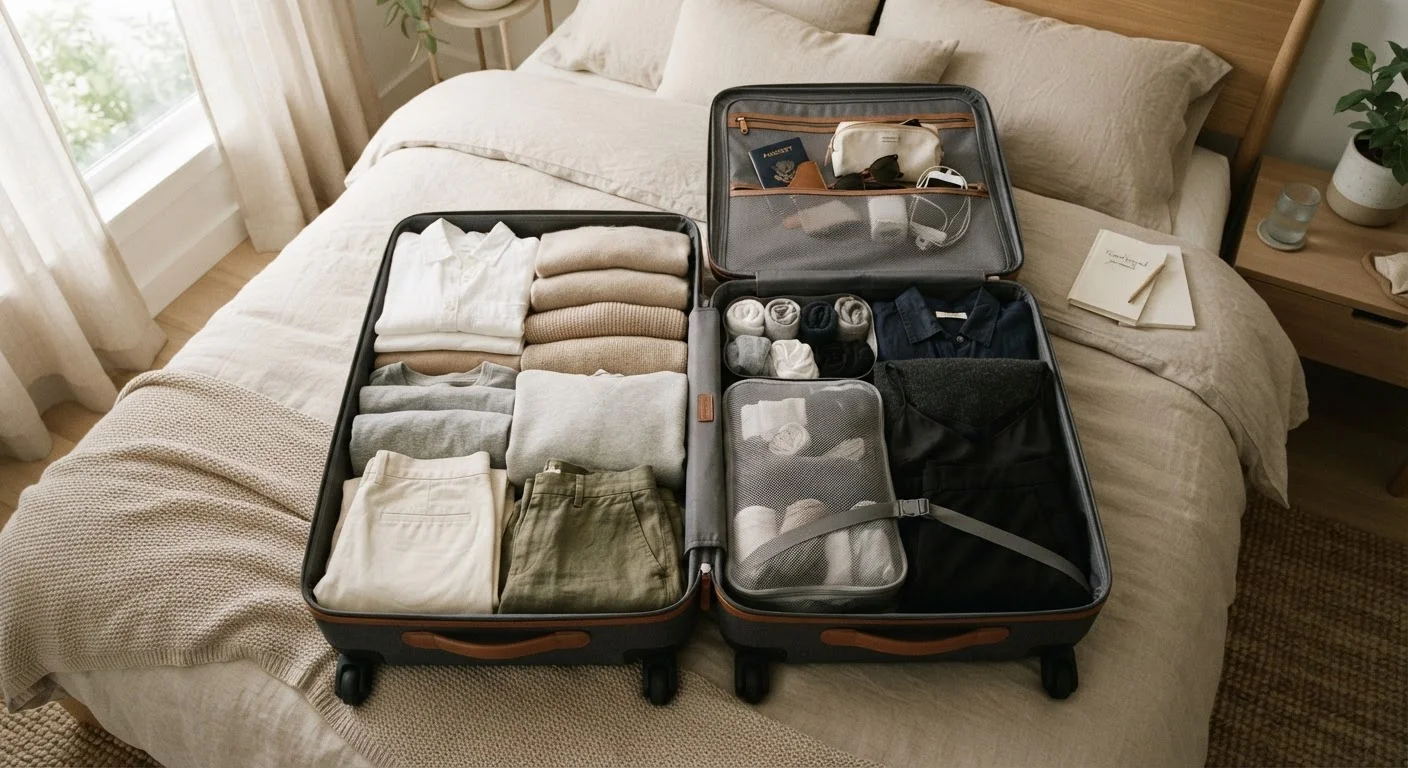
Photo: HorizonMetric.com | One Destination For Everyday Insights editorial
—— In This Article
Key Takeaways
- Building around a neutral color palette lets you mix and match outfits without overpacking.
- Layering lightweight pieces handles temperature swings better than packing separate heavy items.
- Fabric choice is as important as item count — breathable, quick-dry materials do the most work.
- Knowing your destination's climate range matters more than trying to pack for every scenario.
- A carry-on-friendly wardrobe reduces travel stress and saves time at airports.
Start With the Climate Range, Not the Itinerary
Most travelers pack by imagining each day's outfit — dinner on Tuesday, hike on Wednesday. A smarter approach is to pack for a temperature range rather than a schedule. Find out the expected highs and lows for your destination, then build your wardrobe to handle that entire range with as few pieces as possible.
If you're heading somewhere with a 30-degree swing between morning and afternoon — common in mountain towns, coastal deserts, and shoulder-season destinations — layering is your answer. Think a base layer, a mid-layer you can stuff in a daypack, and one outer shell that blocks wind or light rain. That trio covers more ground than three separate heavy jackets.
For trips spanning multiple climates — say, a city followed by beach time — identify the overlap zone: pieces that work in both contexts. A linen shirt, a lightweight cardigan, and one pair of versatile pants can cross climates more gracefully than you'd expect.
Check More Than the Average Temperature
Most weather apps show daily highs, but the swing between morning lows and afternoon highs matters just as much for packing. Look at both figures for your destination's key dates. A 20-degree daily range calls for a layering strategy; a stable tropical climate may not. This one extra step can eliminate several unnecessary items from your bag.
The Logic of a Neutral Wardrobe
Color is the silent enemy of efficient packing. The moment you include a bright statement piece, you need other items that actually work with it — and suddenly your bag is half-full just managing one outfit. A palette built around two or three neutral tones (think navy, white, olive, stone, or black) means every top pairs with every bottom, and accessories coordinate automatically.
This isn't about dressing blandly — it's about maximum outfit math. Four neutral tops and three bottoms generate twelve possible combinations. The same eight items in clashing colors might yield four wearable outfits. That difference can translate to a full extra day of packed clothes from the same bag space.
~50%
Items packed that travelers report not wearing
Travel surveys and frequent-traveler polls consistently find that roughly half of packed clothing goes unworn on typical trips, indicating a widespread tendency to overpack.
2–3
Neutral base colors for maximum outfit combinations
Wardrobe minimalism research suggests that limiting a travel wardrobe to two or three coordinating neutral tones dramatically multiplies usable outfit combinations per item.
When decluttering before a trip, the same logic applies: items that haven't paired well at home won't suddenly become versatile in your suitcase. Our seasonal decluttering checklist can help you identify wardrobe dead weight well before you zip up your bag.
Fabric Earns Its Place in the Bag
The single most underrated packing decision is fabric selection. A cotton T-shirt and a merino wool T-shirt take up similar space, but the merino regulates temperature, resists odor through multiple wears, and dries overnight if hand-washed. That means you can pack fewer of them — typically half as many as cotton — and still stay fresh throughout the trip.
Quick-dry synthetics — nylon and polyester blends — shine in active and humid settings. They pack small, handle repeated wear, and dry in hours rather than days. The tradeoff is that some feel less comfortable against skin in extreme heat, so blended fabrics often hit the sweet spot.
Choose merino wool or moisture-wicking blends as your base layers
These fabrics regulate temperature in both warm and cool conditions, resist odor across multiple wears, and dry quickly — reducing how many items you need overall. They're the single highest-leverage swap most travelers can make.
Limit your shoe count to two pairs with clearly different functions
Shoes are the heaviest, most space-hungry items in any bag. Every additional pair competes with multiple clothing items for space. Two well-chosen pairs — one active, one versatile — cover nearly all real-world scenarios.
Pack a compact, packable outer layer regardless of your destination's forecast
Weather forecasts are imperfect, air conditioning in airports and restaurants can be aggressive, and evening temperatures routinely drop below midday comfort. A packable shell or lightweight layer adds almost no weight and prevents reactive souvenir-shopping for clothes you didn't need.
Build your packing list around outfits, not individual items
Adding items one-by-one without checking combinations leads to bags full of pieces that don't pair well together. A coherent outfit-based approach reveals exactly how many tops, bottoms, and layers you actually need.
Include one versatile dress or convertible garment if packing for multiple occasion types
A single piece that works dressed up or down removes the need to pack formal and casual options separately. These items carry an outsized share of outfit variety relative to the space they occupy.
Avoid packing heavy denim for climate-variable trips: it dries slowly, packs bulky, and offers little temperature regulation. Lightweight chinos, stretch-fabric pants, or water-resistant hiking-style trousers cover far more ground. For a deeper look at how your packing choices affect your airport experience, see carry-on vs. checked luggage tradeoffs.
Building Your Pre-Trip Packing Rhythm
Wardrobe logic is only as good as the system behind it. Experienced travelers often lay out every item on a bed before packing, then remove one-third of it — a visual edit that consistently reveals redundancies. Shoes take the most space and weight, so limit yourself to two pairs maximum: one for walking and one for everything else.
Run a final check against your confirmed itinerary: what's the most formal event? What's the most active? If one pair of dark pants covers both, you don't need dress pants and casual pants. This review, combined with a full pre-trip confirmation checklist, prevents the last-minute panic that leads to overpacking.
If you're newer to this approach, start small: try applying neutral-palette and layering logic on a weekend trip before committing to it for two weeks abroad. The habits build quickly, and the relief of moving through airports with a lighter bag is genuinely motivating. For more planning principles that hold up in the real world, common travel planning myths is worth a read before your next trip.

Travel Editorial Team
Travel Editorial Team is the collective byline for our editorial team and contributor network. Articles published under this byline or an editorial pen name are researched, written, and reviewed according to our editorial standards for clarity, consistency, and independence before publication.
View author profile