
Road Trip Packing List: What Actually Belongs in Your Car
A practical checklist of safety essentials, comfort items, and navigation tools to have ready before any long American road trip.
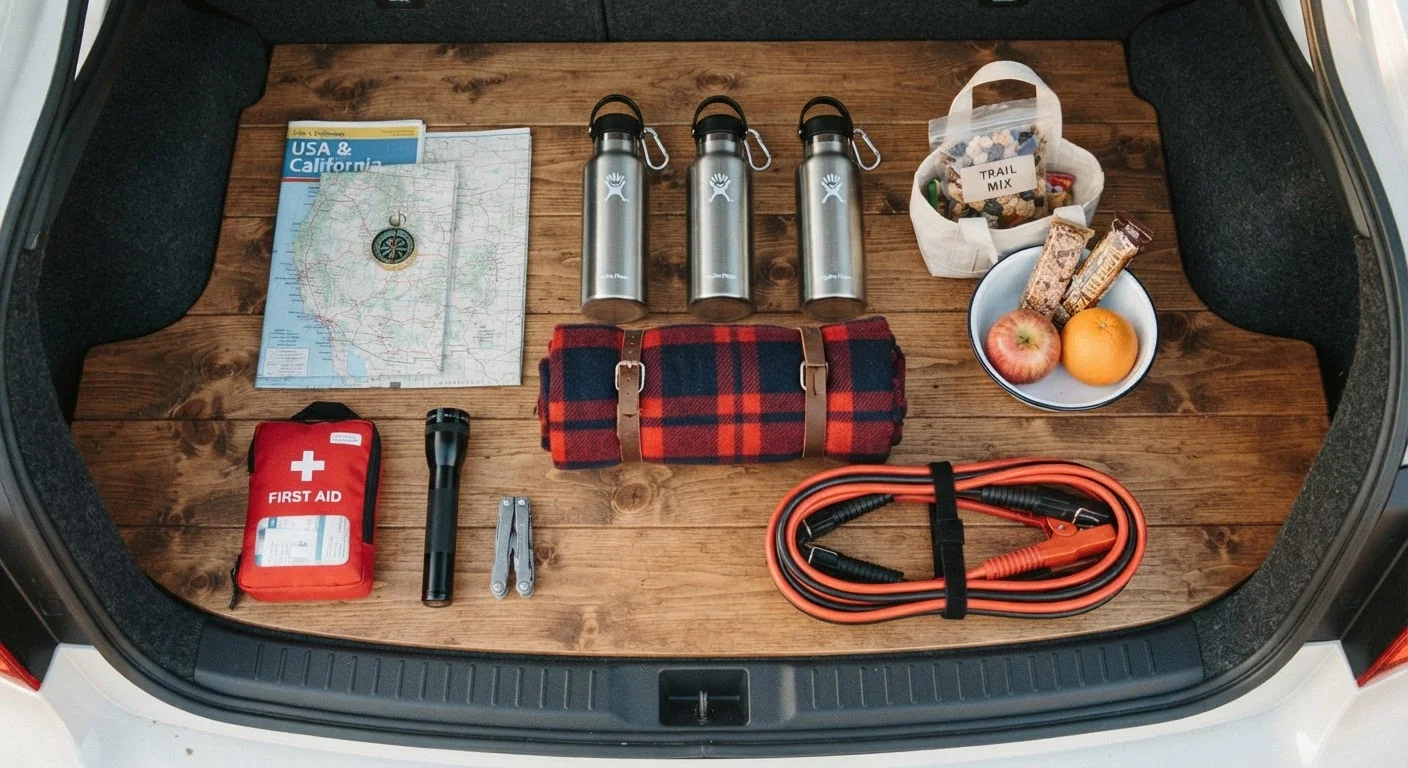
Photo: HorizonMetric.com | One Destination For Everyday Insights editorial
—— In This Article
Key Takeaways
- Safety gear — jumper cables, a first aid kit, and a flashlight — belongs in every car before a long drive.
- Navigation redundancy matters: GPS fails in rural areas, so carry a paper backup.
- Comfort items reduce fatigue and make multi-day drives significantly more manageable.
- Food and water supplies should cover at least one full day in case of unexpected delays.
- A small emergency cash reserve is worth carrying when cards or ATMs aren't accessible on remote routes.
Why Your Packing List Makes or Breaks the Drive
There's a meaningful difference between surviving a road trip and actually enjoying one. That gap usually comes down to what's in your car before you pull out of the driveway. Forgetting a phone charger is a hassle; forgetting jumper cables in January somewhere outside Flagstaff is a genuine problem.
This checklist focuses on what road trippers across the US consistently find they need — organized by category so you can work through it section by section. Whether you're heading out on a weekend loop or preparing for a full cross-country haul, these are the items worth double-checking every single time.
If you're brand new to multi-day driving, our first cross-country drive guide walks through the bigger planning picture alongside packing. And if you want to make sure nothing slips at home before you leave, see the full pre-trip checklist for documents, home security, and finances.
Vehicle Safety Essentials
Navigation and Communication
Food, Water, and Supplies
Comfort and Passenger Wellbeing
Documents and Financial Backup
Tools, Navigation, and the Backup Plan
GPS apps are excellent — right up until you're in a dead zone somewhere in rural Nevada and the screen goes blank. Experienced road trippers treat digital navigation and paper maps as a team, not a competition. Our guide on GPS vs. paper maps for road trips explains exactly when each one earns its keep.
Don't Rely Solely on Live GPS in Remote Areas
Vast stretches of the American interior — including parts of the Southwest, Great Plains, and mountain West — have limited or no cell coverage. If your navigation app requires a live connection and you haven't downloaded offline maps, you may find yourself genuinely lost. Always download your full route offline before leaving a city, and carry a paper backup as a secondary option.
Cell service in remote stretches of the American West, parts of Appalachia, and many rural highways can disappear for long intervals. Download offline maps before you leave populated areas — don't count on being able to do it on the road. If your route crosses mountains or desert, also review our overview of driving in extreme US weather so you know what conditions to prepare for in different regions.
Offline Maps App
Download your entire route for GPS navigation without requiring a cell signal.
Portable Jump Starter
Restart a dead battery without another vehicle — essential on remote or overnight stretches.
Paper Road Atlas
Backup navigation when GPS fails in rural or mountainous areas with no cell coverage.
Multi-Port Car Charger
Keep phones, GPS units, and other devices charged for multiple passengers simultaneously.
Roadside Emergency Kit
Includes reflective triangles, gloves, and basic tools to handle common breakdown situations safely.
Portable Cooler
Keeps perishable food and drinks safe on longer drives through areas with limited food services.
Once you've packed everything, think about how you'll actually spend the hours behind the wheel. Planning smarter around drive time makes a real difference in whether the trip feels energizing or draining — and the habits covered in what separates experienced road trippers are worth reading before any long haul.
Check Your Spare Tire Before Every Long Drive
A flat spare discovered roadside is far worse than discovering it at home. Spare tires — especially compact 'donut' spares — lose pressure over time and are often neglected during routine maintenance. Check both the pressure and the condition of your spare before any long-distance drive. If it's damaged or underinflated, address it before you leave.

Travel Editorial Team
Travel Editorial Team is the collective byline for our editorial team and contributor network. Articles published under this byline or an editorial pen name are researched, written, and reviewed according to our editorial standards for clarity, consistency, and independence before publication.
View author profile