
Bodyweight Training: What It Is and Why It Works
Understand how bodyweight exercise builds strength and fitness using only your own body — no equipment or gym membership needed.
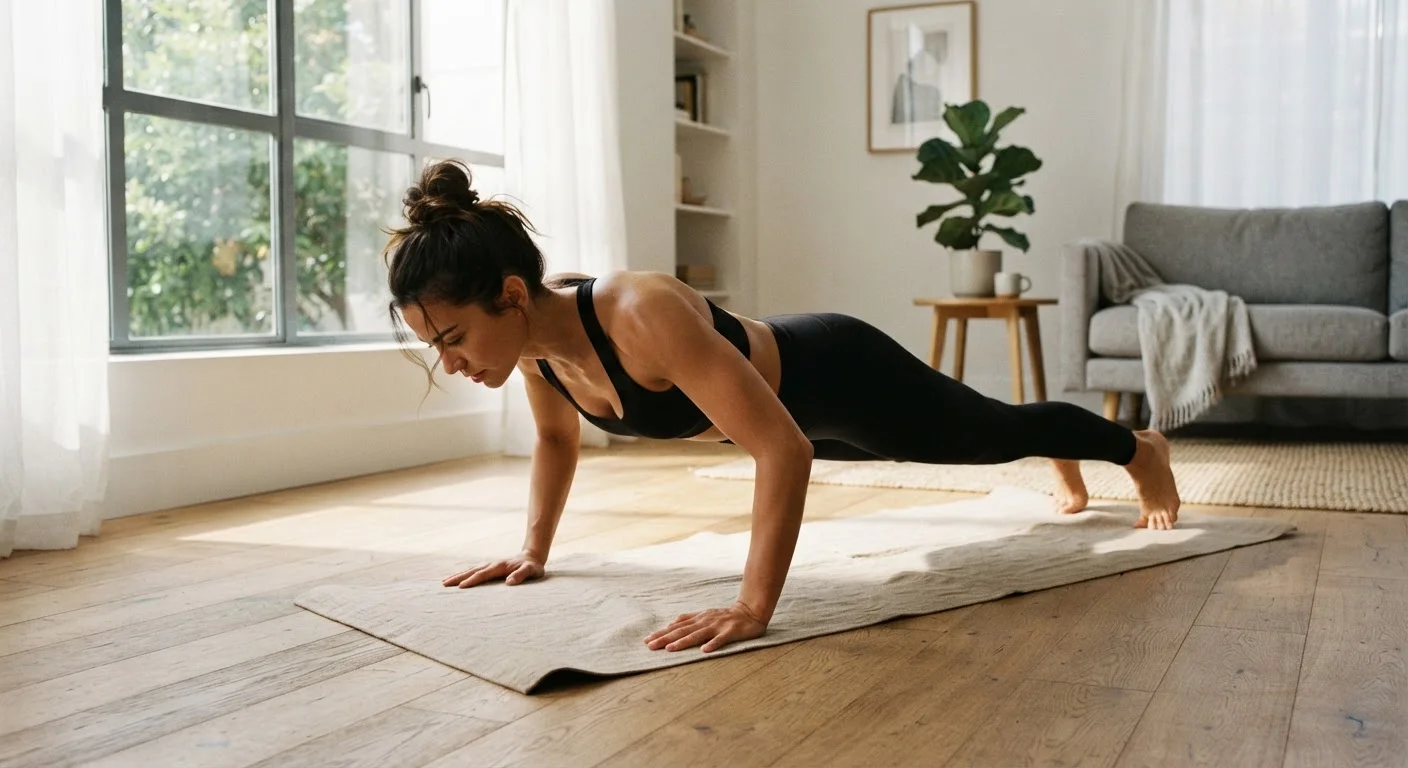
Photo: HorizonMetric.com | One Destination For Everyday Insights editorial
—— In This Article
Key Takeaways
- Bodyweight training uses your own body as resistance, requiring no equipment or gym access.
- It builds real strength, muscular endurance, and flexibility through fundamental movement patterns.
- Exercises can be scaled easier or harder to match any fitness level.
- Consistency over time produces measurable fitness gains comparable to beginner weight training.
- A small, clear space at home is all the setup you need to get started.
What Bodyweight Training Actually Means
The term sounds technical, but the concept is straightforward. Bodyweight training simply means using the weight of your own body to create the resistance your muscles work against. When you lower yourself into a squat and stand back up, your legs are pushing against gravity and your own mass — that's resistance training, just without any added equipment.
This approach has been used for centuries in physical conditioning, military fitness, and martial arts. It's not a trend or a shortcut — it's a foundational method of building physical fitness that's stood up to scrutiny and modern exercise research alike.
Common bodyweight movements include push-ups, squats, lunges, glute bridges, planks, mountain climbers, and dips using a chair or step. Each targets different muscle groups and movement patterns, and together they create a well-rounded workout capable of improving strength, stability, and cardiovascular endurance. For a broader look at how resistance exercise benefits general health, see what strength training does for everyone.
Bodyweight Training Is Still Resistance Training
Some people assume that 'real' strength training requires barbells or machines. Exercise science classifies any activity that makes muscles work against resistance as resistance training — and your body weight qualifies. The adaptations your muscles make (increased strength, improved endurance) are driven by the same physiological processes, regardless of what provides the load.
Why Your Body Weight Is Enough — Especially at the Start
A common assumption is that serious fitness requires heavy weights or expensive machines. The evidence doesn't support that for most people, particularly those just beginning their fitness journey. Muscle tissue responds to mechanical tension — the effort required to move a load through a range of motion. Your body weight provides that load effectively, especially in the early stages.
The key principle that makes any resistance training work is progressive overload: gradually increasing the challenge over time. With bodyweight training, that means moving from a knee push-up to a standard push-up, then to a slower tempo, then to an elevated-feet variation. The movement stays the same; the difficulty grows. This built-in scalability makes bodyweight training genuinely useful across fitness levels, not just for beginners.
2x/week
Minimum resistance activity recommended for adults
The U.S. Department of Health and Human Services Physical Activity Guidelines for Americans recommend muscle-strengthening activity at least two days per week for general health.
0
Equipment pieces required to start
Core bodyweight movements — squats, push-ups, lunges, and planks — require only a clear floor space and enough room to extend your arms and legs.
One practical advantage is that bodyweight exercises tend to train multiple muscle groups simultaneously. A squat, for example, engages the quadriceps, hamstrings, glutes, and core in a single movement. This efficiency makes workouts shorter and more functional for everyday movement.
How Bodyweight Training Fits Into Real Life
The biggest barrier most Americans face with exercise isn't motivation — it's logistics. Gym memberships cost money, commutes take time, and schedules rarely cooperate. Bodyweight training removes most of those friction points entirely.
A living room, backyard, hotel room, or office floor is all the space you need. Sessions can be 15 minutes or 45 minutes depending on what your day allows. There's no commute, no wait for a machine, and no minimum buy-in. This accessibility is a genuine advantage, not a consolation prize.
Structure Your Session Before You Start
Write down your exercises, sets, and reps before you begin — even a simple list on your phone works. Having a plan reduces decision fatigue mid-workout and helps you track progress over time. Consistent structure is one of the most reliable predictors of long-term fitness adherence.
That said, it helps to treat home workouts with the same structure you'd give a gym session. Deciding in advance what exercises you'll do, in what order, and for how many repetitions makes sessions more effective and easier to stick with over time. If you're figuring out where to begin, this beginner-friendly home workout guide walks through how to build a safe, sustainable routine from scratch.
Bodyweight training also pairs naturally with other healthy habits — stretching, walking, and mobility work — without needing a separate gym environment for each. For a more complete picture of how to structure your home fitness setup over time, this comprehensive home fitness resource covers progression and habit-building in detail.
This article is for general informational purposes only and is not medical advice. Consult a qualified healthcare professional before beginning any new exercise program, especially if you have existing health conditions or injuries.
Frequently Asked Questions

Beauty Editorial Team
Beauty Editorial Team is the collective byline for our editorial team and contributor network. Articles published under this byline or an editorial pen name are researched, written, and reviewed according to our editorial standards for clarity, consistency, and independence before publication.
View author profile