
Sensitive Skin Routines: Principles That Help Reduce Irritation
Sensitive skin reacts easily to new products. This guide covers the core principles of a gentle routine that minimizes flare-ups and guesswork.
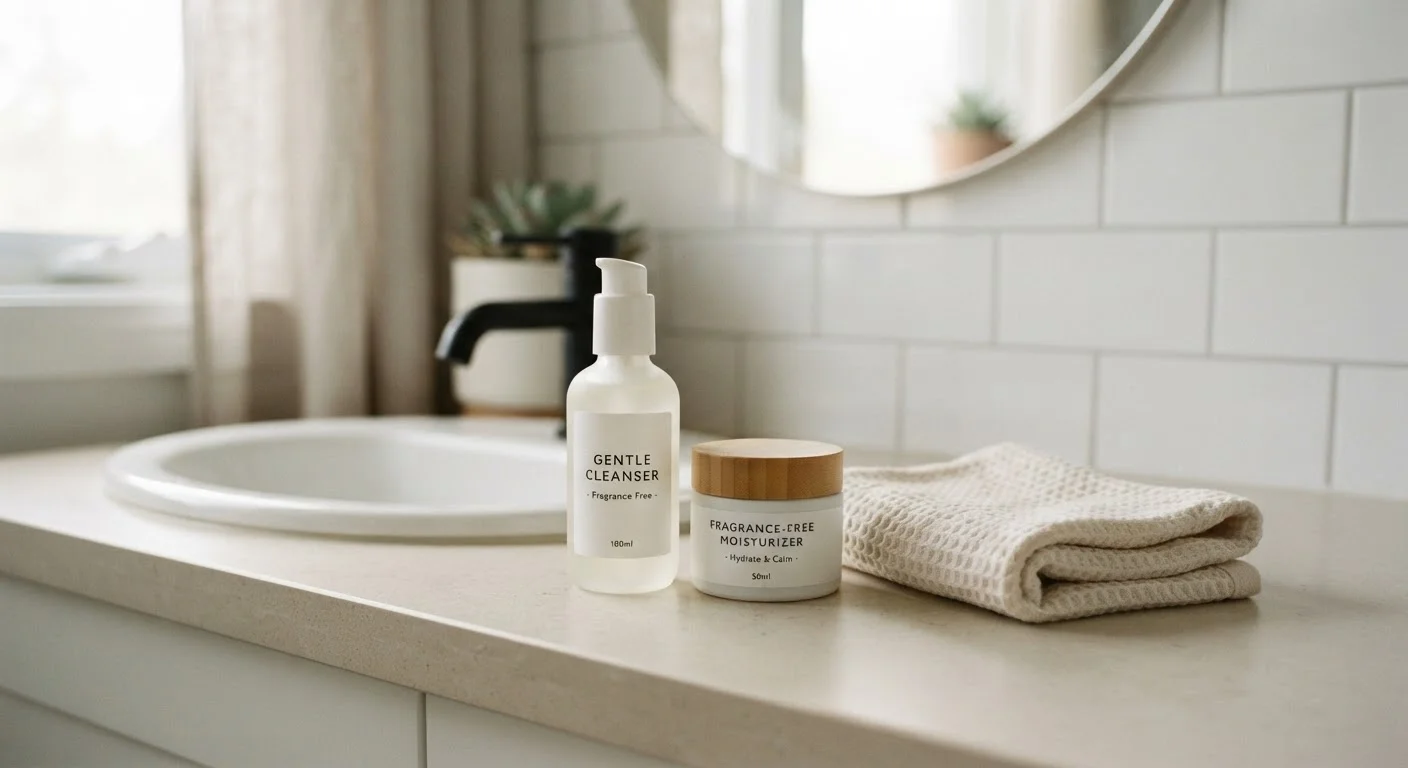
Photo: HorizonMetric.com | One Destination For Everyday Insights editorial
—— In This Article
Key Takeaways
- Sensitive skin benefits most from short, consistent routines with fewer products.
- Fragrance — including 'natural' fragrance — is one of the most common skin irritants.
- Introducing one new product at a time makes it easier to identify what causes a reaction.
- Patch testing before full application can prevent widespread flare-ups.
- Barrier-supporting ingredients like ceramides and glycerin are generally well-tolerated by reactive skin.
What Makes Skin 'Sensitive' in the First Place
Sensitive skin isn't a single diagnosis — it's a description of how skin behaves. It tends to react more strongly than average to products, environmental changes, or physical friction. Reactions can include redness, stinging, itching, tightness, or small bumps. For some people this is tied to a recognized condition like rosacea, eczema, or contact dermatitis; for others it's simply reactive skin without a clear underlying cause.
What most sensitive skin types share is a compromised or easily disrupted skin barrier — the outermost layer that keeps moisture in and irritants out. When that barrier is weakened, even ingredients or products that are generally considered mild can trigger a response. If you're unsure about your skin type, our beginner's skincare guide offers a useful starting point.
This article is for general informational purposes only and is not a substitute for advice from a qualified dermatologist or healthcare provider. If you experience persistent or severe skin reactions, consult a medical professional.
Core Principles for a Sensitive-Skin Routine
The goal of a sensitive-skin routine isn't to add more — it's to do less, more deliberately. The following principles are drawn from general dermatological guidance and are designed to reduce guesswork and limit unnecessary exposure to potential irritants.
Keep your routine to three steps or fewer until your skin is stable.
More products mean more potential irritants. A minimal routine — cleanser, moisturizer, and SPF in the morning — limits the number of ingredients your skin has to process. Once your skin is calm and consistent, you can cautiously add one additional product if needed.
Avoid fragrance in all forms, including 'natural' or 'botanical' scents.
Fragrance — synthetic or natural — is among the most widely documented skin sensitizers. The term 'unscented' doesn't always mean fragrance-free; some products use masking agents that still contain sensitizing compounds. Reading the ingredient list rather than relying on front-label claims matters here.
Introduce only one new product at a time, waiting at least one to two weeks between additions.
When you add multiple products simultaneously, isolating the cause of a reaction becomes difficult or impossible. Spacing out introductions lets you observe your skin's response clearly and act on real information rather than guessing.
Patch test every new product before applying it to your full face.
A patch test involves applying a small amount of product to a less visible area — typically inside the elbow or behind the ear — and observing for 24 to 48 hours before wider use. This practice can prevent a localized reaction from becoming a widespread one. Our practical patch testing guide walks through the method step by step.
Choose products with short, recognizable ingredient lists.
A shorter ingredient list reduces cumulative exposure to potential sensitizers. This doesn't mean every complex formula is harmful, but for reactive skin, fewer ingredients generally means fewer variables and less risk of a triggering compound slipping through.
Wash your face with lukewarm water, not hot.
Hot water strips the skin's natural oils and disrupts the moisture barrier, leaving skin more vulnerable to irritation. Lukewarm water is effective for cleansing without causing additional stress to already reactive skin.
Getting Started Without Overwhelming Your Skin
One of the most common mistakes with sensitive skin is overhauling an entire routine at once. Introducing several products simultaneously makes it nearly impossible to know what's helping and what's causing problems. A measured, step-by-step approach gives your skin time to adjust — and gives you clear information.
Understanding what each product in your routine is actually doing also helps you cut what isn't necessary. Our breakdown of what each skincare step does can help you simplify without guessing. And if you're ready to build from scratch, the simple morning routine guide walks through a low-fuss approach in the right order.
When to See a Dermatologist
If your skin reacts persistently even to fragrance-free, minimal products, or if you experience significant swelling, peeling, or discomfort, that's worth discussing with a board-certified dermatologist. Conditions like eczema, rosacea, and contact dermatitis benefit from professional diagnosis and treatment plans. General skincare guidance is not a substitute for clinical evaluation of ongoing or severe symptoms.

Beauty Editorial Team
Beauty Editorial Team is the collective byline for our editorial team and contributor network. Articles published under this byline or an editorial pen name are researched, written, and reviewed according to our editorial standards for clarity, consistency, and independence before publication.
View author profile