
Skincare Basics: Everything You Need to Get Started
New to skincare? This beginner's guide covers skin types, essential products, routine order, and the habits that genuinely make a difference.
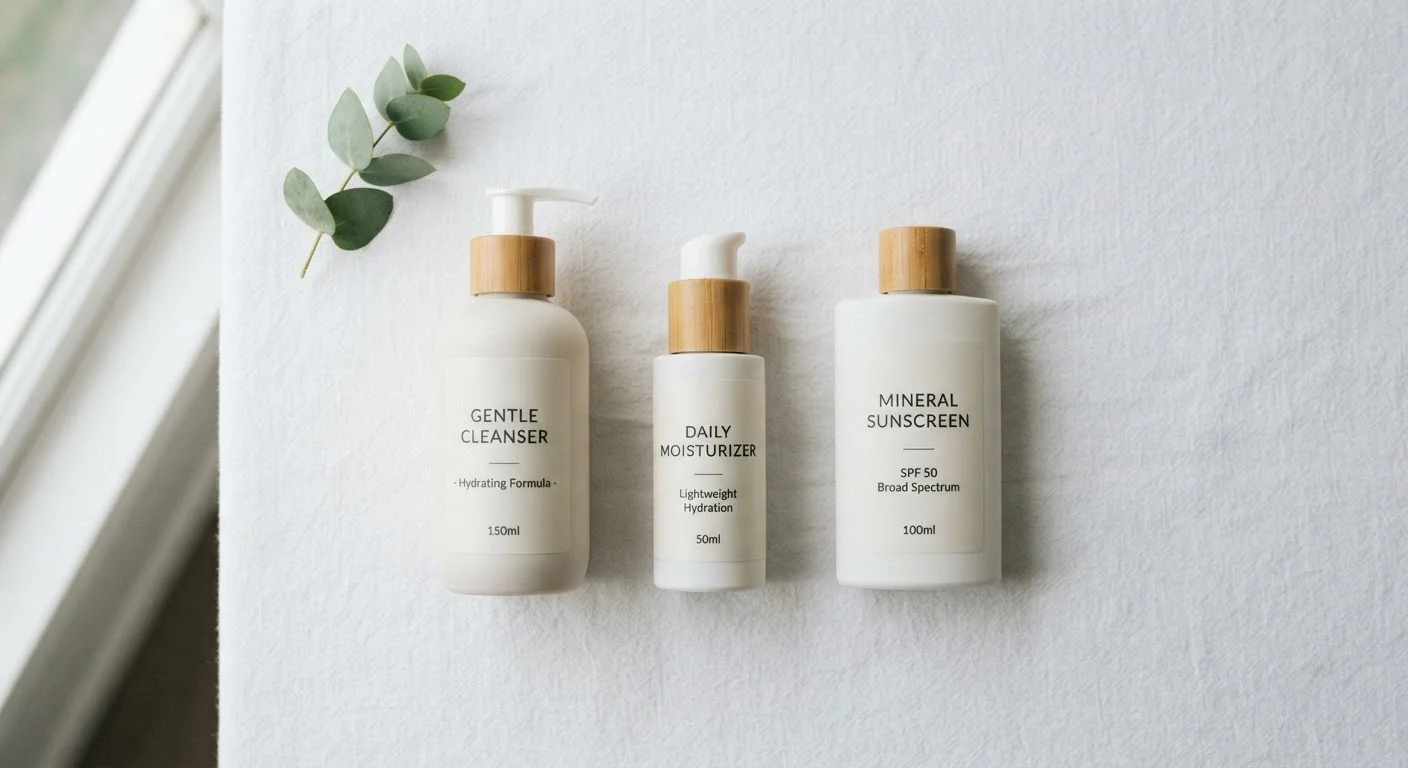
Photo: HorizonMetric.com | One Destination For Everyday Insights editorial
—— In This Article
Key Takeaways
- Knowing your skin type prevents you from buying products that work against you.
- A cleanser, moisturizer, and SPF form a complete, effective starter routine.
- Application order matters — lighter textures go on before heavier ones.
- Daily sunscreen is widely considered the most impactful single skincare step.
- Consistency over weeks outperforms any single expensive product.
Know Your Skin Type First
Buying products without knowing your skin type is the most common beginner mistake. The right cleanser for dry skin can worsen oily skin, and vice versa. Identifying your type takes about a minute.
Wash your face with a gentle cleanser, pat dry, and wait 30 minutes without applying anything. Then observe:
- Oily: Skin looks shiny across the forehead, nose, and chin (the T-zone) or all over.
- Dry: Skin feels tight, flaky, or rough, especially around the cheeks and jaw.
- Combination: Oily in the T-zone but normal or dry elsewhere — the most common type.
- Normal: Balanced, minimal shine or tightness, few breakouts.
- Sensitive: Easily reacts to new products with redness, stinging, or itching.
Skin type can shift with seasons, hormonal changes, and age, so it is worth reassessing periodically. Contrary to a common myth, oily skin still needs moisturizer — skipping it often makes oil production worse.
Skin barrier
The outermost layer of skin that acts as a protective shield, keeping moisture in and irritants out. Keeping it healthy is the foundation of good skincare.
Non-comedogenic
A label term meaning a product is formulated to not clog pores. Useful if you are acne-prone or have oily skin.
SPF
Sun Protection Factor — a measure of how well a sunscreen blocks UVB radiation. SPF 30 filters out roughly 97% of UVB rays under ideal conditions.
Exfoliant
A product that helps remove dead skin cells from the surface. Chemical exfoliants use mild acids to dissolve the bonds holding dead cells together, while physical ones use fine particles to manually buff them away.
Retinoid
A family of vitamin A derivatives used in skincare to support cell turnover. They have significant research backing but can cause irritation when first introduced, so a gradual approach is generally advised.
The Three Products Every Routine Needs
A complete beginner routine has exactly three steps. You do not need serums, toners, or eye creams to start.
1. Cleanser
A gentle, non-stripping cleanser removes dirt, oil, and sunscreen without disrupting the skin barrier. Look for terms like "gentle," "hydrating," or "non-foaming" if you have dry or sensitive skin. Foaming cleansers work well for oily skin. Cleanse once in the morning and once at night.
2. Moisturizer
Moisturizer maintains the skin barrier — the outermost layer that keeps water in and irritants out. Even if your skin is oily, a lightweight, non-comedogenic (won't clog pores) moisturizer is beneficial. Dry skin types generally do better with richer creams.
3. Sunscreen
Daily SPF is the step most beginners skip and dermatologists most consistently emphasize. UV exposure is a leading cause of premature skin aging and increases skin cancer risk. Daily SPF applies even on cloudy days and indoors near windows. An SPF of 30 or higher, applied every morning, is the general recommendation. If you want to understand ingredient labels on these products, our skincare label guide breaks it down clearly.
Patch Test New Products First
Before applying any new product to your whole face, dab a small amount on your inner forearm or behind your ear and wait 24 hours. This is especially important for sensitive skin. If redness, itching, or swelling occurs, discontinue use and consult a dermatologist.
How to Layer Products in the Right Order
Order matters because products applied first are absorbed most directly into the skin. A simple rule covers most situations: lightest to heaviest.
Morning routine order
- Cleanser
- Moisturizer
- Sunscreen (always last in the morning)
Evening routine order
- Cleanser (consider a second pass if wearing heavy SPF or makeup)
- Moisturizer
Wait about 60 seconds between steps to let each product absorb before applying the next. You do not need to time this precisely — it takes about as long as doing another step in your bathroom routine. For a reference on what specific ingredients do and how they interact, the skincare ingredient glossary is a useful starting point.
SPF Goes on Last — Every Morning
Sunscreen is designed to sit on top of the skin and form a protective layer, so applying moisturizer or anything else over it dilutes that protection. In the morning, always apply sunscreen as your final step. At night, you can skip it entirely.
Habits That Make More Difference Than Products
No product compensates for consistently skipped basics. These behaviors influence skin health significantly and cost nothing.
- Sleep: The skin repairs itself during sleep. Chronic sleep deprivation is associated with increased skin sensitivity and slower barrier recovery.
- Hydration: Drinking adequate water supports overall body function, though it is not a substitute for a good moisturizer.
- Not touching your face: Hands transfer bacteria and oils to the skin throughout the day.
- Clean pillowcases: Changing pillowcases weekly reduces the buildup of oils and bacteria that contact your skin for hours each night.
- Diet: Research on diet and skin is nuanced, but balanced everyday nutrition is linked to healthier skin in general.
If you are building skincare alongside a broader wellness practice, getting started with a holistic wellness routine covers how these habits connect.
Don't Overhaul Your Routine All at Once
Switching multiple products at the same time makes it nearly impossible to identify what's helping or causing a reaction. Change one product at a time and give your skin several weeks to adjust before drawing conclusions. Rapid changes are a common reason beginners experience unexpected breakouts or irritation.
When to Add More Steps
Once your three-step routine feels consistent and your skin has stabilized — usually after four to eight weeks — you may want to address specific concerns. Common additions include:
- Exfoliation: Chemical exfoliants (like AHAs or BHAs) help with texture and dullness. Start with once or twice a week, not daily.
- Targeted serums: Ingredients like niacinamide (for uneven tone) or hyaluronic acid (for hydration) can be added between cleanser and moisturizer.
- Retinoids: Vitamin A derivatives with strong evidence for improving skin texture and signs of aging. Start slowly and consult a dermatologist if you have questions about suitability.
Introduce one new product at a time and wait two to three weeks before adding another. This makes it easier to identify what helps — or what causes a reaction. If budget is a consideration, our guide to skincare on a tight budget helps you prioritize where spending actually matters.
This article is for general informational purposes only and is not a substitute for personalized advice from a qualified dermatologist or healthcare professional. If you have a skin condition or persistent concerns, consult a licensed provider.
Frequently Asked Questions

Beauty Editorial Team
Beauty Editorial Team is the collective byline for our editorial team and contributor network. Articles published under this byline or an editorial pen name are researched, written, and reviewed according to our editorial standards for clarity, consistency, and independence before publication.
View author profile