
Skincare Myths That Dermatologists Keep Correcting
From 'natural is always safer' to 'oily skin doesn't need moisturizer' — separating widespread skincare myths from what the evidence actually shows.
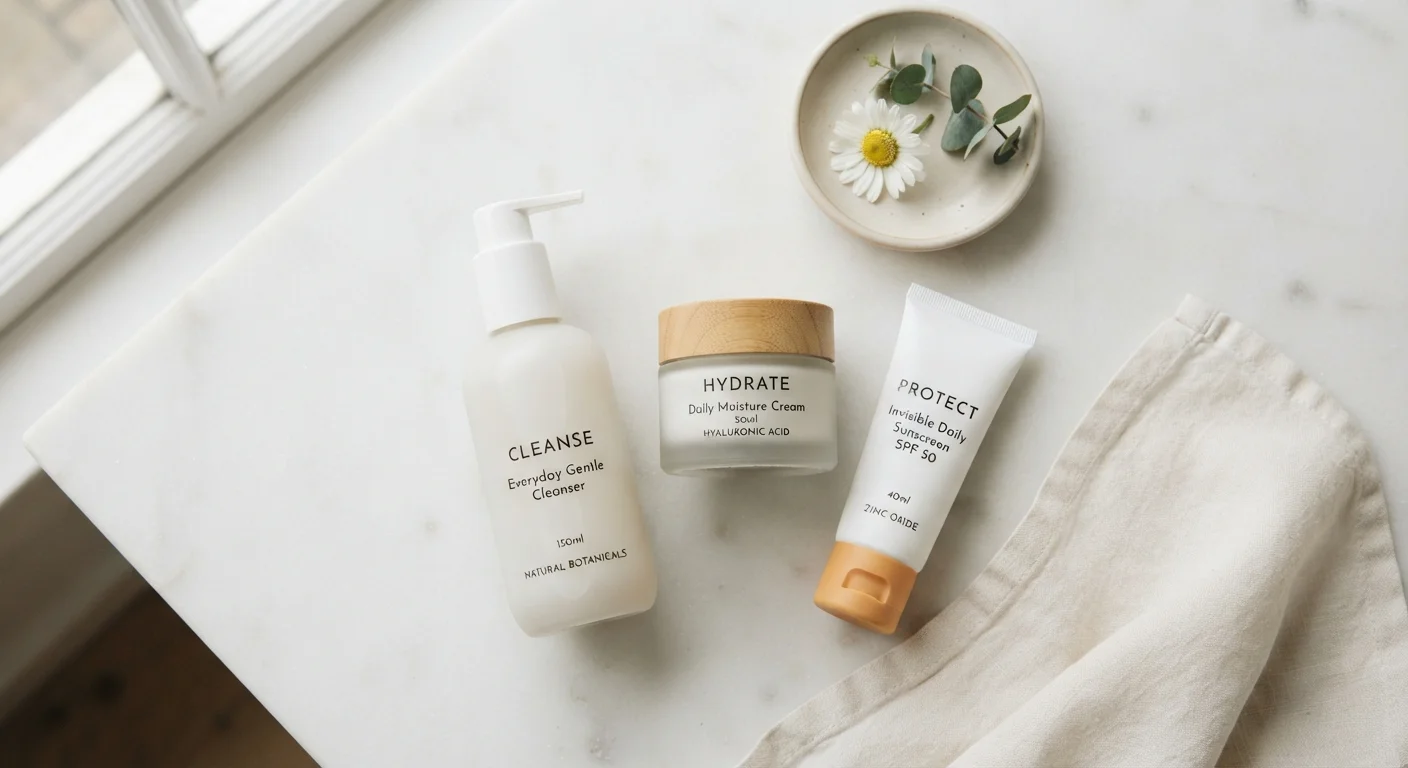
Photo: HorizonMetric.com | One Destination For Everyday Insights editorial
—— In This Article
Key Takeaways
- Oily skin still needs moisturizer — skipping it can trigger more oil production.
- Natural ingredients are not automatically safer or more effective than synthetic ones.
- Daily sunscreen use is considered the most impactful anti-aging step by dermatologists.
- Pores cannot be permanently opened or closed by temperature.
- Expensive products don't reliably outperform affordable alternatives with the same active ingredients.
Why Skincare Myths Are So Hard to Shake
Skincare advice travels fast — through social media, family recommendations, and decades of beauty marketing. The problem is that a lot of it isn't backed by evidence. Dermatologists report correcting the same handful of misconceptions in their offices every week, and many of those myths are actively working against people's skin health.
This article addresses the most persistent ones. For anyone building or reconsidering a routine, our beginner's skincare guide is a useful starting point alongside these corrections.
Myth
Natural ingredients are always safer and gentler than synthetic ones.
Fact
Natural and synthetic are not reliable indicators of safety or irritation risk — what matters is the specific ingredient and its concentration.
Poison ivy is natural. So is urushiol, the compound that causes its rash. Meanwhile, many synthetic ingredients in skincare — like niacinamide and hyaluronic acid — have strong safety records and are well-tolerated across skin types. Dermatologists evaluate ingredients on their evidence profile, not their origin. Some botanical extracts are common allergens; some lab-made compounds are among the mildest options available. Always patch-test new ingredients regardless of their source.
Myth
Oily skin doesn't need moisturizer.
Fact
Oily skin still needs hydration — skipping moisturizer can prompt the skin to produce even more oil to compensate.
Oiliness and hydration are separate things. Skin that's dehydrated (lacking water, not oil) can ramp up sebum production as a compensatory response. The solution isn't to skip moisture but to choose a lightweight, non-comedogenic formula — often labeled oil-free or gel-based — that hydrates without adding heaviness. Dermatologists routinely recommend moisturizer for every skin type, including those prone to acne.
Myth
Steam opens your pores and cold water closes them.
Fact
Pores don't have muscles and cannot open or close in response to temperature.
The "open and close" framing is a durable myth. Pore size is largely determined by genetics and is influenced by factors like oil production and skin elasticity — not water temperature. Warm water can help soften debris and make cleansing more effective, but it doesn't structurally alter pores. Consistent cleansing, exfoliation, and sunscreen use are the approaches with actual evidence behind them for minimizing the appearance of pores over time.
Myth
You only need sunscreen on sunny days or when you're at the beach.
Fact
UV radiation reaches skin through clouds and glass year-round, making daily sunscreen relevant regardless of weather or season.
Ultraviolet A (UVA) rays — associated with premature aging and skin damage — penetrate cloud cover and glass windows. Cumulative daily UV exposure, not just beach trips, is a leading factor in long-term skin changes. Dermatologists consistently identify broad-spectrum sunscreen as the most evidence-backed anti-aging step available. SPF 30 or higher, applied daily to exposed skin, is the general guidance — though individuals with specific conditions should consult a dermatologist for personalized direction.
Myth
Expensive skincare products are more effective than affordable ones.
Fact
Product efficacy is determined by active ingredients and their concentrations, not price point.
A moisturizer with 5% niacinamide works the same way whether it costs $8 or $80. Price often reflects packaging, fragrance, marketing, or brand positioning rather than formula performance. Dermatologists routinely recommend drugstore formulations that contain the same clinically studied actives found in luxury lines. Reading ingredient labels — rather than relying on price as a quality signal — is the more reliable approach.
Myth
You should feel a tingling or burning sensation for a product to be working.
Fact
Tingling or burning typically signals irritation, not effectiveness.
This myth has likely persisted because some active ingredients — like certain acids or retinoids — can cause mild, temporary sensations during an adjustment period. But persistent stinging is a sign of barrier disruption or sensitivity, not proof that a product is doing more. A compromised skin barrier makes skin more reactive and less able to benefit from active ingredients. If a product consistently burns, discontinuing use and consulting a dermatologist is the appropriate response.
What the Evidence Actually Supports
Correcting a myth is only half the job — the other half is understanding what actually does work. Dermatologists broadly agree on a short list of evidence-backed steps: a gentle cleanser, a moisturizer suited to your skin type, and consistent daily sunscreen. That's a complete foundation for most people.
90%
Of visible skin aging attributed to UV exposure
Research published in dermatology literature consistently attributes the majority of premature skin aging to cumulative ultraviolet radiation rather than intrinsic aging processes.
3 steps
Core routine dermatologists most commonly recommend
Cleanser, moisturizer, and broad-spectrum sunscreen form the evidence-backed foundation that most board-certified dermatologists recommend as a complete daily routine.
The tendency to overcomplicate routines often comes from the belief that more products mean better results. In practice, layering too many active ingredients can cause irritation and make it harder to identify what's helping or hurting. Our guide on what skincare spending actually moves the needle breaks this down further.
Active Ingredients Are What Matter
When evaluating any skincare product, focus on the active ingredient list and its concentration — not brand name, packaging, or price. Two formulas with identical actives will generally produce comparable results. This single shift in approach can simplify your routine and significantly reduce unnecessary spending.
If you're evaluating a product, look at its active ingredients rather than its price or claims. Two formulas with the same concentration of an ingredient like niacinamide will generally perform similarly regardless of brand. The same logic applies to sunscreen — the SPF number and broad-spectrum rating matter far more than the label.
For a deeper look at one commonly misunderstood product category, see our piece on when face oils help and when they don't. And for the single step dermatologists recommend above all others, the case for daily SPF explains why sunscreen belongs in every routine, not just at the beach.
This article is for general informational purposes only and is not a substitute for professional medical or dermatological advice. If you have concerns about a skin condition, consult a licensed dermatologist or healthcare provider.

Beauty Editorial Team
Beauty Editorial Team is the collective byline for our editorial team and contributor network. Articles published under this byline or an editorial pen name are researched, written, and reviewed according to our editorial standards for clarity, consistency, and independence before publication.
View author profile