
Sunscreen Every Day: The Case for SPF Beyond the Beach
Daily SPF isn't just for sunny days. Here's why dermatologists consider sunscreen the single most important skincare step — rain or shine.
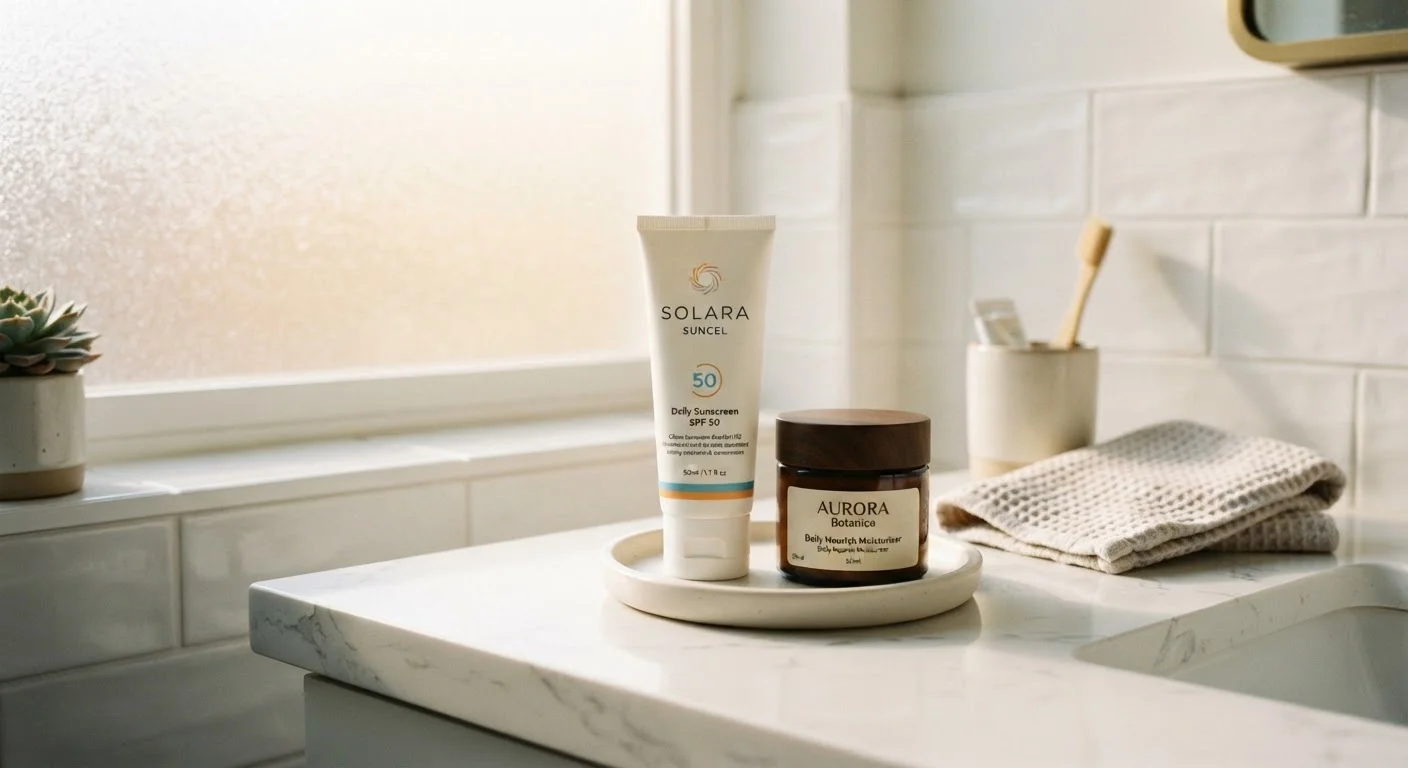
Photo: HorizonMetric.com | One Destination For Everyday Insights editorial
—— In This Article
Key Takeaways
- UV radiation reaches your skin even on cloudy days and through windows — making daily SPF essential year-round.
- Dermatologists broadly agree that sunscreen is the single most effective tool for preventing premature skin aging.
- SPF 30 broad-spectrum formulas are widely accessible, affordable, and suitable for most skin types.
- Reapplication every two hours during outdoor exposure matters as much as morning application.
- Sunscreen works best as part of a consistent daily routine, not just a beach or vacation habit.
Why Daily Sunscreen Is Not Optional
Most Americans reach for sunscreen before a beach trip or a day at the pool — and leave it in the cabinet the rest of the year. That habit leaves skin unprotected during the vast majority of its daily UV exposure.
Ultraviolet radiation from the sun comes in two main forms: UVB rays, which cause sunburn, and UVA rays, which penetrate more deeply and are strongly linked to premature aging, collagen breakdown, and increased skin cancer risk. UVA levels remain relatively consistent year-round and throughout the day. They also pass through clouds and glass, meaning a drive to work or sitting near an office window delivers real cumulative exposure over time.
The American Academy of Dermatology recommends applying a broad-spectrum sunscreen with at least SPF 30 every day — not just during summer. "Broad-spectrum" means the formula protects against both UVA and UVB rays. This distinction matters because many older sunscreens only blocked UVB.
Sunscreen and Vitamin D: A Common Concern
Some people worry that daily sunscreen will block vitamin D production. Research suggests that typical real-world sunscreen use does not cause vitamin D deficiency in most people, partly because application is rarely complete enough to block all UV. If you have concerns about vitamin D levels, speak with your healthcare provider about dietary sources or supplementation — this is not a reason to skip SPF.
If you're building a complete daily routine, see our morning skincare routine guide for the right order to layer sunscreen with your other products.
The Real Cost of Skipping SPF
Skin aging has two main drivers: intrinsic aging (genetics and time) and extrinsic aging (environmental factors). Research published in peer-reviewed dermatology journals consistently identifies chronic UV exposure as the leading cause of extrinsic skin aging — including fine lines, uneven tone, dark spots, and loss of elasticity. This is sometimes called photoaging.
Beyond cosmetic concerns, cumulative UV exposure over a lifetime is a well-established risk factor for skin cancers, including melanoma. The skin has no way to distinguish between UV received on a bright July afternoon and UV received through a car windshield in February. It accumulates all of it.
90%
Of visible skin aging attributed to UV exposure
Research cited by dermatology organizations suggests up to 90% of visible skin aging is caused by sun exposure rather than the natural aging process alone.
97%
UVB rays blocked by SPF 30
SPF 30 sunscreen filters approximately 97% of UVB rays under controlled testing conditions, according to established FDA and dermatology guidance.
There is also a common misconception that people with deeper skin tones don't need sunscreen. All skin tones produce melanin, which provides some natural protection, but it does not fully block UV radiation. Photoaging and skin cancer risk exist across skin tones, and broad-spectrum sunscreen remains broadly recommended regardless of complexion. You can find a detailed breakdown of common misconceptions like this one in our article on skincare myths dermatologists keep correcting.
Best Practices for Everyday SPF Use
The gap between knowing sunscreen matters and actually using it daily often comes down to application habits. These practices help make SPF a reliable part of your routine rather than an afterthought.
Apply sunscreen as the final step of your morning skincare routine, every day.
Consistency is more protective than intensity. Daily application — even on overcast or indoor-heavy days — prevents the gradual accumulation of UV damage that causes photoaging and elevates long-term skin cancer risk. Making it a fixed morning habit removes the judgment call of 'do I need it today?'
Choose a broad-spectrum formula with at least SPF 30.
SPF 30 blocks roughly 97% of UVB rays, while broad-spectrum coverage adds UVA protection. SPF values above 50 offer marginally greater UVB protection but are not dramatically superior — consistent application matters more than chasing higher numbers.
Use enough product — about a nickel-sized amount for the face alone.
Most people apply significantly less sunscreen than the amount used in SPF testing, which effectively reduces the protection they receive. Under-application is one of the most common reasons sunscreen underperforms in real-world use.
Reapply every two hours during extended outdoor exposure.
Sunscreen breaks down with UV exposure and physical contact (sweating, touching the face, wiping). A morning application does not last all day, particularly outdoors. Reapplication is especially important between 10 a.m. and 4 p.m. when UV intensity peaks.
Don't neglect commonly missed areas: ears, neck, back of hands, and lips.
Skin cancers frequently develop on ears, the lower lip, and the backs of hands — areas that receive significant incidental sun exposure but are routinely skipped during sunscreen application. These areas are also among the first to show visible signs of photoaging.
For readers watching their budget, sunscreen is widely considered one of the highest-impact skincare purchases available at any price point. Our guide to skincare on a tight budget explains why SPF consistently makes the "worth it" list.
Quick Wins: Starting Your Daily SPF Habit Today
Changing a skincare habit doesn't require an overhaul. A few targeted actions can anchor sunscreen into your morning within a week.
This article is for general informational purposes only and does not constitute medical advice. If you have concerns about skin conditions, skin cancer risk, or sensitivity to sunscreen ingredients, consult a qualified dermatologist or healthcare provider.

Beauty Editorial Team
Beauty Editorial Team is the collective byline for our editorial team and contributor network. Articles published under this byline or an editorial pen name are researched, written, and reviewed according to our editorial standards for clarity, consistency, and independence before publication.
View author profile