
Cast Iron vs. Stainless Steel: Choosing Your Everyday Pan
Both are beloved by serious cooks, but they behave very differently. Here's a side-by-side look at how each performs in a home kitchen.
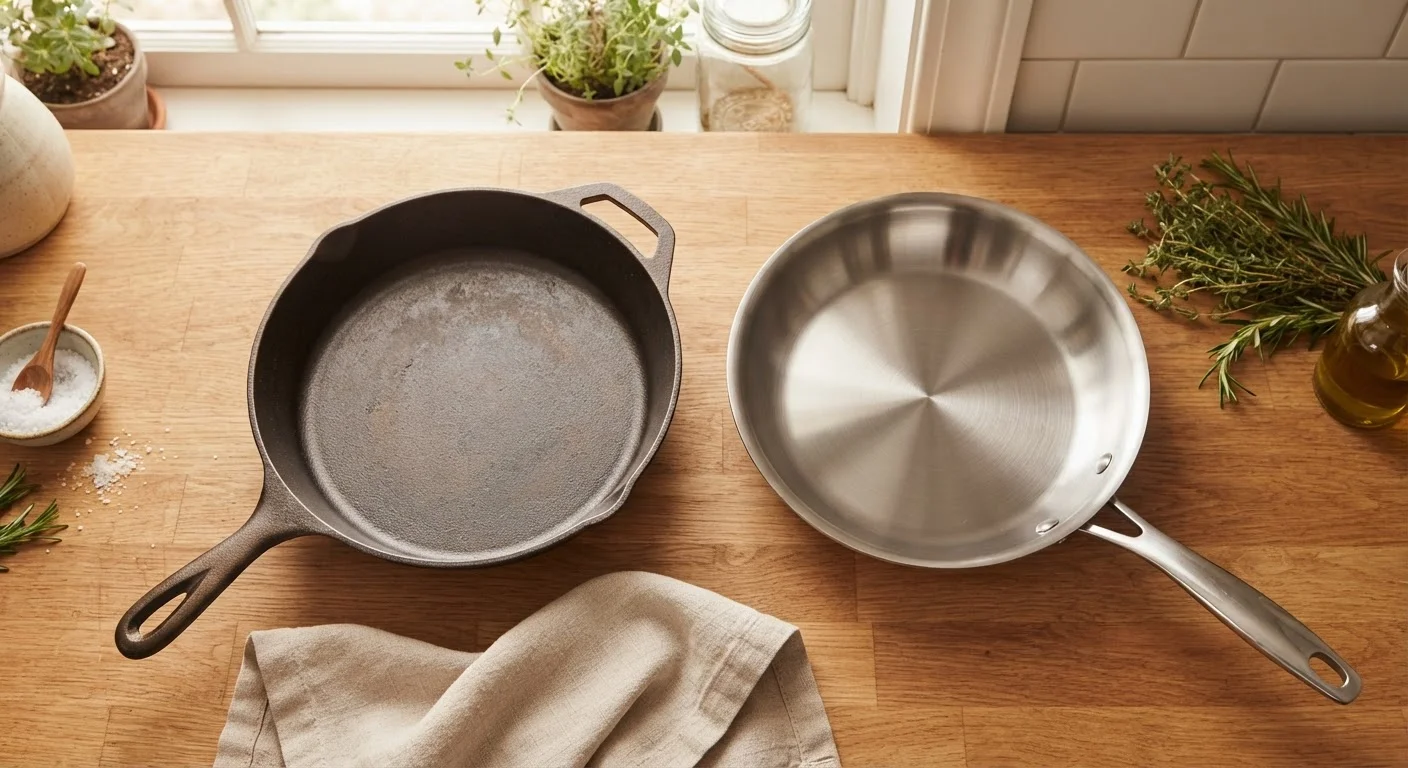
Photo: HorizonMetric.com | One Destination For Everyday Insights editorial
—— In This Article
Key Takeaways
- Cast iron retains heat exceptionally well but heats unevenly and takes longer to warm up.
- Stainless steel responds quickly to temperature changes, giving cooks more moment-to-moment control.
- Cast iron requires seasoning and careful drying to prevent rust; stainless steel is largely maintenance-free.
- Stainless steel is safe with acidic foods like tomatoes; cast iron can react with them.
- Both pans can last decades with proper care, making either a worthwhile long-term investment.
How Each Pan Handles Heat
Understanding heat behavior is the single most useful thing you can know about either pan. Learning to read your pan's heat signals makes every cooking session more predictable.
Cast iron heats slowly and unevenly at first — you'll notice the center gets hotter than the edges on most burners. But once it's hot, it stays hot. That thermal mass is exactly what you want when searing a thick steak or frying chicken: the pan doesn't lose heat when cold food hits the surface.
Stainless steel responds quickly to burner adjustments. Turn the heat down and the pan cools down. That responsiveness makes it easier to avoid scorching delicate proteins or vegetables. It won't hold heat as aggressively as cast iron, but for most everyday cooking, that's an advantage, not a drawback.
| Criterion | Cast Iron | Stainless Steel |
|---|---|---|
| Heat retention | Excellent — holds heat very well | Moderate — cools faster |
| Heat responsiveness | Slow to adjust | Adjusts quickly |
| Weight | Heavy (6–12 lbs typical) | Lighter and easier to handle |
| Maintenance required | Seasoning, hand-wash, dry carefully | Minimal — dishwasher-safe |
| Acidic foods (tomatoes, citrus) | Use sparingly — strips seasoning | Fully compatible |
| Oven-safe | Yes — any temperature | Yes — check handle material |
| Non-stick over time | Yes, with proper seasoning | No — needs fat to prevent sticking |
Maintenance, Seasoning, and Daily Care
This is where the two pans differ most in day-to-day life. Cast iron requires seasoning — thin layers of baked-on oil that build up over time and create a naturally slick cooking surface. A well-seasoned cast iron pan releases eggs and fish nearly as easily as a non-stick pan, but getting there takes patience and consistent care.
After each use, cast iron should be dried thoroughly (moisture causes rust), lightly oiled, and stored in a dry place. Avoid soaking it and skip the dishwasher entirely. Acidic foods like tomatoes or citrus can strip seasoning and leave a metallic taste if left in the pan for extended periods.
Stainless steel needs none of that. Wash it with soap and water — or run it through the dishwasher — and you're done. It handles acidic ingredients without any reaction. The one maintenance note: stainless can develop water spots or discoloration over time, but these are cosmetic and don't affect performance. A quick scrub with a gentle abrasive restores the shine.
Sticking Problems With Stainless Steel
Food sticking to stainless steel is the most common beginner frustration — and it's almost always a heat issue, not a pan issue. Preheat the pan before adding oil, then add food only when the oil shimmers. Cold food in a cold pan is the main cause of sticking. A well-preheated stainless pan releases food cleanly in most situations.
What Each Pan Does Best in the Kitchen
Choosing between them is really about matching the pan to how you cook most often. Understanding different stovetop cooking methods like sautéing and pan-frying helps clarify which pan to reach for.
Cast iron excels at:
- Searing meats at high heat
- Baking (skillet cornbread, frittatas, cobblers)
- Shallow frying and smash burgers
- Cooking over a grill or campfire
Stainless steel excels at:
- Sautéing vegetables and proteins
- Building pan sauces from fond (the browned bits left after searing)
- Cooking acidic dishes like tomato-based sauces
- Tasks requiring quick, precise heat adjustments
Many experienced home cooks keep both — using cast iron for tasks where heat retention matters and stainless for everyday flexibility. That said, if you can only choose one, stainless steel is generally the more versatile starting point for a beginner, while cast iron rewards cooks who appreciate its particular strengths. Common kitchen myths — like the idea that cast iron is too difficult for beginners — can make the choice seem harder than it is.
~150 years
Lifespan of well-maintained cast iron
Cast iron cookware handed down across multiple generations remains functional, illustrating the durability of properly cared-for pieces.
~500°F+
Typical oven-safe temperature for cast iron
Most bare cast iron pans can withstand high oven temperatures, making them suitable for baking and broiling as well as stovetop cooking.

Food Editorial Team
Food Editorial Team is the collective byline for our editorial team and contributor network. Articles published under this byline or an editorial pen name are researched, written, and reviewed according to our editorial standards for clarity, consistency, and independence before publication.
View author profile