
Meal Prep for Busy Weeks: Building a Realistic Sunday Routine
A practical guide to preparing ingredients and meals ahead of time so that healthy choices are the easiest choices on weeknights.
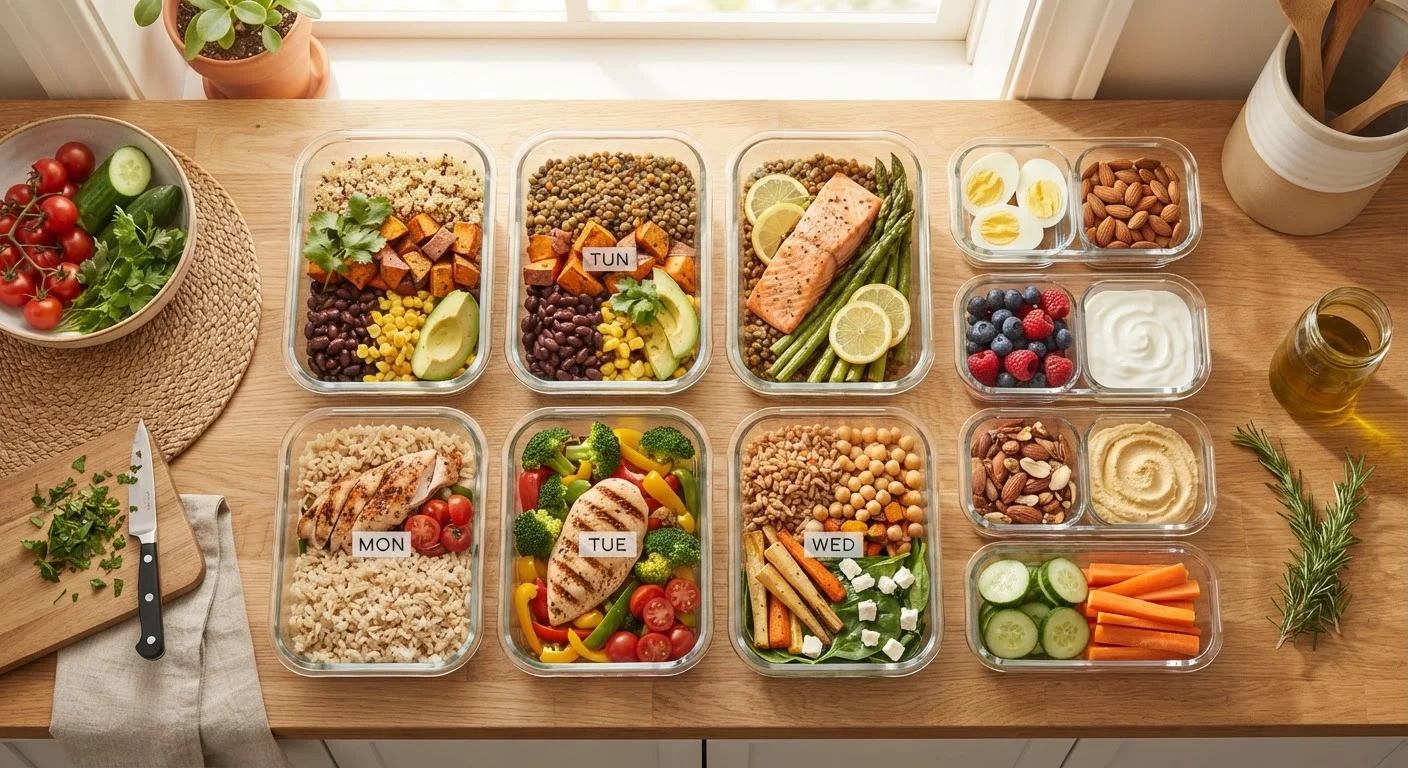
Photo: HorizonMetric.com | One Destination For Everyday Insights editorial
—— In This Article
Key Takeaways
- A focused 90–180 minute Sunday session can cover most of your weeknight meal needs.
- Prepping components — not full meals — gives you flexibility without wasting food.
- Starting small and building the habit over several weeks is more effective than going all-in at once.
- Good storage practices extend the life of prepped ingredients and reduce food waste.
- Meal prep works best when it's tied to a realistic grocery list made before you shop.
Why a Sunday Routine Changes the Whole Week
The biggest obstacle to eating well on busy weeknights isn't motivation — it's friction. When you come home tired and hungry, the easiest option wins. Meal prep shifts what's easiest: instead of ordering takeout or defaulting to ultra-processed convenience food, you open the fridge and find things that are already done.
A realistic Sunday routine doesn't mean cooking elaborate recipes for seven days straight. It means doing the 20% of prep work that eliminates 80% of the weeknight effort: cooking a pot of grains, roasting a sheet pan of vegetables, washing salad greens, and having a protein or two ready to use. These components combine into quick, varied meals without locking you into rigid recipes.
For households navigating demanding schedules, this kind of proactive approach pairs well with other planning habits. Our weeknight dinner rotation guide walks through how to cycle through meals you actually enjoy so cooking stays sustainable long-term.
Batch Your Staples, Not Just Recipes
Instead of prepping five complete meals, cook flexible staples — a pot of grains, a sheet pan of roasted vegetables, and a protein or two. These building blocks combine into many different meals throughout the week, reducing monotony and making it easier to use up what you have.
If you're new to meal prep, set expectations low and build from there. Meal planning that holds up past the first week covers the structural habits that help people actually stick with it — worth reading before you invest a Sunday session.
What You'll Need Before You Start
Good prep depends less on fancy equipment and more on having the basics organized and ready. Below are the tools that genuinely make a difference, along with what to have in place before your first session begins.
What you will need
Airtight food storage containers
Keep prepped ingredients fresh in the refrigerator and prevent cross-contamination.
Sheet pan
Roast large batches of vegetables or proteins evenly in the oven.
Large pot or Dutch oven
Cook big batches of grains, beans, soups, or stews efficiently.
Sharp chef's knife and cutting board
Chop and slice a week's worth of produce quickly and safely.
Masking tape and marker (for labeling)
Label containers with contents and prep date to track freshness.
Instant-read thermometer
Confirm proteins are cooked to a safe internal temperature.
If your kitchen workspace setup feels chaotic, it's worth doing a quick kitchen prep checklist before diving in. A few minutes of organization at the start saves a lot of scrambling later.
Your Step-by-Step Sunday Meal Prep Session
Follow these steps in order for the most efficient use of your kitchen time. The goal is to keep every burner and the oven working simultaneously so you're finishing multiple tasks at once, not waiting on one thing to finish before starting another.
Plan your meals and make your grocery list
Before you touch a knife, decide what you're making. Look at the week ahead and identify which nights you'll need a quick dinner and which are flexible. Choose two or three dinners and factor in lunches you can build from the same ingredients. Write your grocery list from that plan — not the other way around.
Shop and bring everything home before you start
Do your grocery run on Saturday evening or early Sunday morning so ingredients are ready when you're ready to cook. Unpack everything and set perishables on the counter so you can do a quick visual inventory before your session begins.
Set up your workspace
Clear the counters, get your containers out, and preheat the oven if you're roasting. Having everything within reach before you begin is one of the most underrated efficiency moves in meal prep. See the prep checklist for stress-free meals for a thorough workspace setup guide.
Start your longest-cooking items first
Put grains on the stove and proteins in the oven before doing any chopping. Brown rice, dried beans, and roasted chicken thighs all need 30–60 minutes of mostly hands-off time. While they cook, you can wash and chop vegetables, make sauces, or hard-boil eggs.
Wash, chop, and portion your produce
Work through your vegetables and fruit systematically: wash, dry, chop, and store. Pre-cut vegetables for stir-fries, snack-ready sliced peppers and cucumbers, and pre-washed salad greens all eliminate the friction that makes weeknight cooking feel like a lot of work.
Cool, label, and store everything properly
Once cooked items are done, spread them out to cool before sealing containers. Label every container with the item name and date. Refrigerate items you'll use within four days; freeze anything beyond that. Arrange the fridge so the most perishable items are front and center so they get used first.
Food Safety Comes First
Cooked proteins and grains should be cooled to room temperature within two hours before refrigerating, then consumed within three to four days. Always store prepped food in airtight containers and label them with the date. When in doubt about whether something is still safe to eat, discard it — food safety guidelines from the USDA are a reliable reference.
For more strategies on getting nutritious meals on the table when energy and time are both low, see our guide to healthy eating on a tight schedule.
Making the Habit Stick Beyond Week One
The first few sessions will take longer and feel awkward — that's normal. The habit becomes efficient once you've repeated it enough times that the sequence is automatic. A few things that help it stick:
- Keep a running list of what worked (and what you didn't use) so each week's plan improves on the last.
- Protect the time by treating Sunday prep like an appointment. Even 60 minutes is enough to make a meaningful difference.
- Adjust the scope based on your week. A lighter week might need only a quick 45-minute session; a particularly packed week might justify a longer one.
Meal prep doesn't exist in isolation. Pairing it with consistent physical activity is another way to reduce the mental load of healthy habits — the weekly movement schedule guide offers practical strategies that fit realistically into a packed week.
Avoid Overcommitting in Week One
Trying to prep every meal for the entire week on your first attempt is a fast path to burnout. Start by prepping for just two or three weeknight dinners. As the habit solidifies over several weeks, you can gradually scale up without it feeling like a chore.
Food and movement habits reinforce each other. Small, sustainable systems — not dramatic overhauls — are what most people find they can actually maintain. Start with the prep steps above, give yourself three or four Sundays to refine the approach, and adjust based on what your household actually eats.

Food Editorial Team
Food Editorial Team is the collective byline for our editorial team and contributor network. Articles published under this byline or an editorial pen name are researched, written, and reviewed according to our editorial standards for clarity, consistency, and independence before publication.
View author profile