
The US Gulf Coast: What Draws Travelers to This Underexplored Stretch
From the Florida Panhandle to Texas, the Gulf Coast offers beaches, seafood culture, and history that most Americans overlook in favor of the Atlantic or Pacific.
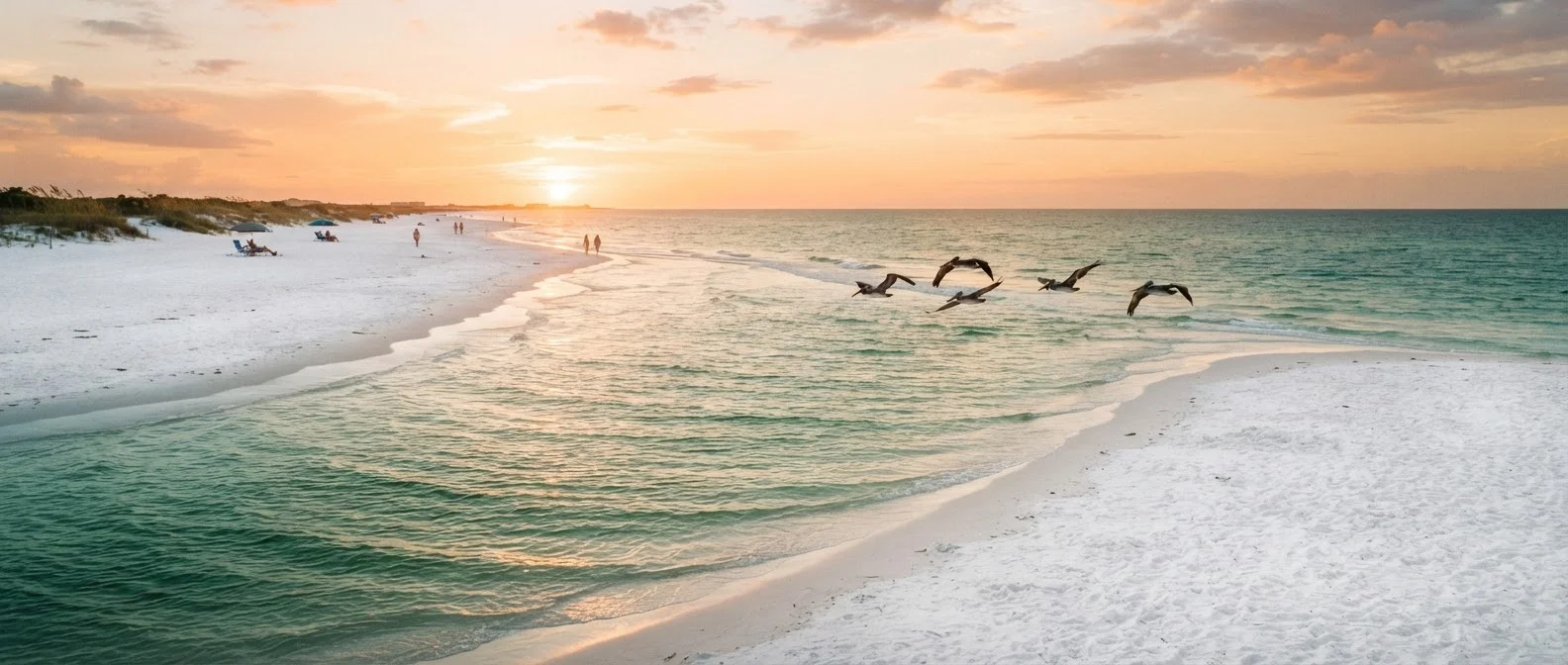
Photo: HorizonMetric.com | One Destination For Everyday Insights editorial
—— In This Article
Key Takeaways
- The Gulf Coast spans five states with dramatically different landscapes and cultures.
- Gulf waters are typically calmer and warmer than Atlantic or Pacific beaches, making them family-friendly.
- New Orleans, Mobile, and Corpus Christi anchor a food and history culture unlike anywhere else in the US.
- Spring and fall are generally ideal travel windows; peak hurricane season runs June through November.
- The Gulf Coast remains significantly less crowded than comparable Atlantic or Pacific destinations.
Why the Gulf Coast Gets Overlooked — and Why That's Changing
American travelers tend to default to the Atlantic or Pacific when they picture a coast. The Gulf Coast, sandwiched between Florida's crowded resort corridors and the Texas border, rarely makes the highlight reel. That's a genuine oversight. The Gulf offers something distinct: calm, warm, emerald-to-turquoise water, sugar-white quartz sand in the Florida Panhandle and Alabama, and a cultural depth that beach-only coasts simply don't have.
Part of the region's lower profile comes from geography. There's no single iconic highway that stitches it together in the public imagination the way the Pacific Coast Highway defines California's coast. Yet for those willing to look, the Gulf Coast deserves a spot on any serious US travel list — and it's increasingly appearing on them. See how it compares to better-known drives in our roundup of America's most iconic road trip routes.
~1,700 mi
Total US Gulf Coast shoreline length
The Gulf Coast spans roughly 1,700 miles of coastline across five US states, according to NOAA coastal geography data.
5 states
States with Gulf Coast shoreline
Florida, Alabama, Mississippi, Louisiana, and Texas each have distinct Gulf Coast character, culture, and landscape.
80°F+
Typical summer Gulf water temperature
Gulf nearshore waters regularly reach 80–85°F in summer months, making them among the warmest coastal waters in the continental US.
What Each State Along the Gulf Offers
No two Gulf Coast states feel alike, which is part of what makes the stretch so rewarding to explore.
- Florida Panhandle: Destinations like Pensacola Beach and Destin are famous for their startlingly white quartz-sand beaches — the sand here originates from the Appalachian Mountains and has a powdery texture found almost nowhere else in the US. The water is clear and shallow.
- Alabama: Gulf Shores and Orange Beach punch above their weight for seafood and laid-back beach culture, with far smaller crowds than comparable Florida resorts.
- Mississippi: The coast here is more about history and transition — barrier islands, the city of Biloxi's complicated past, and access to the Gulf Islands National Seashore.
- Louisiana: New Orleans sits roughly 100 miles inland but defines the region's cultural identity. The actual Louisiana coastline is a labyrinth of marshes, bayous, and wetlands — one of the most ecologically significant coastal systems in North America.
- Texas: From Galveston Island to South Padre Island, Texas offers 367 miles of coast that range from bustling resort towns to genuinely remote stretches of barrier island accessible only by boat or off-road vehicle.
This kind of regional variety is what sets the Gulf apart from more uniform coastal stretches — a theme explored further in our look at underrated American road trip corridors.
Food, History, and Culture: The Gulf's Real Draws
The Gulf Coast's food culture is among the most distinctive in the United States. Louisiana's Creole and Cajun traditions — rooted in French, Spanish, African, and Native American influences — have shaped how the entire region eats. Gulf shrimp, oysters, blue crab, and crawfish appear in preparations that vary meaningfully from state to state and city to city. Mobile, Alabama has its own Mardi Gras tradition predating New Orleans'. Galveston, Texas carries a Victorian-era architectural legacy from its early 20th-century prominence as one of America's busiest ports.
Historically, the Gulf Coast was a contested crossroads — claimed successively by Spain, France, Britain, and eventually the United States. That layered past survives in place names, architecture, and living cultural traditions. For travelers who want food to anchor their itinerary, the regional food stops worth including on any American road trip gives useful context on what to seek out.
“The Gulf Coast is one of the most culturally layered coastlines in North America. People think 'beach' and overlook the architecture, the food traditions, the music, the water access to ecological systems that exist nowhere else in the US.”
— A Gulf Coast tourism researcher, Regional travel and cultural heritage specialist
Practical Considerations Before You Go
Planning a Gulf Coast trip requires honest attention to a few realities. Hurricane season officially runs June 1 through November 30, with peak activity typically in August and September. This doesn't mean the coast is unvisitable in summer — millions travel there annually — but it does mean travelers should purchase travel insurance, monitor weather forecasts, and have flexible plans. Always verify current advisories through official government and local tourism sources before traveling, as conditions change.
Water quality and beach conditions vary significantly by location and season. Red tide events, jellyfish blooms, and occasional tar ball deposits from legacy offshore drilling activity do occur. Checking local beach condition reports before arrival is simply good practice.
Accessibility varies widely. Some areas have well-developed infrastructure; others, particularly remote barrier islands and wetland communities, are harder to reach and offer minimal amenities. For nature-focused travelers, that remoteness is the draw — the Gulf Coast has protected areas that rival national parks that most Americans overlook in ecological richness.
Travel Smart: Verify Before You Go
Entry conditions, beach water quality, and weather can shift quickly along the Gulf Coast. Before any trip, check the National Hurricane Center, your destination's local beach condition reports, and official state tourism or park service sites for current information. Booking refundable accommodations during hurricane season gives you flexibility without sacrificing planning.
Frequently Asked Questions

Travel Editorial Team
Travel Editorial Team is the collective byline for our editorial team and contributor network. Articles published under this byline or an editorial pen name are researched, written, and reviewed according to our editorial standards for clarity, consistency, and independence before publication.
View author profile