
Why Layering Products in the Wrong Order Undermines Your Routine
Applying skincare in the wrong sequence can block absorption or irritate skin. Here's what goes wrong — and the order that actually works.
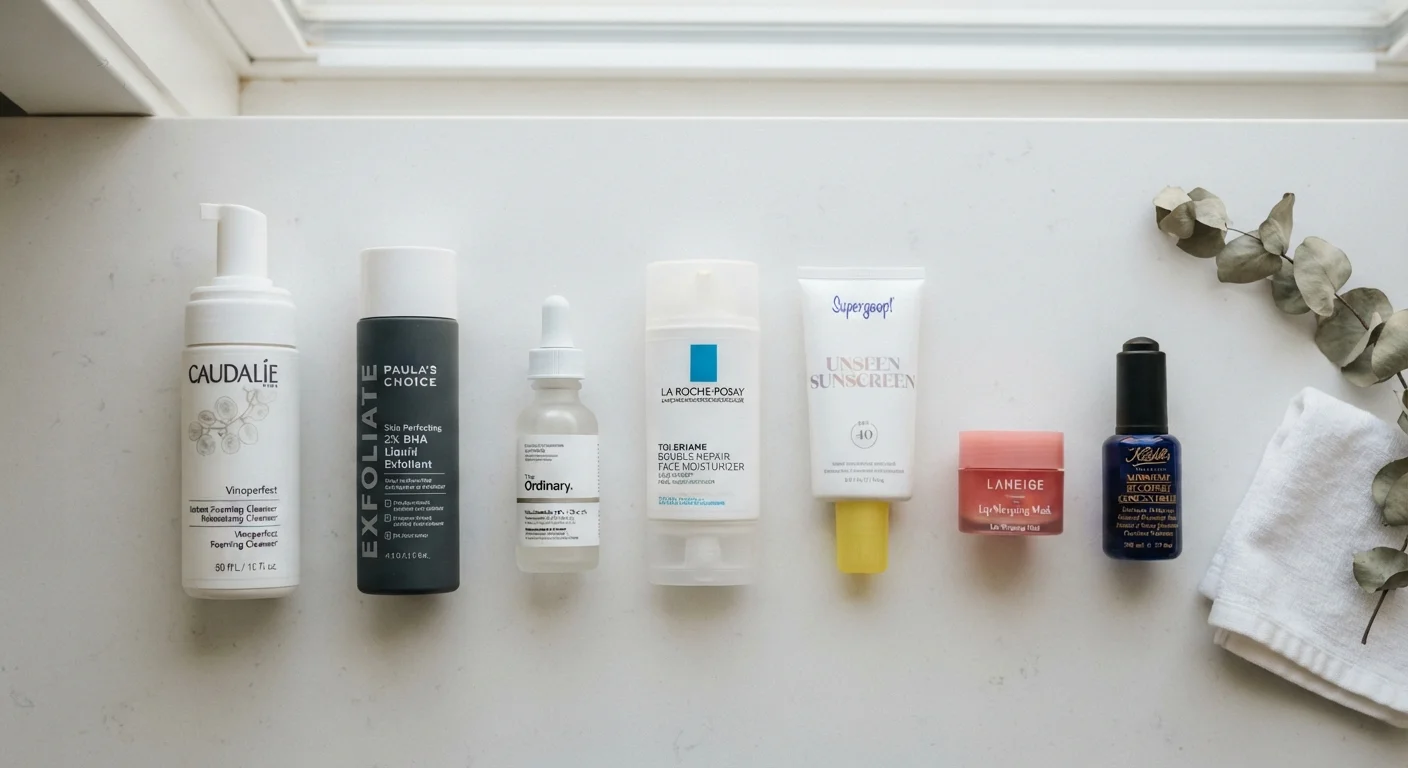
Photo: HorizonMetric.com | One Destination For Everyday Insights editorial
—— In This Article
Key Takeaways
- Applying products thickest-to-thinnest blocks lighter formulas from reaching the skin.
- Mixing certain active ingredients in the wrong order can cause irritation or neutralize their effects.
- SPF applied before moisturizer loses much of its protective benefit.
- A simple lightest-to-heaviest rule covers most everyday routines correctly.
Why Order Isn't Just a Preference
Skincare layering isn't arbitrary — it's chemistry. Each product is formulated to interact with skin at a specific moisture and pH level. When you apply them out of sequence, you either create a barrier that prevents the next product from absorbing, or you set up a chemical environment that reduces how well an active ingredient performs.
If your routine doesn't seem to be delivering results despite using good products, the order you're applying them in may be the culprit — not the products themselves. Understanding a few core principles makes the right order easy to remember without memorizing a specific checklist. For a full introduction to building a routine from the ground up, see Skincare Basics: Everything You Need to Get Started.
Common Layering Mistakes — and How to Fix Them
Most application errors fall into a handful of predictable patterns. Identifying which ones apply to your routine is the fastest way to get more from the products you already own.
Applying moisturizer before a serum.
Why it happens: Serums come in smaller bottles and some people apply them last as a finishing step, assuming a thicker moisturizer prepares the skin to receive them.
Putting SPF on before moisturizer in the morning.
Why it happens: Sunscreen feels like a protective "top coat," so it's tempting to layer everything else over it once it's on.
Layering vitamin C and niacinamide directly on top of each other.
Why it happens: Both are popular brightening ingredients and many people assume more is better, applying one immediately after the other.
Using a facial oil before moisturizer.
Why it happens: Oils feel rich and nourishing, so they're often assumed to be a base layer that "preps" the skin.
Applying exfoliating acids and retinol in the same step.
Why it happens: Both are active treatments, and users want to maximize results by using them together or in quick succession.
If you're unsure what's actually inside your products, Reading a Skincare Label Without Getting Lost in the Jargon can help you understand ingredient lists before you decide how to sequence them.
The Practical Rule That Covers Most Routines
The general guideline used by most dermatologists is straightforward: apply products from thinnest to thickest consistency. In practice, that typically means: cleanser → toner or essence → serum → eye cream → moisturizer → facial oil (if used) → SPF (morning only).
~pH 4–5
Typical skin surface pH range
Dermatologists note that most effective serums are formulated to work within this naturally acidic skin environment, which is why cleanser order and timing matter.
2–3 min
Recommended wait time between layers
Allowing each product to partially absorb before adding the next is a widely recommended practice among skincare professionals to avoid pilling and improve efficacy.
There's one important exception: prescription treatments and medicated products should usually go on cleansed skin before other layers, unless your dermatologist specifies otherwise. Always follow the guidance of a qualified healthcare professional for any prescription skincare.
Don't Skip SPF to Simplify Your Routine
Sunscreen is consistently identified by dermatologists as the single most important skin-protective step. Removing it to reduce the number of layers is not recommended. If application feels heavy, look for a lightweight, non-comedogenic formula suited to your skin type — but keep it in the routine.
For readers working with a limited product lineup, Skincare on a Tight Budget: What's Worth Keeping, What Isn't outlines which steps genuinely move the needle — helpful when you're deciding which layers you actually need. And if you're building a morning routine from scratch, Building a Simple Morning Skincare Routine from Scratch walks you through each step in the correct order.
This article is for general informational purposes only and does not constitute medical or dermatological advice. Consult a qualified healthcare professional for concerns about your skin.

Beauty Editorial Team
Beauty Editorial Team is the collective byline for our editorial team and contributor network. Articles published under this byline or an editorial pen name are researched, written, and reviewed according to our editorial standards for clarity, consistency, and independence before publication.
View author profile