
Organic Fertilizer vs. Synthetic Fertilizer: A Practical Comparison for Home Gardens
Both organic and synthetic fertilizers feed plants, but they work differently. Compare their trade-offs before choosing an approach for your garden.
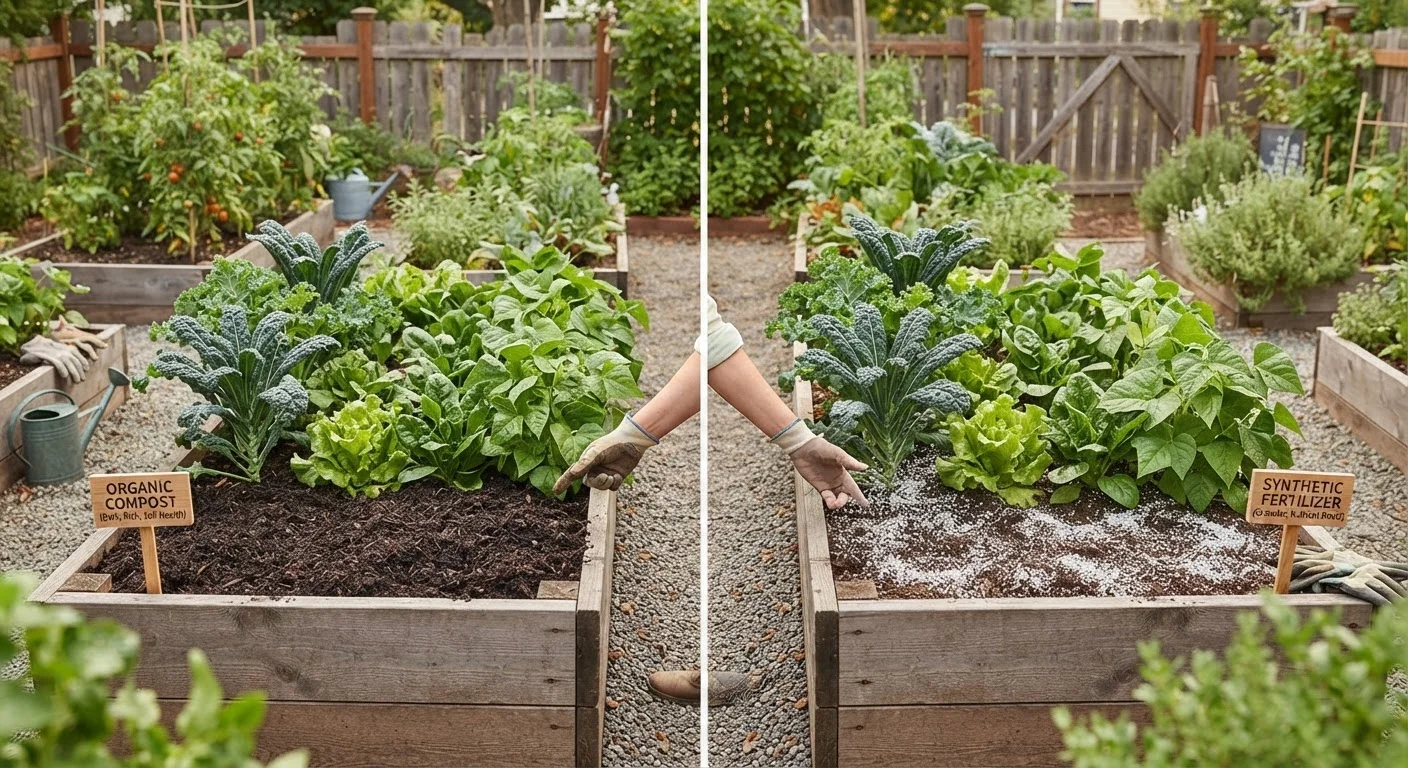
Photo: HorizonMetric.com | One Destination For Everyday Insights editorial
—— In This Article
Key Takeaways
- Organic fertilizers release nutrients slowly and improve soil structure over time.
- Synthetic fertilizers deliver nutrients quickly but don't build long-term soil health.
- Neither type is universally superior — the right choice depends on your soil, plants, and goals.
- Over-applying either type can harm plants and pollute waterways.
- Combining both approaches is a legitimate strategy many experienced gardeners use.
How Each Type Actually Feeds Your Plants
Plants absorb nutrients in the same basic forms regardless of where those nutrients originate. The difference between organic and synthetic fertilizers lies in how nutrients get delivered — and what happens to your soil in the process.
Organic fertilizers are derived from once-living materials: bone meal, blood meal, fish emulsion, composted manure, and worm castings are common examples. These materials must be broken down by soil microbes before plants can use them. That process takes time — weeks to months — but it also feeds the underground microbial communities that make soil fertile in the first place. To understand why that matters, see our guide to what's happening underground in your garden.
Synthetic fertilizers are manufactured chemicals — typically nitrogen, phosphorus, and potassium compounds — formulated so plants can absorb them almost immediately. They bypass the microbial step entirely, which is why results are visible faster. However, because they dissolve readily in water, they can also leach out of the root zone quickly, especially in sandy soils or during heavy rain.
Key Trade-Offs Side by Side
Before choosing an approach, it helps to see how the two options compare across the criteria that matter most to home gardeners.
| Organic Fertilizer | Synthetic Fertilizer | |
|---|---|---|
| Speed of action | Slow (weeks to months) | Fast (days to a week) |
| Soil health impact | Builds microbial life over time | Minimal to no soil benefit |
| Risk of over-application | Lower, but not zero | Higher; can burn plants |
| Nutrient precision | Variable; harder to control | Exact; labeled percentages |
| Leaching risk | Lower; nutrients release slowly | Higher, especially in rain or sandy soil |
| Cost | Often higher per application | Generally lower upfront cost |
| Best use scenario | Long-term soil building | Correcting acute deficiencies fast |
One factor the table can't fully capture: organic fertilizers tend to vary in their nutrient concentrations because they come from natural materials. A bag of synthetic fertilizer will list exact percentages (such as 10-10-10, meaning 10% each of nitrogen, phosphorus, and potassium), while an organic product's actual nutrient content can be more variable. That predictability is why some gardeners lean synthetic for container gardens, where nutrient control is harder to achieve any other way. For more on matching fertilizer strategy to your garden setup, see matching the right approach to your space.
Common Mistakes With Both Types
The most frequent error gardeners make with fertilizer — organic or synthetic — is applying too much. More fertilizer does not mean faster growth. Excess nitrogen, for example, pushes leafy growth at the expense of fruit and flowers. In synthetic form, over-application can also burn roots directly through a process called fertilizer burn, where high salt concentrations draw water out of plant tissue.
More Is Not Better With Fertilizer
Applying fertilizer beyond what the label or a soil test recommends doesn't accelerate plant growth — it can damage or kill plants and may wash into storm drains or groundwater. Synthetic fertilizers in particular carry a high runoff risk when overapplied to lawns or garden beds before rain. Always follow application rate guidelines and water in fertilizers at the recommended amount.
Organic fertilizers are more forgiving but not immune to misuse. Applying large amounts of fresh manure near root zones can introduce pathogens. Some organic amendments, like bone meal, are high in one nutrient and low in others, so applying them without knowing your soil's current state can create imbalances over time.
The consistent advice from extension services and soil scientists: test your soil before adding anything. Many university extension programs offer affordable soil testing kits that reveal which nutrients are already present and at what levels. This single step prevents the majority of fertilizer mistakes.
Combining Approaches and Thinking Long-Term
Many experienced gardeners use both types strategically rather than choosing one exclusively. A common pattern is to build soil organically over multiple seasons — using compost and slow-release organic amendments — while keeping a water-soluble synthetic fertilizer on hand for situations where a plant shows acute nutrient deficiency mid-season.
Composting is one of the most effective ways to supply organic matter to your garden over time without ongoing cost. If you're not already composting kitchen and yard waste, composting at home is a straightforward place to start. Finished compost doesn't replace fertilizer entirely, but it improves soil texture, water retention, and microbial activity in ways no bag of fertilizer can replicate.
Start With a Soil Test
Before purchasing any fertilizer, invest in a basic soil test through your local cooperative extension office or a garden center. The results will tell you which nutrients are actually lacking and at what pH your soil is operating — information that prevents wasted spending and protects your plants. Fertilizing without this data is essentially guessing.
If you're redesigning your growing space — perhaps moving from in-ground beds to raised beds — your fertilizer strategy may need to shift too. Raised beds often require more frequent feeding because they drain faster and have a finite soil volume. Raised beds vs. in-ground gardens outlines how each setup affects your overall soil management approach.
Whatever path you choose, consistent attention — rather than any single product — is what produces a thriving garden season after season.

Home Editorial Team
Home Editorial Team is the collective byline for our editorial team and contributor network. Articles published under this byline or an editorial pen name are researched, written, and reviewed according to our editorial standards for clarity, consistency, and independence before publication.
View author profile