
Garage Storage Systems: Weighing Wall-Mounted, Overhead, and Cabinet Options
Compare the main garage storage approaches by cost, capacity, and how well they fit different spaces and habits.
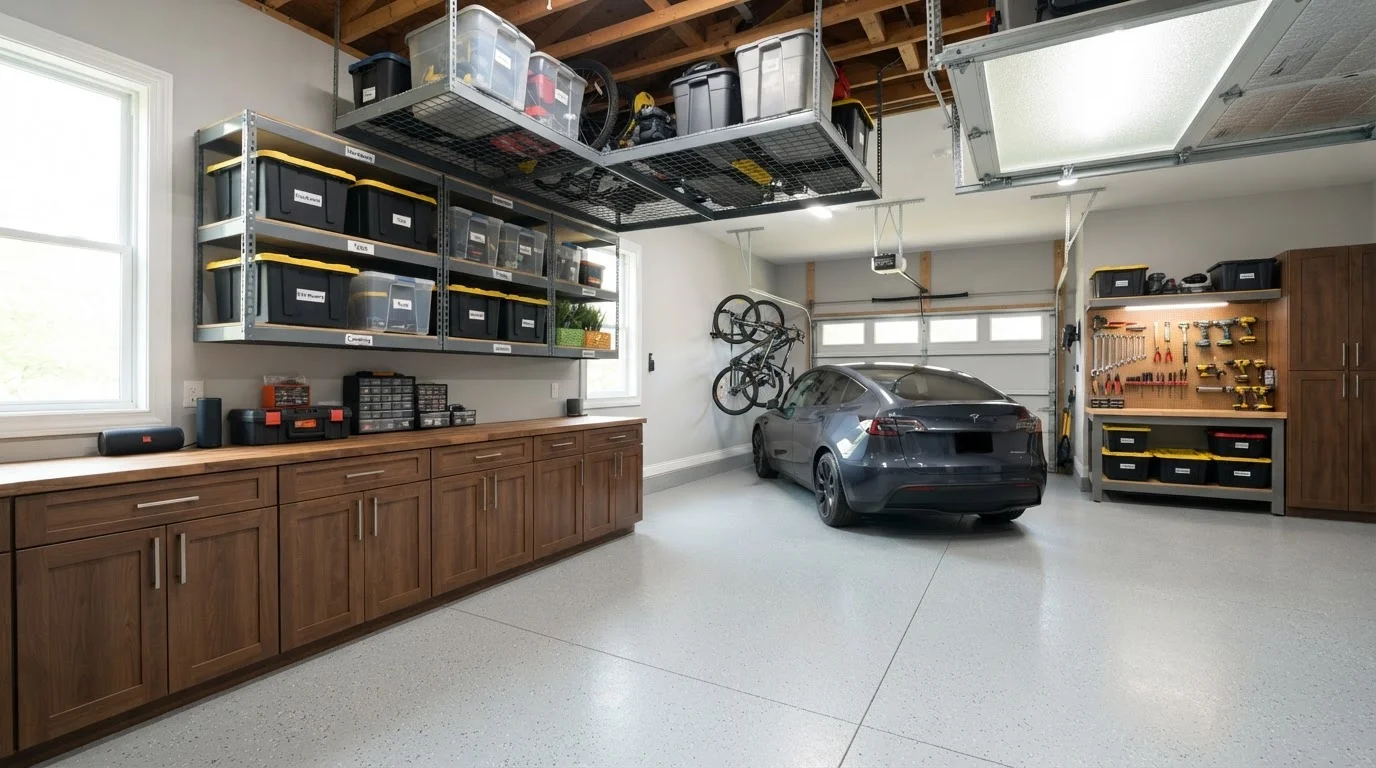
Photo: HorizonMetric.com | One Destination For Everyday Insights editorial
—— In This Article
Key Takeaways
- Wall-mounted systems are the most versatile and accessible option for everyday items.
- Overhead storage excels at keeping bulky, seasonal items out of prime floor and wall space.
- Cabinets offer dust protection and a cleaner look but typically cost more per square foot of storage.
- Most garages benefit from combining two or more storage types rather than relying on a single system.
- Installation complexity varies significantly — overhead racks and heavy cabinets often warrant professional help.
Why Garage Storage Deserves a System — Not Just Shelves
A garage without a storage plan tends to become a catch-all room where everything lands and nothing is found. Before selecting any hardware, it helps to think in terms of storage zones — grouping items by how often you use them and who needs access. If the concept of zoning is new to you, see our plain-language guide to common storage terms for a quick foundation.
The three systems most commonly used in residential garages — wall-mounted, overhead, and cabinet — each solve a different problem. Understanding their strengths before buying saves money and rework later.
Wall-Mounted Systems: Versatile and Accessible
Wall-mounted storage includes slatwall panels, pegboard, track-and-bracket shelving, and fixed ledger shelves. The core advantage is accessibility: items hang or sit at eye level or within arm's reach, making them the natural home for frequently used tools, sports equipment, and garden supplies.
Track systems are particularly flexible because shelves, hooks, and bins slide along horizontal rails and can be repositioned without drilling new holes. Pegboard is inexpensive and works well for hand tools. Fixed bracket shelves are simple to install and can hold significant weight when fastened into wall studs.
Anchor Into Studs, Not Just Drywall
Wall-mounted systems in a garage are only as strong as their anchors. Always locate wall studs with a stud finder before installing any bracket or track. Drywall anchors alone are insufficient for shelves carrying tools or heavy bins. When in doubt about a wall's load-bearing capacity, consult a contractor before proceeding.
A realistic limitation is wall real estate. A standard two-car garage may have only 50–80 linear feet of usable wall space once doors, windows, and utility panels are accounted for. For ideas on maximizing limited space more broadly, our article on vertical space and small-home organization covers transferable principles. The open shelving vs. closed cabinets comparison also applies directly to wall-mounted choices.
Overhead Storage: Capitalizing on Ceiling Height
Ceiling-mounted platforms and hanging racks use the volume of a garage that almost nothing else does. A typical two-car garage with 8- to 10-foot ceilings can accommodate 200–500 square feet of overhead storage, which is well suited to items you access only a few times a year: holiday décor, camping gear, luggage, and off-season sporting equipment.
Overhead Installation Has Real Structural Risks
Ceiling-mounted storage platforms must be fastened into structural members — rafters or blocking — not just drywall or furring strips. Verify joist location and spacing before purchasing any overhead system. Do not exceed the manufacturer's stated weight limit, and distribute weight evenly across the platform. If you are unsure about your ceiling structure, hire a qualified contractor to assess and install the system.
The main drawbacks are retrieval inconvenience and installation complexity. Getting items down requires a step ladder at minimum. Weight ratings matter enormously — ceiling joists must be confirmed before loading any platform, and spans that are too wide can flex under load. Heavy-duty overhead systems fastened directly into rafters or blocking are generally a job for a licensed contractor, since improper fastening can cause a platform to fail under load. Always verify your ceiling joist spacing and material before purchasing any overhead system.
Cabinets: Enclosed Storage with a Finished Look
Garage cabinets — whether metal, wood composite, or high-density polyethylene — enclose their contents completely, protecting items from dust, moisture, and pests. This matters for power tools, automotive supplies, and anything with small parts that would be ruined by grit or humidity.
Cabinets also produce the tidiest visual result, which is meaningful if the garage doubles as a workspace or is visible from common areas. The trade-off is cost per cubic foot of storage; cabinets typically run higher than open shelving or overhead platforms. They are also the least adjustable option once installed, particularly base cabinets bolted to the floor or wall.
For homeowners who wall-mount heavier cabinets, the structural considerations parallel those of mounting large wall-hung items anywhere in the home — studs, fastener type, and load distribution all matter. Our article on what to know before mounting heavy objects to a wall covers useful overlapping principles around stud-finding and fastener selection.
Comparing the Three Systems at a Glance
The table below distills the core trade-offs across the most important decision factors. Use it alongside your own assessment of what you store, how often you access it, and what your ceiling height and wall layout allow.
| Wall-Mounted | Overhead | Cabinets | |
|---|---|---|---|
| Typical relative cost | Low to moderate | Moderate | Moderate to high |
| Storage capacity | Medium — limited by wall space | High — uses unused ceiling volume | Medium — depends on unit count |
| Accessibility | Excellent — items at arm's reach | Poor — requires ladder for retrieval | Good — eye-level with doors closed |
| Best item types | Tools, sports gear, garden supplies | Seasonal, bulky, rarely used items | Chemicals, small parts, valuables |
| DIY installation difficulty | Low to moderate | Moderate to high | Moderate |
| Dust and moisture protection | None — items exposed | None — items exposed | High — fully enclosed |
| Flexibility to reconfigure | High — tracks adjust easily | Low — fixed mounting points | Low — units are fixed once installed |
Many garage organization projects layer all three systems: overhead platforms for seasonal bulk items, wall tracks for tools and sports gear, and cabinets for chemicals, small parts, or anything requiring a clean, closed environment. Budgeting for at least two tiers from the start tends to produce a more functional result than buying one system now and retrofitting later.
Planning Before You Buy
Measure your garage carefully — ceiling height, wall length available between obstructions, and floor-to-ceiling clearance over the hood of any parked vehicle. Overhead platforms must typically clear vehicle rooflines by several inches and comply with any local fire-clearance requirements for attached garages; check with your local building department if in doubt.
If your garage project is part of a broader home organization effort, the Home Organization hub offers additional frameworks for thinking through storage decisions room by room. Starting with a clear picture of what you own — and grouping those items by access frequency — will make any system you choose work harder for you.

Home Editorial Team
Home Editorial Team is the collective byline for our editorial team and contributor network. Articles published under this byline or an editorial pen name are researched, written, and reviewed according to our editorial standards for clarity, consistency, and independence before publication.
View author profile