
Smart Thermostats: What Changes After You Install One
Smart thermostats promise convenience and efficiency, but they also come with real limitations. Here's an honest look at both sides.
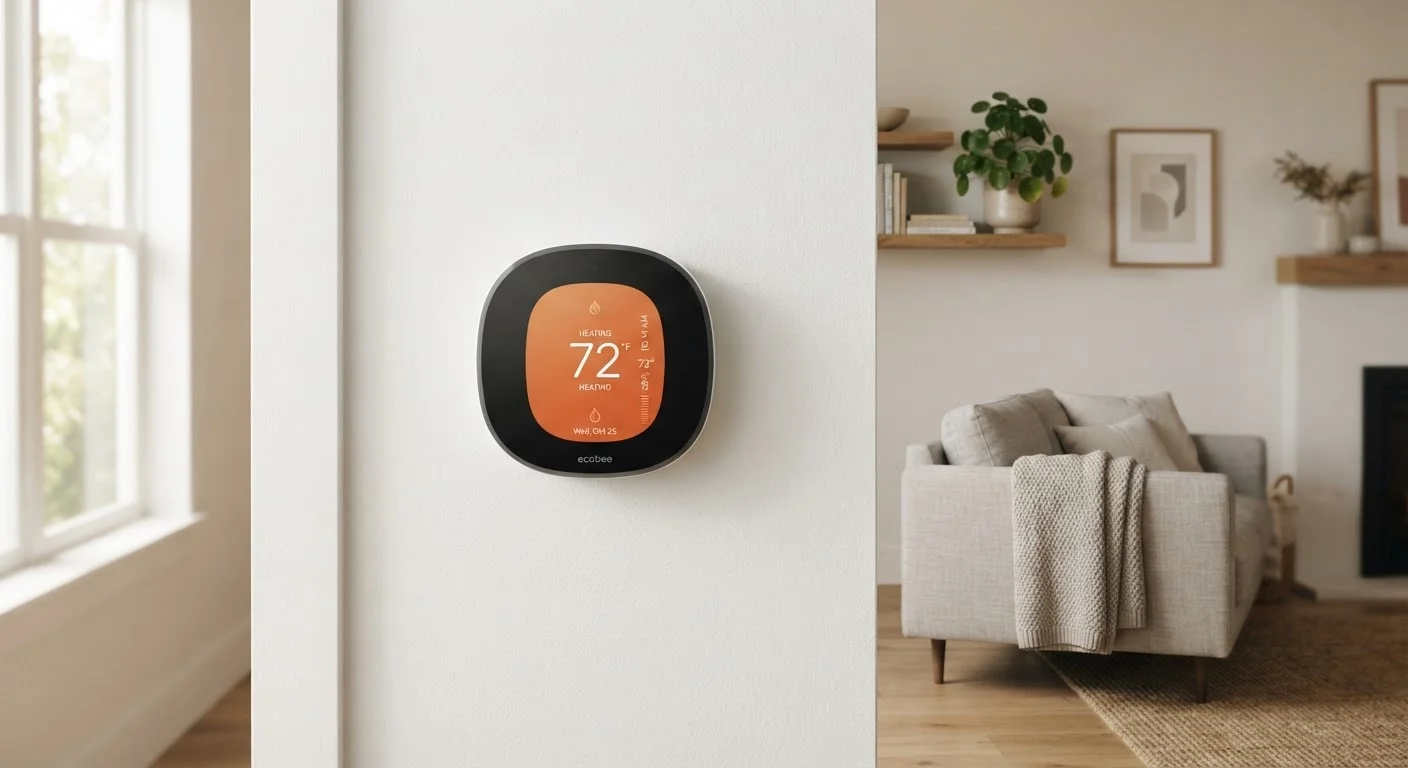
Photo: HorizonMetric.com | One Destination For Everyday Insights editorial
—— In This Article
Key Takeaways
- Smart thermostats can reduce heating and cooling energy use, but savings vary widely by household.
- Installation is often DIY-friendly, though some older homes or heating systems require professional help.
- Learning schedules and remote control are genuinely useful features — when your Wi-Fi is reliable.
- Privacy concerns are real: these devices collect data about when you're home and your daily routines.
- Compatibility with your existing HVAC system should be confirmed before purchasing any smart thermostat.
Control temperature remotely from any location
If you forget to turn down the heat before a trip, you can adjust it from your phone without turning around. This also helps when plans change and you want the house comfortable before you arrive.
Scheduling reduces energy waste automatically
You can program the thermostat to run less while you're at work and warm up before you get home. Done consistently, this tends to lower heating and cooling costs over time.
Usage reports make your habits visible
Many smart thermostats provide monthly energy reports showing how long your system ran and when. This visibility can help you spot inefficiencies you wouldn't otherwise notice.
Voice assistant and smart home integration
Many models connect to Amazon Alexa, Google Home, or Apple HomeKit, letting you adjust temperature by voice or as part of home automation routines.
Installation is often a DIY project
Most smart thermostats are designed for homeowners to install without an electrician. Setup typically takes under an hour if your wiring is compatible.
Requires reliable Wi-Fi to function fully
Remote access, voice control, and app features all depend on your internet connection. During outages, most smart thermostats revert to basic manual operation — but if your router is far from the thermostat, connectivity issues can be an ongoing frustration.
Not compatible with all heating and cooling systems
Electric baseboard heaters, some heat pumps, and multi-stage systems may require specific models or professional installation. Checking compatibility before purchase is essential.
Savings require active use of scheduling features
A smart thermostat used passively — without schedules or automation — offers little financial advantage over a standard programmable thermostat.
Collects data about your home occupancy patterns
These devices monitor when you're home, your temperature preferences, and usage routines. That data is stored by the manufacturer and governed by a privacy policy most users never read.
Can add complexity for non-tech-comfortable households
For people who prefer simple controls, the app setup, software updates, and occasional connectivity troubleshooting can feel like more hassle than the convenience is worth.
What Actually Changes When You Install a Smart Thermostat
The most immediate change is control. Instead of walking to a wall panel to adjust the temperature, you can do it from your phone — whether you're on the couch or stuck late at the office. Most smart thermostats also let you set schedules that automatically adjust temperature based on time of day, and some learn your patterns over time and adjust without you doing anything.
For a broader look at how a smart thermostat fits into a connected home, see our guide to setting up a smart home from scratch.
Control temperature remotely from any location
If you forget to turn down the heat before a trip, you can adjust it from your phone without turning around. This also helps when plans change and you want the house comfortable before you arrive.
Scheduling reduces energy waste automatically
You can program the thermostat to run less while you're at work and warm up before you get home. Done consistently, this tends to lower heating and cooling costs over time.
Usage reports make your habits visible
Many smart thermostats provide monthly energy reports showing how long your system ran and when. This visibility can help you spot inefficiencies you wouldn't otherwise notice.
Voice assistant and smart home integration
Many models connect to Amazon Alexa, Google Home, or Apple HomeKit, letting you adjust temperature by voice or as part of home automation routines.
Installation is often a DIY project
Most smart thermostats are designed for homeowners to install without an electrician. Setup typically takes under an hour if your wiring is compatible.
The Real Drawbacks Worth Knowing Before You Commit
Smart thermostats are useful tools, but the marketing version of them tends to oversell the experience. Before you swap out your old thermostat, it's worth understanding what can go wrong or simply disappoint.
Requires reliable Wi-Fi to function fully
Remote access, voice control, and app features all depend on your internet connection. During outages, most smart thermostats revert to basic manual operation — but if your router is far from the thermostat, connectivity issues can be an ongoing frustration.
Not compatible with all heating and cooling systems
Electric baseboard heaters, some heat pumps, and multi-stage systems may require specific models or professional installation. Checking compatibility before purchase is essential.
Savings require active use of scheduling features
A smart thermostat used passively — without schedules or automation — offers little financial advantage over a standard programmable thermostat.
Collects data about your home occupancy patterns
These devices monitor when you're home, your temperature preferences, and usage routines. That data is stored by the manufacturer and governed by a privacy policy most users never read.
Can add complexity for non-tech-comfortable households
For people who prefer simple controls, the app setup, software updates, and occasional connectivity troubleshooting can feel like more hassle than the convenience is worth.
Compatibility is the most commonly overlooked issue. Homes with older HVAC systems, electric baseboard heaters, or multi-zone setups may not be compatible with standard smart thermostat models at all. Always check the wiring requirements — specifically whether your system has a common wire (called a C-wire) that provides continuous power — before buying anything. Our article on common smart home myths covers more of the assumptions that trip people up.
Energy Savings: What the Numbers Actually Show
Energy savings are the headline benefit, and they can be real — but they're not guaranteed and they vary a lot. Studies by utility companies and independent researchers have found that programmable and smart thermostats tend to reduce heating and cooling costs when people use the scheduling features consistently. The key word is use. A smart thermostat set to the same temperature 24/7 saves nothing over a manual one.
~8%
Typical heating cost reduction with scheduling
The U.S. Department of Energy estimates you can save around 8% on heating and cooling costs annually by setting back your thermostat 7–10°F for eight hours a day.
90 million+
Smart thermostats installed in U.S. homes
Industry research suggests adoption has grown steadily as utility rebate programs have made smart thermostats more affordable for average households.
It's also worth noting that thermostat efficiency is only part of the picture. If your home has poor insulation or drafty windows, you won't capture the full benefit of any thermostat upgrade. See our related piece on insulation myths that cost homeowners money for context on how your home envelope affects energy performance.
Check Before You Buy: The C-Wire Question
Most smart thermostats require a common wire — called a C-wire — to draw continuous power from your HVAC system. Homes built before the 1990s often don't have one run to the thermostat location. Some manufacturers include adapter kits, and some newer models work without a C-wire, but you should check your existing wiring before purchasing. If you're unsure, a licensed HVAC technician can assess your setup in a short visit.
Privacy and Data: A Consideration Many Skip
Smart thermostats are connected devices, which means they collect data. This typically includes occupancy patterns, temperature preferences, and how often you're home. That data may be used to improve the product, but it's also subject to the manufacturer's privacy policy — which can change.
If data privacy is a concern for your household, read the privacy policy before setting up the device, and check whether you can opt out of data sharing in the app settings. For households thinking about how multiple smart devices interact and share data, our piece on getting smart home devices from different brands to work together is a useful starting point.
Smart thermostats are a reasonable upgrade for most households — just go in with clear expectations rather than marketing promises. More home improvement tips and guidance are available if you're working through a broader upgrade.

Technology Editorial Team
Technology Editorial Team is the collective byline for our editorial team and contributor network. Articles published under this byline or an editorial pen name are researched, written, and reviewed according to our editorial standards for clarity, consistency, and independence before publication.
View author profile