
Coastal Highway vs. Interior Routes: Choosing the Right Road Trip Style
Ocean views or wide-open plains? Compare the experience, scenery, and logistics of America's coastal and inland driving routes.
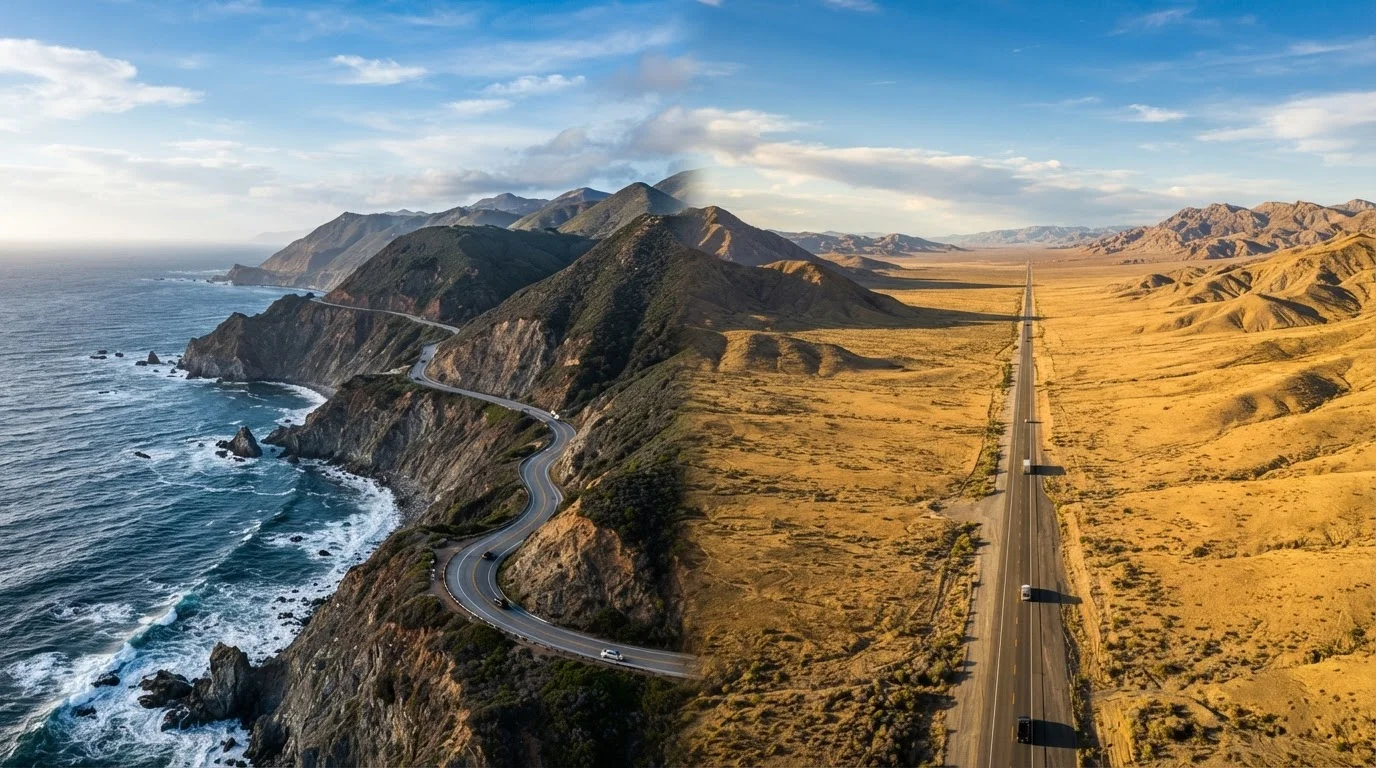
Photo: HorizonMetric.com | One Destination For Everyday Insights editorial
—— In This Article
Key Takeaways
- Coastal routes tend to offer more frequent stops and denser scenery but often move slower due to traffic and winding roads.
- Interior routes cover ground faster and often cost less, making them practical for longer cross-country itineraries.
- Weather, seasonality, and road conditions differ significantly between coastal and inland driving corridors.
- Both route styles deliver deeply rewarding experiences — the right choice depends on your pace, budget, and scenery preference.
- Mixing coastal and interior segments in one trip is a legitimate strategy many experienced road trippers use.
The Fundamental Difference in Driving Experience
Choosing between a coastal highway and an interior route isn't just about scenery — it shapes the entire rhythm of your trip. Coastal driving is inherently stop-and-go in the best possible sense: lighthouses, fishing piers, sea-stack overlooks, and clam shacks keep pulling you off the road. Interior driving, by contrast, has its own meditative appeal — long straights, big skies, and the satisfying sense of watching America unfold mile by mile.
Coastal routes like the Pacific Coast Highway or US-1 along the Atlantic seaboard are famously winding and often single-lane in places, meaning average speeds stay low. A stretch that looks short on a map can take twice as long as expected. Interior corridors — think Route 66 across the Southwest or US-2 through the Northern Rockies — generally allow higher sustained speeds and fewer tourist bottlenecks, which matters when you're trying to reach a distant destination.
For a deeper look at how these famous corridors compare historically and culturally, see America's Most Iconic Road Trip Routes, Explained.
| Criterion | Coastal Highway Routes | Interior Routes |
|---|---|---|
| Scenery type | Ocean cliffs, beaches, harbor towns | Plains, deserts, mountains, forests |
| Driving pace | Slow; winding, stop-heavy roads | Faster; straighter, open highways |
| Typical cost level | Higher (coastal premium pricing) | Generally lower, especially rural |
| National park access | Limited; mostly coastal preserves | Excellent; most major parks inland |
| Traffic & crowds | Higher in summer peak season | Lower on most interior corridors |
| Seasonal closures | Fog, storm surge, landslides | Snow, heat extremes, wildfires |
| Food & culture | Seafood, maritime, beach culture | Regional Americana, ranch, indigenous heritage |
| Cell coverage | Reasonably consistent near towns | Spotty in remote stretches |
Scenery, Stops, and What You'll Actually Remember
Coastal routes deliver a kind of continuous visual stimulation that's hard to match: crashing surf, sea stacks, beachside state parks, and historic fishing villages. The Atlantic coast layers in colonial history and lighthouses; the Pacific dazzles with redwood forests and dramatic cliffs; the Gulf Coast offers white-sand beaches and deep Cajun culture. For the food angle alone, the coast wins in a particular way — regional food stops on coastal drives can be extraordinary.
Interior routes hit differently. The Badlands at dawn, Monument Valley catching late-afternoon light, the endless wheat fields of Kansas — these are landscapes that feel almost abstract in their scale. They also put you closer to America's national parks. If your itinerary revolves around public lands, planning a drive-through tour of national parks pairs naturally with interior routing.
Interior routes also reward explorers willing to detour. Under-the-radar road trip stretches often run through heartland and mountain corridors that most travelers skip entirely.
~3,000
Miles of US Pacific coastline driveable by road
The contiguous US Pacific coast spans roughly 3,000 miles, much of it accessible via US-101 and California's Route 1.
63
US National Parks, most accessible via interior routes
The majority of America's 63 designated national parks are located in inland states, making interior highways the natural connective tissue for park-focused itineraries.
2,400+
Miles along historic Route 66
Route 66 stretches over 2,400 miles from Chicago to Santa Monica, serving as one of America's most celebrated interior driving corridors.
Logistics: Cost, Timing, and Practical Planning
Budget-conscious travelers consistently find interior routes more forgiving. Coastal accommodations — especially in summer — carry a premium, and waterfront dining towns rarely offer budget-friendly options. Fuel costs can also differ because coastal routes involve more idling and lower average speeds. Interior highways, particularly through rural states, tend to have more competitive motel and fuel pricing.
Seasonality matters enormously on both route types, but in different ways. Coastal highways in New England peak in fall foliage season and again in summer; Pacific Coast Highway fog is thickest in May and June (a phenomenon locals call "May Gray" and "June Gloom"). Interior desert routes are most punishing in midsummer heat, while mountain interior roads may have seasonal closures in winter. Always verify current road conditions and closures through official state DOT sources before departing — conditions change and no article can substitute for up-to-date local information.
For travelers drawn to the Pacific coast specifically, The Pacific Coast Highway driver's guide covers practical seasonal and road-condition details in depth. And if you're curious about the Gulf side, the US Gulf Coast is an underappreciated coastal alternative with its own distinct rhythm.
Always Check Road Conditions Before You Go
Coastal highways are vulnerable to landslides, storm damage, and seasonal closures — California's Route 1 has seen multi-month closures due to cliff erosion. Interior mountain passes face winter snow closures, and desert roads can become hazardous during flash flood season. Always check your state's Department of Transportation website and the National Weather Service for current conditions before departure. No travel article can substitute for real-time official information.
Can You Do Both? The Hybrid Approach
Many experienced road trippers deliberately mix coastal and interior segments — driving inland to cover distance efficiently, then dipping to the coast for scenic stretches and overnight stops. A classic Pacific Northwest loop, for example, might run south on US-101 along the coast and return north via US-97 through the Cascade interior. This approach captures the best of both worlds without locking you into one driving style for the entire trip.
The key is honest planning. How many miles are you comfortable driving per day? Do you need reliable cell coverage? Are you traveling with kids, pets, or someone who gets carsick on winding coastal roads? These real logistics should shape your route as much as any scenic checklist. Common road trip myths often involve underestimating driving time — a trap that hits coastal drivers especially hard.
For broader trip organization, the Trip Planning hub offers straightforward guidance on budgeting and logistics that applies equally to coastal and interior adventures. No matter which route style calls to you, the best road trip is the one you've planned honestly and approached with genuine curiosity.

Travel Editorial Team
Travel Editorial Team is the collective byline for our editorial team and contributor network. Articles published under this byline or an editorial pen name are researched, written, and reviewed according to our editorial standards for clarity, consistency, and independence before publication.
View author profile